By Saba Chaudhry
The tireless battles of women and gender-diverse people in South Asia are met with bullying, harassment, sexual violence, dangerous dis- and misinformation campaigns, and even rape threats. Not only is the traditional media complicit, but it is also routinely silencing the voices of women and gender-diverse people.
A recent global study found that stories about gender-based violence remain invisible in the world’s news, with fewer than 2 in 100 news stories covering the abuse that affects so many women.
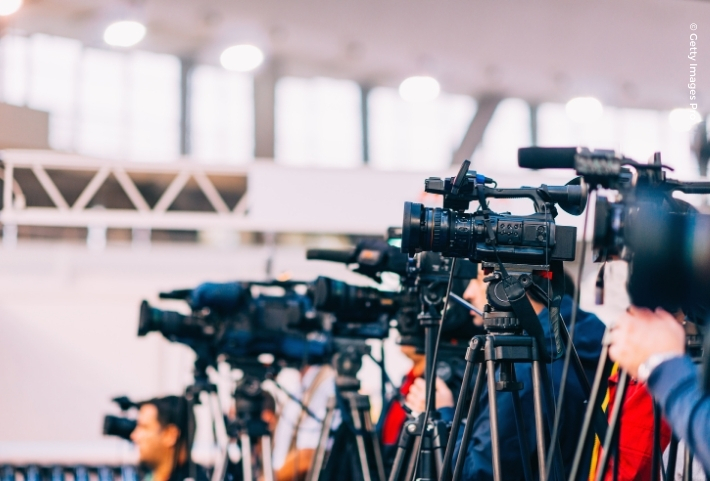
The report highlights the extent of the coverage gap in the media. Instead of challenging such existing inequalities, the media reinforces the very biases it should be fighting- sometimes by fueling a culture of silence, other times by dehumanising propaganda.
Every year, from November 25 to December 10, millions around the world participate in the 16 Days of Activism against Gender-Based Violence. Yet, year after year, despite the annual outpouring of solidarity, violence against women continues to be a pressing issue.
Why are efforts to combat violence and harassment slow to bring about change?
Language and Violence
“Mainstream media often treats gender-based violence as a spectacle rather than a structural issue that is rooted in both patriarchy and state neglect. Instead of centring coverage on survivors and their dignity, the media sensationalises their stories. Cases are reduced to headlines designed for shock value, to draw in viewers. Even the language is very dehumanising. Women become ‘bodies, cases, or incidents,’ rather than human beings with agency, histories, and identities,” says Tilyan Aslam, a young Baloch feminist activist and storyteller.
In gender-based violence cases, attention is frequently shifted from perpetrators to a woman’s choices or personal relationships. This dynamic extends into digital spaces, where dis- and misinformation campaigns reinforce such language. For instance, on 16 November 2025, an X account, followed by a Pakistan politician, shared a fake video of renowned Pakistan journalist Benazir Shah in an effort to target her and attack her work.
Alarmingly, some of these campaigns are conducted not just by authorities but also by followers of political parties and content creators within traditional media.
“As a young Baloch feminist activist who has been on the internet for the last 7 years and speaks about state violence, patriarchy, and indigenous identities, I think online abuse has become a constant background of my activism. It comes from multiple people. I have faced a lot of harassment from my own people in my culture. On the other hand, I have also faced harassment when I spoke about saving Baloch students from enforced disappearances or Baloch activists who are in prison,’’ Tilyan told MDI.
‘’The violence you encounter online really affects you, exhausts you, and also shapes who you are as a person offline. I have been targeted with misogynistic comments and racist slurs aimed at undermining my work. There have been times when harassment crossed into rape threats.’’
What’s changing
Women journalists, activists, and content creators have faced violence in every part of the world for expressing themselves; in other words, they have been pushed out of online and offline spaces. A study conducted by WAN-IFRA Women in News revealed that, on average, 41 per cent of women journalists experienced verbal or physical and sexual harassment in the workplace. Yet, only one in five reported the incident.
“The main issue I keep facing is in my comments section. Every time I post something, men leave inappropriate comments, say horrible things, and sometimes even start threatening me. When I tried to report these incidents and attached all the documents and screenshots, I only received automated replies. This was very frustrating, and that’s why I even gave up on reporting,” says Hafsa Tahir, a content creator and storyteller.
Millions of women and girls, including those at the intersection of multiple forms of discrimination, including adolescent girls, LGBTQI+, those with disabilities, and women in public life, are affected by online violence and harassment. The widespread problem raises many questions for the media, including what role traditional media organisations should play in demanding accountability and calling for policy reforms and internet governance.
Tilyan concludes with another perspective. ‘’What’s really missing is trauma-informed, survivor-centred reporting. Journalists and the media must see violence not as an isolated event but as part of a continuum shaped by the state system and patriarchal structures. Violence doesn’t happen in a vacuum; it is embedded in these systems.”
The role of technology
Technology is playing a role in supporting the victims of gender-based violence, but it has also exacerbated violence.
Digital Rights Foundation, a research-based NGO in Pakistan, operates the Cyber harassment helpline, the region’s first dedicated helpline addressing online violence with gender-sensitive, confidential, and free services. It provides legal advice, digital assistance, and basic psychological assistance and offers a proper referral mechanism.
In 2024, the Digital Security Helpline received 3,171 new cases, an increase from the previous year. People contacted the organisation through three primary channels: the Helpline phone service, the Helpdesk email, and DRF’s accounts on social media platforms. The majority of incidents, totalling 2,779, were reported via the helpline.
While complaints against harassment and violence have increased, the path to justice remains slow and out of reach for many women. Survivors often face a delay in investigations from law enforcement agencies or, in some cases, no justice at all.
‘’I think the only way we can change this is awareness of how to collect evidence and where to report it without any hassle. Many people still don’t know what to do in such cases. Documenting everything is important. From screenshots to written reports. Secondly, we can mitigate it by having smooth reporting mechanisms in place,” says Dr Sadya Salar, a transgender doctor and intersectional human rights advocate based in Lahore.
“We have laws, but not the proper implementations of those laws. If laws are enforced strictly both online and offline, only then can we hope. Ending violence requires collective action; that is why we must unite to end violence against women,” adds Sadya.
The views and opinions expressed in this article are solely those of the author and do not reflect the official policy or position of the Media Diversity Institute. Any question or comment should be addressed to [email protected] of the Media Diversity Institute (MDI).