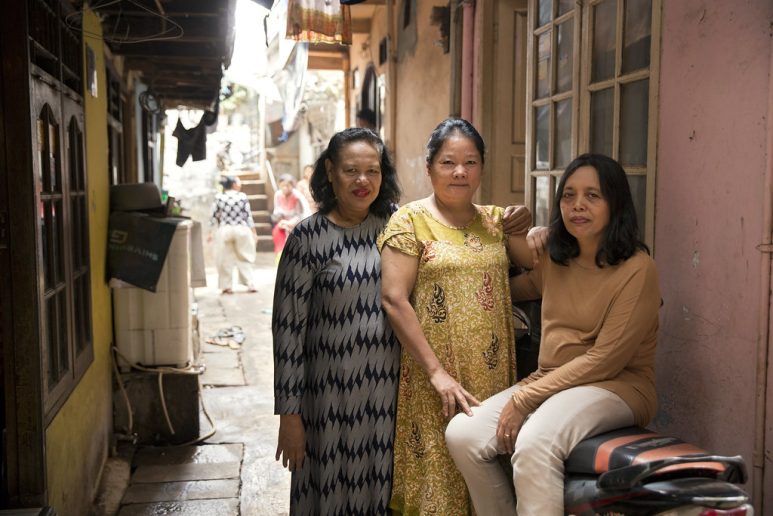
By Arpan Rachman
A full-time journo-activist, Luviana Ariyanti is the key figure behind the hard-hitting alternative media outlet Konde.Co in Indonesia. Konde means “hair bun”. The editorial team is led by Ariyanti, who is editor-in-chief, and deputy chief editor Salsabila Putri Pertiwi. They are supported by the managing editor, special editor, multimedia manager, staff, and IT officer. Outside the newsroom, the team includes an executive manager, a research and development manager, two collaboration staff, and a financial supervisor.
Changing the way people see women in the media
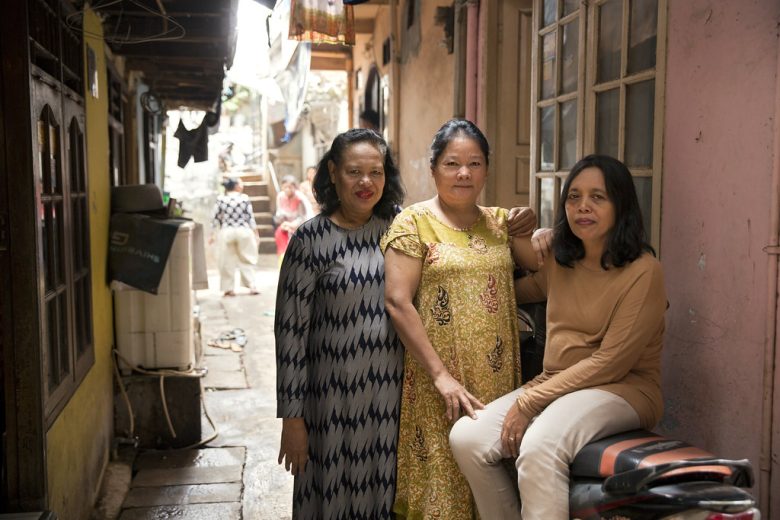
This Alt-media has transformed coverage of women and marginalised groups by focusing on intimate personal stories. Their approach supports Nancy Fraser’s view that women’s issues involve both culture and political economy, combining these in their coverage and writing.
“Cultural issues sometimes don’t resolve class issues. In political economy, we talk about class and confronting oppressive individuals. Konde sees many issues facing marginalised women as not just about their bodies, but also about class and access to opportunities.
“Another reason is that knowledge about second-wave feminism was only written and shared in the 1970s. Konde sees this as a space to socialise feminism.” Luvi (her nickname) told Media Diversity Institute.
Women’s representation
In 2025, women’s representation in Indonesian politics reached an important milestone, with 22.1% (128 of 589) of seats in the House of Representatives following the 2024 election. However, this still falls short of the 30% quota needed for meaningful participation. The number of women in Indonesia is estimated to be about 142.2 million, or about 49.8% of the total population.
Luvi hopes Konde will become a space for counter-narratives, since political-economic issues are deeply ideological.
Reaching audiences
Konde, founded in March 2016, focuses on in-depth reporting of at least 1,500 words. It also publishes a 60-page monthly special edition. All website content uses a slow journalism style.
Brief stories spread quickly on social media. Young audiences read news summaries there, while the full article appears on the Konde website. According to Luvi, weekly Instagram readership alone can reach 1.5 to 2 million. Including X, TikTok, and Facebook, the total can reach 3 million. The website has 3,000 to 4,000 readers per day.
The Konde logo features a woman’s head wearing glasses and three hair bun pins at the back, inspired by traditional Central Javanese bridal makeup called paes. The forehead shows a red indentation instead of the usual black or green. Three taglines are below the image: Women, Marginal, & Intersection.
Tackling a range of issues
Konde tackles a range of issues from violence against women and tech misogyny to feminism and the persecution of women.
On Monday, February 16, 2026, the English edition featured the headline: 2025 Year-End Edition: Women’s Resistance in the Season of Arrests and the Year of #DemocracyApocalypse, written by Luthfi Maulana Adhari, research and development manager at Konde.
A November 2025 special edition addressed misinformation and disinformation targeting women, especially related to human trafficking, securing sources from eastern Indonesia to tell the story.
“It was quite challenging because we were trying to find survivors who could provide testimonials based on their experiences. We then confirmed this with various parties, such as platforms and the government. Meanwhile, the incident was still ongoing,” said Salsa.
Another story covered the misuse of women’s personal data through AI forgery, editing their photos into nude images.
“It was exciting because Konde strives to generate impact through reporting and follow-up,” she added.
Konde’s persistence in exposing a job scam led police to confirm that the recruiter and agency would be detained and investigated for human trafficking. In another case, a sexual deepfake involving a minor left the victim’s parents struggling to report the matter to the police.
Protecting workers’ rights
Assignments and working hours at Konde are ideal, as the company complies with labour regulations. The standard minimum workday is eight hours. Employees only need to come into the office one day a week and can work from anywhere the rest of the time, allowing flexibility. Konde ensures employees have time to rest, including on weekends. If they work on weekends, compensation is provided so overtime is not excessive and staff are not overburdened, according to Salsabila Putri Pertiwi, better known as Salsa.
Konde has four contributors based outside Jakarta. They assist with coverage in East Nusa Tenggara, Yogyakarta, Surabaya, Malang, and other areas. While other media outlets have rarely covered women’s issues in these places, Konde has given a voice to people often overlooked.
“Those who will be reporting coordinate and communicate with the person in charge or the editor. We also welcome people outside Konde to write for Konde by emailing their articles to be curated by editors. Additionally, one dedicated contributor handles translations, as Konde has an English section,” added Salsa.
Promoting public journalism and community involvement
All staff are also tasked with maintaining the network, as Konde promotes public journalism. They also strive to be directly involved in civic movements, ensuring Konde’s connection with society remains strong. Salsa and other staff contribute to this.
“I think Konde is not only about gender empowerment, but also about workers’ rights, the urban poor, and marginalised groups, by focusing on their socioeconomic situations,” said Dr. Monika Winarnita, who researched Konde and Luviana Ariyanti in 2018-2019.
“Gender activism is part of an era in which online spaces enable people to engage and amplify what happens offline, creating global momentum. They can use global activism to gain traction for their own movements locally, then adapt it to local conditions,” Winarnita added.
As a lecturer in Indonesian and Asian Studies at the University of Melbourne’s Asia Institute, Winarnita highlighted last year’s activism involving the One Piece manga’s skull flag. The flag originated in Japan and was first used by defiant youth in Indonesia.
“It’s something from Asia that went global, then was used in France, Brazil, Mauritius, and Nepal. So, I see various forms of global movements, not just from the West, but now from Asia and countries like Indonesia.”
Konde is embracing activism and generational differences to appeal to audiences. Luvi, who was nominated for the UN’s N-Peace Award in 2014 and named Indonesia’s best journalist in 2023, says adopting new idioms, different narratives, and unique ways of thinking from people younger than herself, a middle-aged woman, helps her and Konde stay relevant.
Providing a platform for marginalised voices
“As a journalist, I want Konde and me to consistently report on significant issues about gender and marginalised groups in the context of human rights. We must persevere despite the structural repression faced by the press and many Indonesian citizens.
“Konde can continue to practice public journalism that focuses on the interests of people whose concerns have rarely been voiced and who have not been given the space to speak directly,” said Salsa.
Unlike mainstream media, with well-established business structures and networks, alternative media outlets like Konde face recurring funding challenges. “There’s no manual or book of know-how that explains the day-to-day aspects of managing Alt-media,” Luvi asserted.
Working from an 861-square-foot office on the fourth floor, Konde publishes articles and creates feminist books, videos, and documentaries about violence against women. In 2022, their website was taken offline by a Distributed Denial of Service (DDoS) attack after they reported on a gang rape at a ministry. Later, police visited a Konde book discussion in Yogyakarta in December 2025.
Despite these threats, Luvi and her team remain determined. Although women in Indonesia still face challenges in making their voices heard in the media, Konde is fighting for equality.