
Highlighting under-reported minorities and groups impacted by conflict.
By Asfandiyar
“I keep asking myself: if this had happened in Lahore or Islamabad, would the cameras have come? Of course they would. But we are Pashtuns on the border. We bleed quietly, and they move on.”
These words belong to Haji Ghulam, a tribal elder from Khyber Agency in northwestern Pakistan. He is in his sixties, with a white beard and calloused hands, and he spent three days after the February airstrikes walking from family to family in his village, writing names in chalk on a blackboard he normally uses for Friday prayers. Seventeen names. Men and boys. Farmers, a schoolteacher, a truck driver. Not even one of them a fighter.
Since the start of recent clashes between Pakistan and Afghanistan, there have been two entirely separate narratives. Pakistani officials describe their airstrikes and cross-border attacks as intelligence-based operations to target different proxy militant groups, while the Afghan interim regime portrays their attacks as a right to self-defence.
However, an overshadowing narrative is missing. Shelling, displacement, economic ruin, and the anguish of the largest ethnic group, ‘the Pashtuns’, on both sides.
A Conflict Counted, Not Witnessed
According to the UN Human Rights Office, by mid-March, at least 75 Afghan civilians had been killed and more than 200 wounded since the fighting began on February 26. A wider accounting put the toll at 289 civilians, among them 104 children and 59 women, killed or injured across the border regions.
The UNHCR documented more than 115,000 people displaced inside Afghanistan.
Pashtuns in the Bajaur Agency of Pakistan have also been displaced.
On March 17, a strike on a drug treatment centre in a Pashtun-dominated region, Kabul, killed more than 100 people. Pakistan denied it deliberately targeted the centre, saying it had “precisely targeted military installations and terrorist support infrastructure”.
The incident highlights the conflicting narratives in the conflict. Pakistani television reported the government’s claim that hundreds of militants had been neutralised, while on the other hand, Afghan media broadcast footage of the devastation and attributed it to foreign aggression. In both countries, the figures were utilised as arguments rather than individuals. Direct engagement with civilians and solicitation of their perspectives were largely absent in reporting from Islamabad to Kabul.
Khalid, a 21-year-old bachelor’s student from Landi Kotal, Pakistan, was attending a morning lecture when the first shells landed near his college compound. A mortar fragment ricocheted off the wall and tore into his leg.
“I observed the media for hours, anticipating information regarding the residents of the villages behind the college. Unfortunately, there was no prime-time broadcast about the incident. There was just generic and repeatedly displayed identical footage of a military checkpoint, which the Afghan authorities targeted. It is quite disheartening for me to say that no individuals attended the clinic, and no one questioned or asked about my opinion,” he said.
He was taken to a border clinic and spent two weeks recovering. As soon as he switched on the TV, what he calls his second injury started. His annoyance is about more than just him. It exemplifies a systemic truth regarding the media’s coverage of conflicts involving marginalised communities.
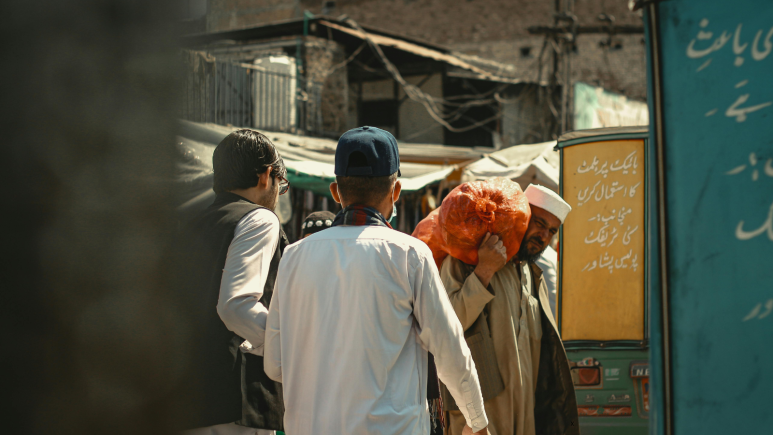
Government and media outlets in Pakistan’s northwest tribal regions have a long history of underinvestment. Mohmand, Bajaur, and Khyber are not often places where correspondents keep permanent offices. Coverage of violent incidents is often compiled from a distance using official statements, satellite photos, and spokesmen. Even a phone call, much less a visit, is unusual for the people who live in these areas.
Peshawar’s Empty Crates: The Economic Erasure
Torkham serves as a major land crossing point for commercial routes in South Asia. Typically, 700–900 Afghan trucks cross the border every day, transporting fresh produce, dried commodities, raw materials, and other goods into Pakistani markets, and manufactured goods out of Pakistan. For Pashtun towns on either side of the border, the crossing is vital to their economy. In mid-October, months before the latest conflict began, Pakistan shut the crossing citing security concerns. It remains closed and has slashed the livelihoods of locals despite numerous protests to challenge the move.
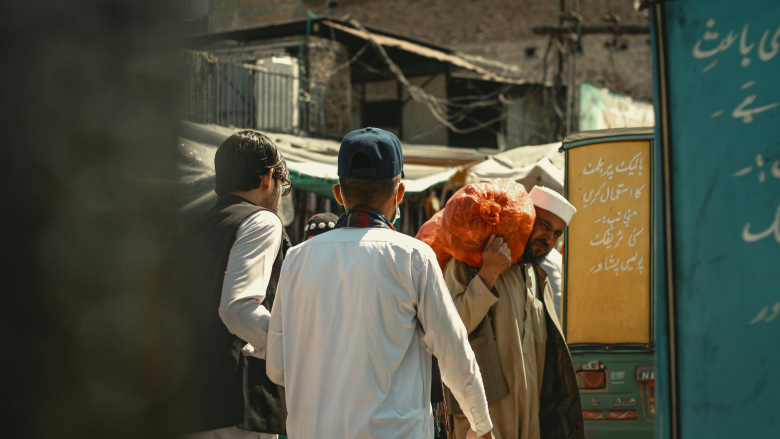
Imran has worked at the fruit bazaar (Sabzi and fruit mandi) in Peshawar since he was a teenager. His sense of smell and weight allow him to keep up with the market’s rhythms, such as the changing seasons of pomegranates, apricots and walnuts, and the maximum number of crates that a strong man can move before the afternoon heat makes work impossible. For months, the wooden crates in his area of the market have sat empty.
“Apricots, pomegranates, onions, and walnuts are the goods we exchanged. No weapons, just the food. The Pakistani Army said it was our battle and shut the gate. Whose battle? One can say that I am a loader providing food for my children is my battle. My question is, “What am I supposed to do now?”
The traders working on Torkham border are majority of Pashtun origin. A Pakistan’s Custom Official on the condition of anonymity said that the closure of Torkham border has impacted livelihoods of roughly 3,000 Pashtun workers. The cost of goods in Khyber Pakhtunkhwa have soared by up to 400 per cent due to the border blockade. The shutdown is seen by communities already alienated by federal economic policy in Khyber Pakhtunkhwa as an act of desertion, rather than a security precaution, an ethnic Pashtun Custom Officer said on the condition of anonymity. “In Islamabad they make the decision. In Khyber we pay for it. When has it ever been the other way around?”
Afghan Side: Same Ethnicity, and Same Conditions
Some of the world’s best pomegranates come from the fruit orchards around Kandahar. Grown in the river basins of the province, this type is shipped all throughout Asia and even into the Gulf.
Thirty years have passed since Haji Farooq began trading Kandahar’s fruit. From harvesting to packing to negotiating rates at the Pakistan crossing, he is an expert on the export schedule. He also knows which markets require early delivery. Since the border closed, he has been utterly useless with all that knowledge.
“I have oranges sitting in crates that I packed three weeks ago. They are worthless now. I have debts I cannot pay. My workers have not been paid. And when I turn on the television, the minister is talking about sovereignty and military infrastructure. Nobody asks me what I have lost.”
Farooq is of the view that 80 per cent of the fruit that Afghanistan sends is either stuck in a warehouse, on a truck, or just sitting there rotting. With the agricultural sector in Afghanistan already in a precarious position due to decades of war and drought, there is no substitute market that could replace Pakistan’s consumption. In the past, Pakistan would receive about two-thirds of Afghanistan’s fresh products. Those paths no longer exist.
Most of Kabul’s private and national television stations have opted to portray the fight from the Taliban government’s political and military perspective, with very few exceptions. Unfortunately, the everyday tales of the effects of the Pakistani airstrikes and the economic blockade on regular people are constantly overshadowed by coverage that focuses on sovereignty and the moral illegitimacy of foreign attacks on Afghan soil. This framing makes no reference to the farmer or worker at all, as their losses contribute nothing to the argument.
“I ran to the hallway, calling out: Who is alive? The dust was so thick I could not see my own hands. I tried to shout, but my throat closed. I kept thinking: we are not soldiers. There is nothing here. Why are they hitting us here?” asks Humayoun, a 45-year-old civil servant. Surrounded by a deluge of dust and shattered glass, he awoke to the sound of explosions and discovered his house windows shattered, walls fractured, and the street outside littered with debris. “With my family by my side, we made our way to the corridor, where we waited. As soon as it became sufficiently silent, I unlocked the front door.”
Murselin, a 35-year-old neighbour, also woke up to the same thing: shattered windows, children sobbing in the dark, and street debris.
Afghan media continued to prioritise official condemnations over residential evidence. In contrast, both men talked with a Reuters journalist who arrived in the district the next morning and their accounts were published globally.
No reporter spoke to a third local, Haji Mohammad Aman, whose family’s house was destroyed. “This entire area is residential. There is not even a single government or military facility here. Who authorised this? And who will answer for it?”
Peace Marches That Nobody Filmed
From mid to late March, peace protests took place in various cities across the tribal areas of Pakistan, as well as in Khyber Pakhtunkhwa, but neither the Afghan nor Pakistani media paid much attention to them.
At the periphery of their devastated communities, men, women, and children of all ages assembled in small groups, holding white flags, and set out for the military regiment centres. They had planned the marches using community communication that does not rely on a media infrastructure – by word of mouth and mosque announcements. They wanted the fighting to stop, the border to be reopened, and people to be able to go home.
A local Awami National Party (ANP) youth leader recorded some of the march on his phone and shared the clips with reporters in Peshawar and Islamabad. Of those, two acknowledged his receipt. No news was reported.
During the same time, a small number of Afghan non-governmental organisations held candlelight vigils in Pashtun neighbourhoods of Jalalabad, where they prayed for peace and called for Pakistani and Afghan officials to meet. Reporters from across the world based in Kabul covered a press conference hosted by the government that very afternoon. No footage of the vigils was shot. “We marched because we had no other way to speak. We thought: if we do something visible, someone will notice. But nobody came. I kept looking down the road for a camera. There was nothing”, said ANP’s leader.
Aside from the broader disregard for civilian opinions, the lack of coverage of these peacemaking efforts is particularly noteworthy. So much as the public has been able to piece together information about Pashtun communities during this conflict, the picture that has emerged largely focuses on victimhood and displacement. There has been a lack of visibility about the agency displayed by these communities, namely, the organised and vocal rejection of violence by regular people.
According to Musa, a 35-year-old cobbler from Kandahar whose store was destroyed when shelling reached his street, the local communities feel invisible.
The Story They Are Asking to Tell
Haji Ghulam desires a permanent record of the names written on his blackboard.
Jamal, a resident of Jalalabad, is distressed that no one has told him how his cattle fared. He spends every day worrying about their well-being.
The scene of empty crates in Imran’s sector of the bazaar, with the journalist standing before an audience to explain why, is what Imran wants.
Homayoun wants someone to represent his neighbourhood by asking officials the question: why were we bombed?
Tasmina, who runs a small cart at the border transit, wants the cost of the blockade to be integral to the story rather than a footnote.
They are not asking for anything unusual. When functioning properly, these questions and the inclusion of the voices of those affected by conflict constitute the vital work of journalists. That work has not been able to take place in the Pashtun border territories due to actual, long-standing structural problems. However, they are not insurmountable. The individuals included in this article recounted their experiences in detail and with accuracy. They are not hard to find. Nobody is looking for them.
In the words of Tasmina: “Our silence is chosen. We ask only that others stop talking about us as if we were their enemies and start listening to us as if we were human beings. That is all. That should not be difficult.”
The views and opinions expressed in this article are solely those of the author and do not reflect the official policy or position of the Media Diversity Institute. Any questions or comments should be addressed to the editor at [email protected] of the Media Diversity Institute (MDI).