By Anthea Kasonga
The 2026 FIFA World Cup claims to unite the world. Yet before kickoff, referees were warned about social media threats. Monitoring found thousands of abusive posts, and police braced for online abuse. Hate speech was not unexpected; it was anticipated.
As the 2026 FIFA World Cup unfolds across the United States, Canada and Mexico, football’s biggest tournament claims to promote unity.
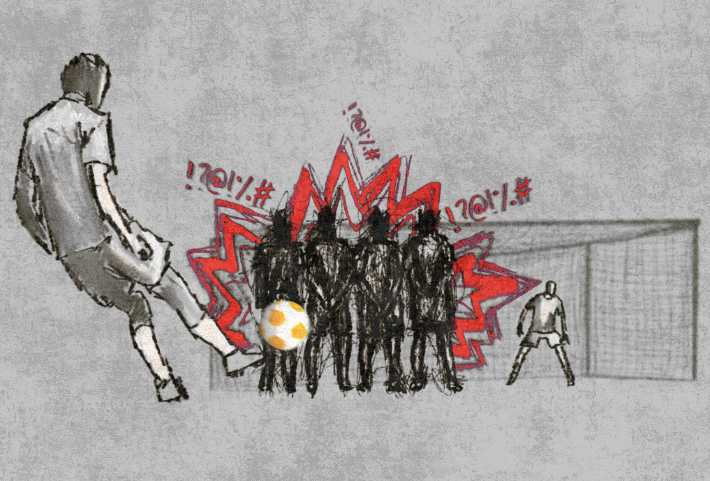
For five weeks, billions will watch nations compete. Communities will come together. Cultures will share a global stage. It is the story football loves to tell about itself: that sport can bridge divides that politics cannot.
Yet before many teams had played their opening match, another reality had already emerged.
The infrastructure designed to counter hate speech is now built into major tournaments themselves. Before a ball is kicked, monitoring systems are in place, police investigations are prepared, and support services are established for players likely to be targeted. The contradiction is difficult to ignore. Football continues to present itself as a force for unity, even as it prepares for the hostility that routinely accompanies it.
Division shaping narratives
This year’s World Cup takes place against a charged global backdrop. In the United States, immigration enforcement is deeply contested. Border controls and travel restrictions shape the debate. Conflicts in the Middle East fuel geopolitical tensions. Questions of nationality, belonging, and identity dominate political discourse across much of the world.
Those tensions do not disappear when the football starts. They often become more visible.
One striking example came before the tournament began. Somali referee Omar Artan, selected by FIFA to become the first Somali official at a World Cup, was denied entry into the United States. US authorities cited vetting concerns. FIFA confirmed he would take no further part in the tournament. For many, the incident was an uncomfortable reminder: participation in global sporting events is not equally accessible to everyone.
Questions around mobility and access have also affected Iran’s participation, with visa complications reflecting how geopolitical tensions shape sporting events despite repeated claims that sport exists separately from politics.
These issues are not the same as hate speech. But they are connected by a broader question: who gets to belong? And who, when they do belong, becomes a target?
Accepted, Until They Aren’t
Major tournaments repeatedly expose how quickly celebration can turn into exclusion. Players from minority backgrounds are often held up as symbols of national pride when teams are winning. When results go badly, some of those same players become targets of racist abuse, questions about loyalty, or attacks on whether they truly belong. The shift is familiar enough that football authorities now plan for it.
Brazilian forward Vinícius Júnior has lived this cycle more publicly than almost any other player of his generation. The racist abuse he faced — across stadiums and social media — became so sustained and well-documented that Rio de Janeiro passed legislation in his name. The Vinicius Junior Law, enacted in 2023, targets racism at sporting events. The fact that a living footballer required a law to address his abuse is not a detail. It is a measure of scale.
This is not new for England either. When Bukayo Saka, Marcus Rashford and Jadon Sancho missed penalties in the Euro 2020 final, the abuse began within seconds. All three, who are Black, had their social media flooded with racist slurs and monkey emojis. One case reached court: a man pleaded guilty to posting a monkey emoji on Sancho’s Instagram. Five people were arrested. The UK Football Policing Unit described the abuse as “utterly vile” and processed many reports. That was 2021.
England’s players received racist abuse during warm-up matches in the United States before the 2026 tournament began. Head coach Thomas Tuchel said he would love to protect his players from online abuse but admitted it was not possible. The father of Reece James and Lauren James called abuse something players now encounter routinely. It is factored in, expected, part of the job.
When abuse becomes something players, families, football associations and police units all anticipate, the question is no longer whether it exists. The question is: what does it mean that it has become so predictable?
Hate learns the algorithm.
The nature of online hate speech has not diminished—it has adapted.
As platforms improved detection of slurs and direct threats, harassers evolved. The Meta Oversight Board, publishing findings at the start of the tournament, reviewed cases in which monkey emojis were used in racist contexts against Black footballers. In one, a Facebook post from Brazil used a monkey clip with football club references, drawing on longstanding racist tropes. Using an emoji instead of a slur is deliberate. What researchers call “algospeak”—coded substitutions that evade moderation—now defines online hate around major sporting events.
The numbers support this. A study by the Professional Footballers’ Association and Signify found more than 3,000 abusive posts aimed at footballers in one year. Fifty-six per cent were racist. Nearly a third of the racist posts used emojis, not explicit language. A separate UEFA report found that 33 per cent of posts flagged to Meta, TikTok and X around UEFA club finals were classified as racist.
The Oversight Board has urged Meta to audit its hateful-content training data and to better coordinate its enforcement of hate speech and harassment. The Board also called for active monitoring of emoji-based content during major sporting events, including the World Cup and Olympics. Meta has committed to auditing and emoji monitoring. The gap between its hate speech and harassment policies remains unresolved.
Slurs become emojis. Insults become memes. As moderation systems become better at identifying explicit abuse, hateful content increasingly relies on context, symbols and coded language. The challenge is no longer only identifying hate speech, but recognising the forms it now takes.
Expected hate speech
Perhaps the most troubling development is not that hate speech exists around major football tournaments. It has become expected.
FIFA operates a dedicated social media protection service, run with Signify, from a monitoring unit in Miami. This unit tracks discriminatory content and threats aimed at players, officials and teams. Referees received threat briefings before the first match. The Football Association funds police investigations into online abuse. The UK Football Policing Unit pursues criminal cases where possible. FIFA pushes for prosecutions.
This infrastructure is real. In a narrow sense, it signals progress: it acknowledges that abuse will occur and a systematic response is needed. However, the main argument is that simply monitoring and detecting abuse is insufficient; these reactive measures do not address root causes or prevent abuse from occurring. Addressing hate must go beyond surveillance and enforcement to changing the conditions that make such abuse predictable.
Before a major tournament begins, we already know the patterns likely to emerge. We know that some players will be targeted if they make mistakes. We know that racist abuse will circulate online. We know that statements condemning discrimination will follow. We know all of this because it has happened before, and before that, and before that.
On the International Day for Countering Hate Speech (18 June), that familiarity should give us pause.
Countering hate speech is not simply about removing offensive posts after they appear. It is about recognising the environments in which exclusionary narratives thrive, and asking why they persist.
The World Cup did not create racism, xenophobia or online harassment. What it does provide is a highly visible stage on which those tensions play out. This year’s tournament arrives amid debates about borders, migration, conflict and belonging. At the same time, football authorities, social media companies and police forces are preparing for the discriminatory abuse they know will come.
During a tournament watched by billions, what gets amplified by recommendation engines, coded language that evades moderation, and the attention given to missed penalties, is just a magnified version of the world’s existing fractures.
The World Cup claims to be a symbol of global connection. Inclusion is often presented as one of football’s greatest strengths. Major tournaments test how true that claim really is.
Illustration by Christiana Warne
The views and opinions expressed in this article are solely those of the author and do not reflect the official policy or position of the Media Diversity Institute. Any questions or comments should be addressed to the editor at [email protected] of the Media Diversity Institute (MDI).