By Arpan Rachman
Following a recent controversy over an official’s denial of a 1998 mass rape in Indonesia, Arpan Rachman conducts his own analysis of how three mainstream Indonesian media outlets have reported on the case and issue in recent years.
Indonesia’s last authoritarian chapter collapsed in May 1998 amid the thunderous roar of rebellion. Jakarta and some other cities became chaotic canvases, marked by the flames of burning malls and the cries of those trapped inside as the country’s fury boiled over. More than 1,200 lives were lost in the pandemonium.
The systematic rape of ethnic Chinese women left scars that still haunt the nation’s memory. In the end, the walls of the Suharto regime’s power, unyielding for 32 years, crumbled beneath this tidal wave of unrest.
According to a Human Rights Watch report, statements from Indonesian government officials on the rapes evolved from tentative criticism to condemnation, to skepticism, to outright denial that any rapes occurred. This pattern has repeated like an endless loop for the past 28 years.
The debate over the rape case has been detrimental in many ways, particularly by distracting from efforts to help victims recover and identify perpetrators. Preventing further violence is a monumental task. This means reversing centuries of discrimination against ethnic Chinese, rooted in Dutch colonial rule.
Documenting violence against women
The 1999 report of the UN Special Rapporteur Radhika Coomaraswamy on violence against women in Indonesia and East Timor explained that Ms Coomaraswamy met with victims of the riots and was convinced that rape had occurred. It also stated that underreporting stemmed from distrust of the criminal justice system, which prevented women from reporting crimes. The Special Rapporteur attended discussions at the Attorney-General’s office that revealed the prevalence of a “denial culture”: a refusal to acknowledge the magnitude of the events that have occurred.
The mass rape of May 1998 has been cited in many scholarly works. Monika Winarnita (2011) stated that “between May 13 and 15, as many as 85 to more than 400 women and girls of Chinese-Indonesian descent were reported to have been mass raped in and around Jakarta,” with reference to three other academic sources.
In 2023, the President of Indonesia ordered the Government to oversee concrete efforts to restore victims’ rights, including those related to the May 1998 riots. The order also aimed to prevent the recurrence of gross human rights violations. However, the two Monitoring Teams for the Implementation of Recommendations for Non-Judicial Resolution of Gross Human Rights Violations (PPHAM), established by the decree and in office until the end of 2023, did not address the mass rape during the May 1998 riots. The PPHAM team’s work has only resolved the 1965 incident, gross human rights violations in Aceh, the Trisakti, Semanggi I, Semanggi II, May 1998 riots, and cases of enforced disappearances.
Recent denial
In June 2025, Culture Minister Fadli Zon called the 1998 mass rapes a “rumour”, causing public outrage. His comments and the backlash that followed reflects ongoing conflicts over recognising and addressing past human rights abuses in Indonesia.
A civil society group filed a lawsuit with the State Administrative Court over his comments, but the case was dismissed on April 21, 2026. The lawsuit shows continued efforts by citizens to hold people accountable and question official accounts. The plaintiffs’ decision to appeal shows society still strongly wants justice and a clear understanding of history.
Public resistance
These incidents are closely linked to the broader public resistance against Indonesia’s then-authoritarian regime, showing the complex relationship between state power and collective unrest. The lasting impact is clear in victims’ continued silence for safety reasons and ongoing debates about their experiences. The unresolved identification of perpetrators reveals systemic challenges in truth-seeking and accountability. It also raises questions about institutional barriers blocking full disclosure and justice for those affected.
“Now, people are starting to worry that the authoritarian regime is resurfacing with an even more terrifying face. We can imagine the public’s fears and their shattered dreams of a democratic transition. It is difficult to reveal the truth about the 1998 mass rapes because the democratic transition process did not go as hoped. There should be a systematic resolution to prevent such incidents from happening again. But in a fragile transition, regulations are often ignored, and those in power can abuse the law,” human rights activist and member of the Joint Fact-Finding Team for the May 1998 Riots, Ignatius Sandyawan Sumardi, told Media Diversity Institute.
He confirmed that repressive measures are becoming more apparent. Revealing the truth about past gross human rights violations is being hampered, allowing those in power to camouflage a new history.
How the media reported the controversy
This author has tried to unravel the controversy surrounding the 1998 mass rape by analysing how three mainstream Indonesian media outlets have reported on the issue in recent years, linking it to gender-based violence and sexual harassment.
This analysis identifies sources and compiles relevant data. A summary of 67 published news reports from May 2023 to May 2026 shows that the May 1998 mass rape received 57 per cent positive responses, stating that the brutality actually occurred; 31 per cent negative responses, voicing implicitly that the incidents did not happen; and the remainder were neutral.
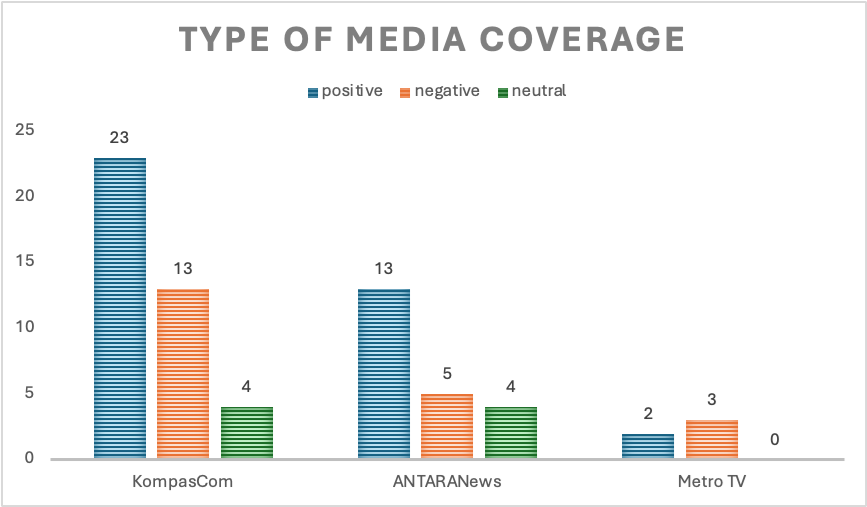
Minister Zon was quoted in most news in the past year. Additionally, 34 other sources gave opinions, responses, and commentary across all titles. They included the member and chairperson of the National Human Rights Commission, representatives of the plaintiffs’ legal counsel, a public lawyer from the Jakarta Legal Aid Institute, a plaintiff who is also the mother of a victim who died in the May 1998 riots, and the Chairperson of the National Commission on Anti-Violence Against Women. The former Chairperson of the Joint Fact-Finding Team, historians and women’s activists, five lawmakers, the deputy speaker of parliament, human rights activists, academics and social observers, and the head of the Presidential Communications Office were also quoted.
The collected and analysed news reports cited eight documentary data sources: a copy of the Jakarta State Administrative Court’s decision; a Ministry of Culture news release posted on the minister’s and the ministry’s official accounts; an announcement from the Case Tracking Information System; a report from the Volunteer Team for Humanity and the Joint Fact-Finding Team; a written statement from the Civil Society Coalition Against Impunity; a book by the National Commission on Anti-Violence Against Women printed in 2008; and the object of the dispute in court.
What the media coverage tells us
By analysing the media coverage, all information collected, verified, and disseminated by professional journalists from three mainstream media in Indonesia demonstrates responsible reporting by giving equal space to parties questioning the chilling historical incident to express their opinions.
Reports in KompasCOM and ANTARANews show the government’s 1998 efforts to form a Joint Fact-Finding Team for the May 1998 Riots and the National Commission on Anti-Violence Against Women. This was followed by a 2022 presidential decree on Non-Judicial Resolution of Gross Violations of Human Rights.
Meanwhile, those mainstream media also quoted Minister Zon, who questioned the idiom “mass,” which he said meant the rape was structured, massive, and systematic, or “orchestrated by certain parties,” rather than a spontaneous action by mobs during a wider riot.
One of the loudest voices against human rights violations has been Amiruddin Al Rahab, a member of the National Human Rights Commission. “Some political elite at the time (after the riots ended) denied that sexual violence occurred, but President Habibie admitted it,” as published by KompasCOM on May 13, 2026. Thirty other sources also opposed Zon’s claim.
Who gets to rewrite history
The recent controversy has focused attention on the Ministry of Culture’s project to rewrite Indonesia’s history.
As Adrian Perkasa from the Royal Netherlands Institute of Southeast Asian and Caribbean Studies wrote in The Conversation, the plan to rewrite the country’s official history was initially met with positive responses, “particularly for its goal of better serving the younger generation. But the project to reshape the country’s mainstream historical narrative soon ignited widespread controversy for overlooking underrepresented groups and reinforcing authoritarian tendencies”.
The Head of the Presidential Communications Office, Hasan Nasbi, has urged all parties to leave the writing of the latest version of Indonesian history to historians. The deputy parliamentary speaker, Sufmi Dasco Ahmad, has warned against speculating on the interests of those behind the project to rewrite history, saying the work is still underway.
This recent incident and media coverage have highlighted the need for responsible reporting and the importance of inclusion to ensure underrepresented groups and those affected by violence are given a voice to prevent them from being forgotten by history.
The views and opinions expressed in this article are solely those of the author and do not reflect the official policy or position of the Media Diversity Institute. Any questions or comments should be addressed to the editor at [email protected] of the Media Diversity Institute.