By Anthea Kasonga
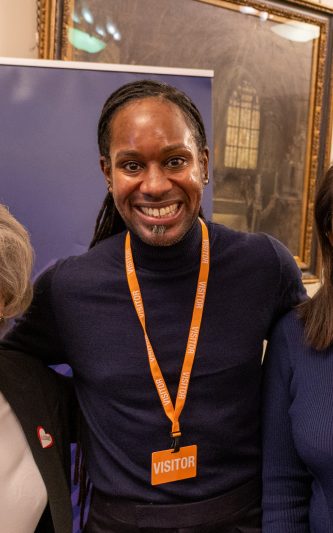
When Jason Arday was appointed Professor of Sociology of Education at the University of Cambridge in 2023, his race was central to the story.
At 37, he became the youngest Black person appointed professor at Cambridge. His story was presented as extraordinary: diagnosed with autism as a child, non-verbal until age 11 and, according to his own account, unable to read or write until 18, he had gone on to become a professor at one of the world’s most prestigious universities.
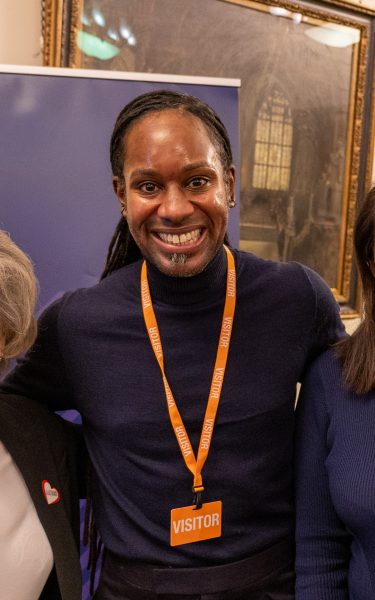
Three years later, Arday’s identity again became central to the story being told about him, but in a different way.
In July 2026, questions about plagiarism in his academic work, alongside scrutiny of claims about his personal achievements, received extensive media attention. On 5 August, after weeks of scrutiny, Arday resigned from Cambridge.
He denied plagiarism but acknowledged mistakes in his work. A previous investigation at Liverpool John Moores University did not uphold the plagiarism allegations, attributing the issues to “honest and reasonable error”. Cambridge had begun a fresh investigation after receiving new information.
Nine days after his resignation, Arday was found dead at his home in Battersea, aged 41. An inquest into his death has since been opened.
His death intensified an already growing debate about the coverage: its scale, the way the allegations had expanded into other areas of his life, and the extent to which race shaped how his case was understood.
The central question is whether the reporting became disproportionate and whether racial undertones affected its framing.
Legitimate scrutiny, or does the story become bigger than the allegations?
Academics should be accountable for the integrity of their research. Questions about plagiarism, inaccurate claims or academic credentials are legitimate subjects for journalism.
Arday was also a prominent public figure whose biography had formed an important part of his public profile. Reporting discrepancies in that biography was therefore not inherently unreasonable.
But the story quickly became about more than Jason Arday. It became a wider argument about merit, race and DEI.
The plagiarism allegations that drove much of the coverage were publicised by Nathan Cofnas, an American academic who describes himself as an advocate of “race realism” and who has been a vocal opponent of diversity, equity and inclusion policies.
Cofnas had previously written that, in what he regarded as a meritocratic system, Black people would “disappear from almost all high-profile positions outside of sports and entertainment”. He had also characterised Arday as “just another DEI hire”.
Cofnas’s association with Emmanuel College, Cambridge, was terminated in 2024 following controversy over his writings on race. He subsequently joined Ghent University in Belgium as a postdoctoral researcher. Reuters reported that Emmanuel College ended its association with Cofnas after controversy over his writings about race. Cofnas says he is not racist and remains in a legal dispute with the college.
Cofnas’s views do not determine the validity of the evidence he presented against Arday, which stands or falls on its own merits. They are relevant, however, to how the allegations became connected to a much broader debate about race and DEI.
As the story developed, scrutiny of particular passages in Arday’s work increasingly sat alongside arguments about whether diversity initiatives allowed supposedly underqualified Black people to occupy positions they had not earned.
When one Black professor becomes a test of DEI
Arday’s appointment was widely reported as a milestone for representation at Cambridge. Black academics remain significantly underrepresented at the highest levels of British universities, with Black professors accounting for around 1 per cent of the UK professoriate.
Race was therefore already part of the public narrative surrounding Arday’s appointment. Once questions were raised about his academic record, it began to feature in a different argument.
Questions about Arday’s academic work increasingly became entangled with a broader debate about whether his career represented a failure of DEI.
In that framing, the alleged failings of one Black academic could be used to question diversity policies more broadly. Arday was no longer discussed solely as an individual professor facing allegations about his work. His career was being made to carry implications for who deserved to occupy elite academic positions.
White academics accused of misconduct may face intense scrutiny, but their cases rarely carry the additional burden of being used to assess whether white people deserved to be appointed in the first place.
A media pile-on?
Following Arday’s death, criticism increasingly turned towards the intensity of the coverage itself.
More than 30,000 people reportedly attended a vigil in Trafalgar Square. Speakers accused parts of the British press of treating Arday unfairly. Cambridge chancellor Chris Smith subsequently described what happened as a “racist feeding frenzy”.
There have also been attempts to quantify the volume of reporting about Arday.
NewsCord conducted an analysis of national media coverage and counted 229 substantive articles about Arday in 22 days, between 24 July, when the allegations entered the mainstream press, and the afternoon of 14 August, when he was found dead.
Most strikingly, 188 of those articles appeared in the nine days between Arday’s resignation and his death.
That amounts to an average of almost 21 articles every day.
NewsCord found that The Times/Sunday Times published 41 articles during the wider 22-day period, while the Daily Mail/MailOnline published 37. Its analysis also counted 18 from The Guardian and 11 from the Daily Express.
A count of articles cannot establish whether individual reports were fair or accurate, but it does show the intensity of attention Arday was receiving.
When Arday resigned on 5 August, he said he had reached “the limits of what any person should reasonably be expected to endure”.
He referred in his resignation statement to relentless accusations, speculation and public commentary and the toll they had taken on him and those close to him.
The nine days after that statement became the most intensive period identified by NewsCord, with 188 articles published before his death. Reuters has separately reported that Arday repeatedly said the public attacks were taking a toll on him and his family.
The coverage had also expanded considerably beyond the original plagiarism allegations.
NewsCord’s chronology identifies 1 August as an important shift, when The Guardian published an investigation into Arday’s biographical claims. From there, reporting increasingly encompassed his childhood, autism, personal life, charitable claims, memoir and family alongside his academic record. Reuters similarly describes the plagiarism allegations as attracting “huge media coverage” that led to scrutiny of Arday’s career, personal life and medical conditions.
By the time Arday resigned, scrutiny had moved beyond his published academic work and into his childhood, health, family and personal history. It continued at considerable intensity after he publicly said he had reached the limits of what he could endure.
For newsrooms, this raises an issue of proportionality. The public interest in investigating allegations against a prominent academic is clear. Less clear is how many successive stories, and how much investigation into the wider details of an individual’s life, continue to serve that public interest.
Arday’s race adds another dimension to that assessment. His appointment had already made him a highly visible figure in debates about representation at elite universities, and critics of DEI later used his alleged misconduct as evidence for a broader argument about merit.
Cofnas made that connection explicit when he described Arday as “just another DEI hire”.
The connection between Arday’s individual conduct and DEI gave the allegations significance beyond the academic misconduct itself. His credibility could now be discussed alongside the credibility of policies designed to increase representation in institutions where Black academics remain significantly underrepresented.
There is no direct comparison that can show how the British press would have treated a white Cambridge professor facing the same allegations. What can be examined is the additional meaning attached to Arday’s case. His alleged failings were repeatedly used as evidence in an argument about race, diversity and merit in a way that the misconduct of a white academic would be unlikely to become evidence about white academics collectively.
Racialised coverage does not require racist language.
Racial bias in media coverage is not always identifiable through an explicitly racist headline or slur. It can emerge through patterns of coverage: the prominence given to particular details, repetition across successive stories, the voices used to interpret events and the wider meaning attached to an individual’s actions.
This has been part of previous debates about the British press and race. Coverage of Meghan Markle provides one example, although the circumstances are very different from Arday’s.
In a Press Gazette survey of 721 journalists following Meghan and Prince Harry’s interview with Oprah Winfrey in 2021, half of respondents said they had seen UK media coverage of Meghan that they considered racist in tone or presentation. Among Black journalists surveyed, the figure was 87 per cent.
The survey is useful here because respondents were asked about tone and presentation, rather than simply whether explicitly racist language had appeared. The same broader understanding of framing is relevant to the discussion surrounding Arday.
What exactly are we scrutinising?
Jason Arday was not above scrutiny because he was Black.
Questions about plagiarism are important, especially in our digital age. Questions about academic standards matter. Journalists should investigate powerful institutions and the people working within them.
But scrutiny of Arday’s work and scrutiny of what his existence supposedly demonstrated about DEI were never the same thing.
A Black academic who had once symbolised progress became, for some, symbolic of the supposed dangers of diversity. His individual credibility became entangled with a larger argument about whether people from underrepresented backgrounds were being given opportunities they had not earned. The ending matters because the story was never only about one man; it was also about how his case framed a wider debate.
Meanwhile, the academic whose accusations helped propel that debate faced questions within his own university about his expertise, appointment and views on race.
After Arday’s death, Ghent University suspended Cofnas as a precaution while it opened a disciplinary investigation. The university has since allowed him to resume academic work, but only remotely and without teaching while that investigation continues. Cofnas has said the investigation concerns possible discrimination against Arday.
Those questions do not absolve Arday of legitimate scrutiny. They do, however, make the asymmetry difficult to ignore.
Arday’s academic record, credentials, childhood, medical history and personal claims became subjects of intense public examination. His alleged shortcomings were then incorporated into a wider argument about whether diversity had allowed him into a position he did not deserve.
The man who helped propel those allegations was himself a controversial academic whose previous Cambridge college had severed its association with him over writings on race and whose current university subsequently opened disciplinary proceedings concerning him.
None of these answers whether every allegation made against Arday was justified. Nor does it establish that every journalist who covered him was motivated by racial prejudice.
But perhaps those are not the only questions the media should be asking.
If legitimate scrutiny produced 229 articles in 22 days, including 188 after the subject had publicly said he had reached the limits of what he could endure, then proportionality deserves scrutiny too.
And if the alleged failures of one Black professor could so readily become evidence in a wider case against DEI, while his race remained central to how both his rise and his fall were understood, then it is reasonable to ask whether race helped determine not only how Jason Arday became a story, but why the story became so big.