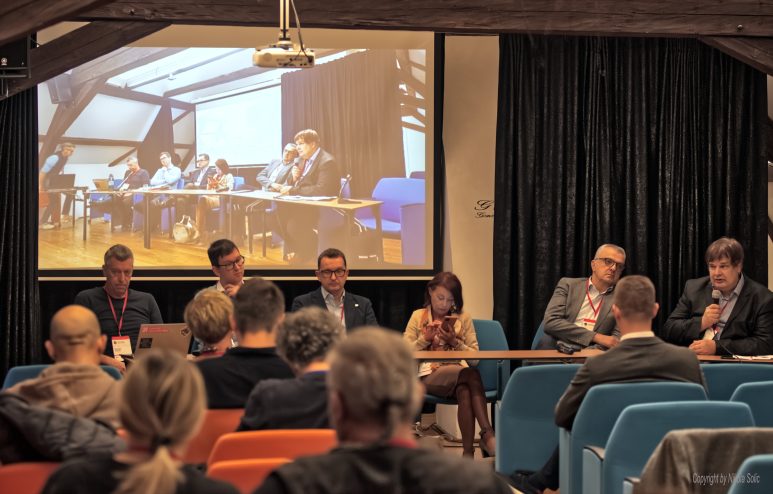
MDI joined other organisations at the Varaždin Media Fest in October to call for authorities in Serbia and across Europe to respect freedom of the press:
Dangerous political pressure on independent media and threats to journalists’ safety have intensified in Serbia ahead of elections. But pressure on journalists is not confined to Serbia: across Southeast Europe, they face political pressure, economic coercion, concentrated media ownership, hostile rhetoric, threats and violence.
Journalists from 16 countries warn of increasing pressure on media freedom in Serbia
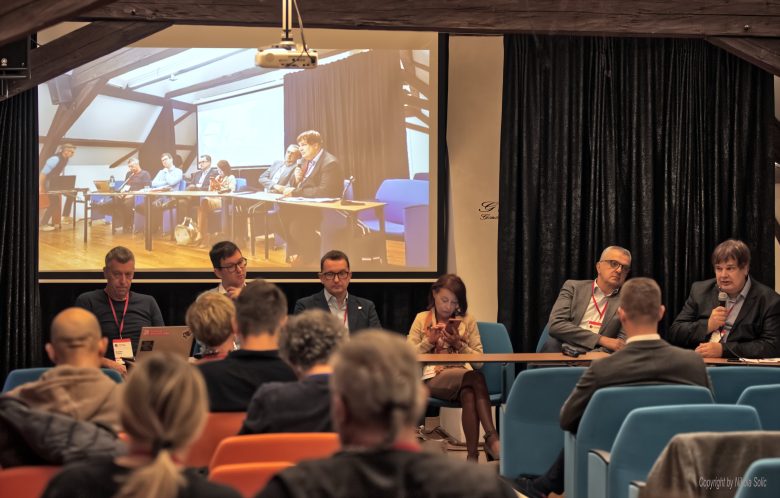
We, journalists and media workers from 16 countries gathered at the Varaždin Media Fest, an international multimedia journalism festival held on October 9 and 10, 2026, in Varaždin, express our deep concern over the continued deterioration of media freedom and freedom of expression in Serbia, particularly in the run-up to the parliamentary elections on October 25.
Threats to independent journalism are not confined to Serbia. The evidence is extensive and compelling. Serbia is entering these elections with a media landscape in which the ruling authorities and President Aleksandar Vučić enjoy absolute dominance. The public broadcaster’s news programmes devote a disproportionate share of their coverage to the political activities of the ruling majority, while television stations and tabloids close to the authorities almost continuously broadcast and amplify government messages. A striking example of this concentration of media power was the simultaneous broadcast of Vučić’s speech from Jagodina by as many as 20 television channels.
At the same time, some of the few major media outlets that consistently provide critical and independent reporting are facing unprecedented pressure. Developments involving Adria News Network and the media outlets under its control have raised serious concerns about the future editorial independence of N1, Nova and other important newsrooms. Editorial dismissals, attempts to impose journalists on newsrooms without the consent of their editors, and the cancellation of 24 Minutes with Zoran Kesić, one of Serbia’s best-known satirical programmes, have intensified fears that another crucial space for independent and critical voices is gradually being closed off.
These developments are unfolding at a time when REM, Serbia’s main electronic media regulator, is effectively paralysed. According to independent election observers, the body has not adopted a single decision in the past 22 months. This institutional failure has allowed a severe imbalance in political representation and media pluralism to persist precisely when an independent regulator is most needed.
Growing Pressure Ahead of Elections in Serbia
The pressure extends beyond issues of media ownership and regulation. Journalists reporting on protests face intimidation, threats and physical attacks. Even more alarming is the documented evidence of invasive digital surveillance. Amnesty International has established that Serbian journalists have been targeted with Pegasus spyware and documented how Serbian authorities used forensic technology and the NoviSpy spyware against journalists, activists and other members of civil society.
Considered individually, each of these developments would be cause for serious concern. Taken together, they reveal something even more dangerous: a media system in which political power increasingly determines who can be heard, which voices can reach the public and how much space remains for questioning those in power. This is incompatible with the conditions necessary for genuinely democratic elections.
We therefore call on the Serbian authorities to end all pressure on journalists and independent media, guarantee the safety of journalists in the field, and investigate attacks against them. We also urge them to ensure REM’s genuine independence and uninterrupted functioning, stop the misuse of state institutions and surveillance technologies against journalists and civil society, and guarantee equal access to the media for all political actors during the election campaign.
We further call on the European Union, the Council of Europe, the Organization for Security and Co-operation in Europe (OSCE) and Serbia’s other international partners not to treat media freedom in Serbia as a secondary issue, but as a fundamental indicator of the state of the country’s democratic institutions.
The citizens of Serbia must be free to make their own political choices on October 25. For that choice to be meaningful, they must also be free to receive information from media outlets that can report, investigate, question and criticise without political interference, intimidation or fear.
The extent of political control over the media and the systematic narrowing of the space for independent journalism in Serbia should concern everyone who cares about democratic governance in Europe.
Serbia has become an exception, but journalists across the region also face political pressure, economic coercion, concentrated media ownership, hostile rhetoric, threats and violence.
Political Power Through Media Ownership
In Turkey, for example, the physical safety of journalists is seriously threatened, particularly for those who expose political corruption and cronyism and draw attention to repression targeting secular, Kurdish, LGBT and other minority groups. For 25 years, online censorship has systematically affected investigative journalists and independent online outlets such as T24 and Bianet, whose stories and content face restrictions on a daily basis.
As the popularity of President Erdoğan’s administration declines, pressure and repression targeting critical and investigative journalism become increasingly widespread. A politicised judiciary uses accusations such as “insulting the president” and “spreading disinformation” as weapons against journalists. As many as 15 journalists were imprisoned during 2026.
In Slovenia, pressure on media independence has been mounting since the national-conservative Slovenian Democratic Party (SDS), led by Prime Minister Janez Janša, returned to power. The public broadcaster, Radiotelevizija Slovenija (RTV Slovenija), faces the prospect of losing revenue from the mandatory licence fee and switching to funding from the state budget.
It is not yet known whether this will happen, given that the results of the referendum held on Sunday remain unofficial and highly uncertain.
Such a change would open the door to greater government influence not only over funding, but also over programme content and journalistic work. Meanwhile, N1 Slovenia has also come under pressure. Following an attempted takeover by foreign investor Pedro Vargas David, who is close to Vučić, as part of a broader deal that also affected N1’s operations in Serbia and Croatia, the outlet was left without a director or editor-in-chief, and numerous journalists resigned.