By Tanya Sakzewski
The landmark decision by the International Court of Justice (ICJ) finding Myanmar responsible for committing genocide against the Rohingya minority has highlighted the role of hate speech in the targeting of a minority group.
The ICJ found there was “overlap” between an “anti-Rohingya hate speech campaign” and the clearance operations that made violence against the population more likely.
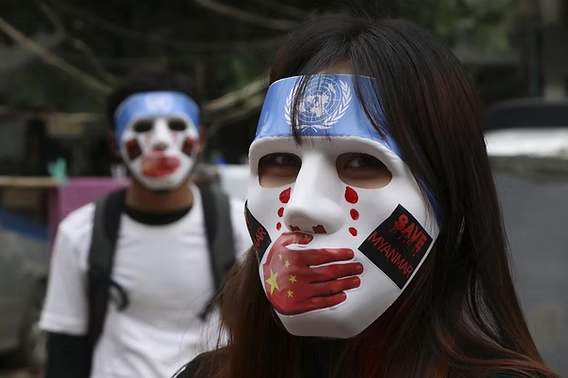
The case, brought by the Republic of The Gambia, centred on what was called ‘clearance operations’ by security forces in Rakhine State, where many Rohingya lived, following attacks by Rohingya insurgents.
As a result of the operations, approximately 87,000 Rohingya were displaced and fled to Bangladesh in 2016 and more than 700,000 fled in 2017.
The role of hate speech
“The Court recalls that the hate speech organised and disseminated by the Myanmar military in the lead-up to and during the clearance operations portrayed the Rohingya both as subhuman and as a violent threat, thus contributing to a climate conducive to targeting a group for destruction.”
The hate speech and its spread across social media were the subject of numerous investigations and reports.
A 2022 report by Amnesty International found that “Facebook owner Meta’s dangerous algorithms and reckless pursuit of profit substantially contributed to the atrocities perpetrated by the Myanmar military against the Rohingya people in 2017”.
According to The Social Atrocity: Meta and the right to remedy for the Rohingya, Meta knew or should have known that Facebook’s algorithmic systems were ‘supercharging the spread of harmful anti-Rohingya content in Myanmar’, but the company still failed to act.
In the months and years prior to the crackdown, Facebook in Myanmar had become an echo chamber of anti-Rohingya content. Actors linked to the Myanmar military and radical Buddhist nationalist groups flooded the platform with anti-Muslim content, posting disinformation claiming there was going to be an impending Muslim takeover, and portraying the Rohingya as “invaders”.
The Independent Investigative Mechanism for Myanmar, created by the United Nations Human Rights Council in 2018 to collect and analyse evidence of the most serious international crimes and other violations of international law committed in Myanmar since 2011, made two of its reports public.
One report detailed the Myanmar military’s covert Facebook network that systematically distributed hate speech against the Rohingya at the time of the 2017 clearance operations.
The hate speech report analysed content posted on 43 Facebook Pages between July and December 2017. Facebook removed all of the Pages in 2018, either because they were connected to individuals or organisations that Facebook banned from the platform or because they engaged in “coordinated inauthentic behaviour” in violation of the company’s misrepresentation policies.
The report identified more than 10,000 posts on these Pages that the Mechanism considered hate speech.
The posts promoted various narratives that the Rohingya were a threat to Myanmar’s other ethnic groups and to Buddhism.
One such post received more than 200 comments calling for Rohingya to be shot, killed, or permanently removed from Myanmar.
The Mechanism’s analysis concluded that these seemingly unrelated Pages, some devoted to celebrity news and popular culture, were part of a network with clear ties to the Myanmar military. These Pages often shared creators, administrators, and editors and regularly posted material using the same IP addresses used by the Myanmar military. Identical material was often posted on multiple Pages in this network, sometimes within minutes.
The report concludes that at the very time of mass violence against the Rohingya, the Myanmar military was carrying out a coordinated hate speech campaign against the group.
Hate speech still a problem
On the eve of the ICJ ruling, the New Mandala, which covers Southeast Asia, wrote that the hate speech and intimidation that preceded the 2017 violence is “surging in Southeast Asian countries home to Rohingya”. The article includes examples of online hate against members of the Rohingya community in Indonesia, Malaysia and India.
The piece calls on states that intervened before the ICJ to press Meta and other platforms to “treat the weeks around the ruling as a period of heightened risk, as they do with elections”.
“Other gaps in protection will take longer to close. The intervening states and governments in the region should fund independent monitors who can flag dangerous content early, and press platforms to give them the data access to do so.”
The ICJ’s decision on 19 November that Myanmar’s authorities violated the 1948 Genocide Convention marks the first time an international court has declared a nation responsible for genocide.