By a Cameroonian Entertainment & Investigative Journalist (Name withheld for safety reasons)
When international media focus on Cameroon, they often reduce the situation to a binary civil war, a cold clash between a regular army and separatist groups. But this surface-level reading is an insult to the reality on the ground. It conceals the root causes, ignores the spiral of violence, and renders invisible the true victims: the civilian population, taken hostage at the heart of a multifaceted chaos.
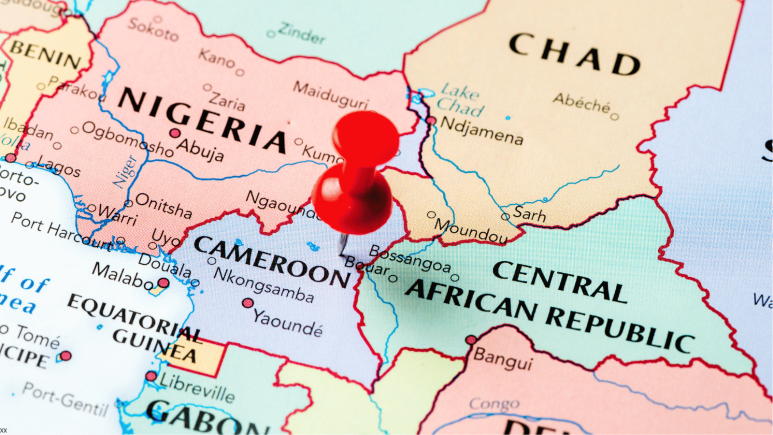
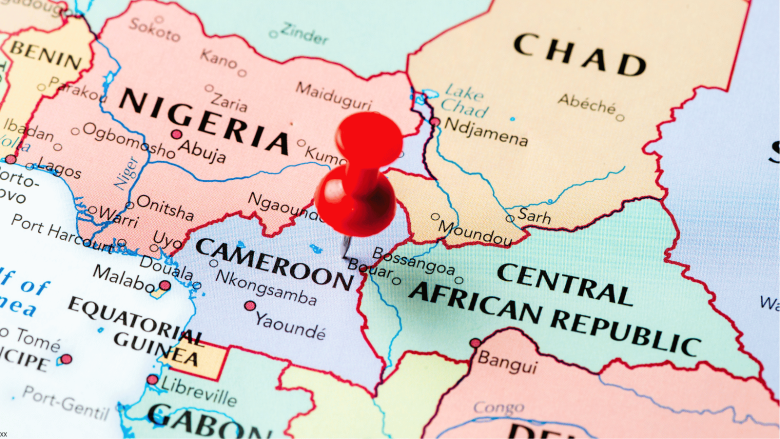
To understand this conflict, the general reader must first understand the geopolitical and historical landscape of Cameroon, a Central African nation ruled for over four decades by the 93-year-old President Paul Biya, whose regime remains a key strategic ally to Western powers like France.
Colonial legacy and the media
The current crisis is deeply rooted in the divisive legacy of colonialism, which split the country into French and British mandates after World War I. Decades later, this historic fault line has resulted in a severe systemic imbalance.
The Anglophone community represents approximately 20 per cent of the country’s total population, historically concentrated in the North-West and South-West regions. Yet, despite the official bilingualism enshrined in the Constitution, the vast majority of institutional information, political decisions, and national media coverage flows exclusively in French from the dominant Francophone authorities, effectively silencing and erasing the reality of this minority.
This erasure is deeply embedded in Cameroon’s media ecosystem. The state broadcaster, CRTV, and the major official newspapers are under the strict control of the Francophone central government. Out of dozens of private and public television channels broadcasting nationwide, only a tiny fraction offer regular programming in English.
Anglophone news broadcasts are often relegated to secondary time slots or treated as a mere word-for-word translation of the official Francophone government narrative. While courageous local Anglophone journalists and community radio stations do exist in the North-West and South-West, they operate under constant financial asphyxiation, heavy state surveillance, and direct physical threats. Consequently, the local population has completely disconnected from national state media, perceiving it as a one-sided propaganda tool.
To find out what is actually happening at the end of their street, these communities have no choice but to rely on WhatsApp groups, encrypted networks, and diaspora managed social media pages – an environment that becomes both a vital survival channel for underground reporting and a fertile ground for unverified rumours.
Lessons for Western journalists
The biggest mistake of Western journalism is trying to tell this story from the safety of Europe or from comfortable hotel rooms in the capital, Yaoundé, far from the conflict zone. They rely on official press releases and remote experts, completely ignoring the journalists who are actually on the ground. We are the ones who go out there. We are the ones who touch the reality with our own fingers, who look into the eyes of the victims, and who risk our lives to report the truth.
This remote approach creates a severe distortion in global news coverage, leaving civilian voices entirely missing. Because international correspondents rarely cross the invisible border into the conflict zones, there is a total drought of English-speaking local experts, human rights defenders, or ordinary citizens on international broadcasts.
When experts are interviewed, they are almost exclusively capital-based, French-speaking analysts aligned with institutional perspectives. The psychological and social impact of this media isolation on the Anglophone population is devastating. It breeds a profound sense of institutional abandonment and collective trauma.
Impact of “missing voices” in media on communities
By seeing their daily suffering, their dead, and their displaced completely ignored by both national and international cameras, these populations feel erased from human history. This total media blackout directly feeds the conflict: when a community realises that its peaceful cries and objective suffering remain invisible to the world, the ground becomes dangerously fertile for extremist rhetoric and armed radicalisation.
This is not a theoretical debate. On the ground, truth carries a deadly price tag. My colleagues have paid that ultimate price.
Journalists like Samuel Wazizi, who disappeared into custody and died for his reporting on the crisis, or Martinez Zogo, who was brutally murdered for exposing corruption, and so many others whose names never make the international headlines. While correspondents report from a safe distance, local truth-tellers are systematically silenced, tortured, or killed. Yet, our voices and our sacrifices are entirely left out of the global narrative.
Roots of the current conflict
To understand the current tragedy, one must go back to the genesis of the crisis in October 2016. In the beginning, there was no question of weapons or war. The movement was peaceful, led by teachers and lawyers from the Anglophone regions. They were protesting for a legitimate cause: defending their educational and legal systems against growing marginalisation. The breaking point lay in the state’s brutal repression. This initial violence closed the door on politics and opened the door to weapons, transforming social demands into an open armed conflict: the “NOSO” (North-West and South-West) crisis.
Today, the conflict has mutated into an uncontrollable monster where the civilian population is caught in a vice. Separatist groups, who initially claimed to defend local populations, have partly transformed into forces of terror. In this lawless zone, abduction has become an industry. It is now enough to be a simple civil servant of Anglophone origin to become a primary target for captors demanding exorbitant ransoms. Schools are closed, villages are deserted, and those who remain live under the dual threat of state suspicion and militia violence.
This ordeal is made even worse by the country’s geographical and geopolitical isolation. The catastrophic state of the road infrastructure acts as an invisible blockade. These broken roads prevent the wounded from reaching hospitals, cut off food supplies, and block any possibility of escape for civilians.
Added to this is a regional destabilisation that simplistic frameworks refuse to integrate, with foreign interference, arms trafficking, and the constant pressure of the Boko Haram nebula in the Far North.
The Cameroonian tragedy is not a simple linguistic war. It is the story of a peaceful people whose aspirations were stifled by repression and then confiscated by armed gangs. As long as international correspondents content themselves with relaying official stories from afar, they participate, by proxy, in the law of silence that condemns millions of voices to mutisme. The role of journalism is not to simplify chaos from a distance, but to listen to those who have touched the truth on the ground and paid for it with their blood.
The views and opinions expressed in this article are solely those of the author and do not reflect the official policy or position of the Media Diversity Institute. Any questions or comments should be addressed to the editor at [email protected] of the Media Diversity Institute (MDI).