By Tanya Sakzewski
It is more than a year since Syria’s new regime took power, and some of the country’s minorities are still fighting to be heard in the media.
The end of 50 years of Assad rule in December 2024 brought with it hope for a new future and media freedom. Despite the media enjoying more freedom now than in the past half-century, there are still major concerns about safety, free speech and finding ways to break through the hate speech and division in one of the Middle East’s most diverse countries.
Just how free is the media in Syria?
Reporters Without Borders says journalists’ newfound freedom remains fragile due to ongoing political instability and mounting economic pressures.
The Committee to Protect Journalists (CPJ) says the foundations of genuine press freedom are not yet secure.
The country is still fractured as President Ahmed al-Sharaa’s government seeks to integrate multiple groups seeking regional autonomy. CPJ wrote that since Assad’s ouster from power, media killings, injuries, detentions, and assaults stem from political divisions. It found that violations are often carried out by regional militias, rather than government forces.
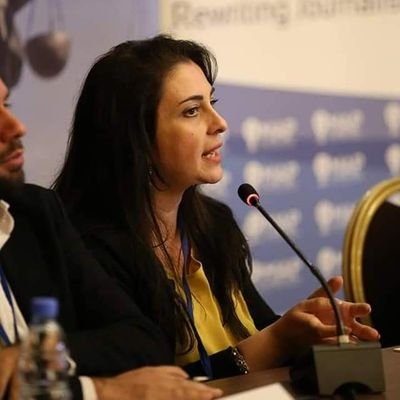
Award-winning Syrian journalist Mais Katt told MDI in the latest episode of the podcast Diversity Matters that although the situation has changed, it is too early and difficult to pronounce that it is ‘better’ than the Assad period.
“Some people have more freedom, and other people have less. The map has changed a lot, so a lot of the people who used to be victims have now become the ‘winners’. For example, a lot of our colleagues from minorities, like the Alawite and the Druzes, are suffering; they cannot express themselves,” Katt said.
Outlook for minorities and media representation
The problem of representation and inclusion runs deeper than access to the media.
The media itself – both social and traditional platforms – are accused of inciting hate, with physical attacks on minorities often mirrored in the media.
In July 2025, UN experts sounded the alarm over attacks on Druze communities in and around Sweida Governorate, saying: “The scale of violence reported – including massacres, looting of homes, shops and livestock, and use of stolen phones for extortion – points to a targeted campaign against the Druze minority, exacerbated by incitement to hatred on media and social media platforms portraying them as Israeli allies. Druze survivors, including university students in Damascus, Homs, Aleppo and Latakia, face ongoing harassment and fear for their safety.”
Other organisations have also warned of the impact of some media coverage.
Syrians for Truth and Justice said in March 2025 that security incidents and campaigns often coincided with the widespread circulation of misleading and unreliable news across social and traditional media platforms.
PEN International said in February 2026 that systematic persecution of minorities, rising hate speech, and attacks by government forces and affiliated militias have created a suffocating environment for writers. “PEN International is gravely concerned about the freedom of expression environment in Syria amid the systematic persecution of minorities and entrenched impunity for perpetrators of violence throughout the first year under the transitional government.”
Hate speech and media responsibility
In January 2026, journalists and activists warned of the escalation of inciting rhetoric by the media of the interim government and some Arab media outlets against the regions of North and East Syria, and their role in deepening societal divisions. They called for adherence to journalistic ethics and for halting incitement that threatens civil peace and increases the suffering of civilians.
Mais Katt told Diversity Matters that journalists from minority communities in areas like Sweida feel under pressure. “There is more pressure on what they can say, what they can write, and how they appear on social media. All these things are challenging and new, and it has been going on for almost a year.”
Katt says another challenge is self-censorship, which is a huge problem, with reporters facing attacks and security challenges.
She says there is space in the media environment for journalists to push for change, but not everyone is “willing to jump into the space because it can be dangerous”.
Dangerous work
The Assad regime maintained strict control over the press, and speaking against the authorities came at a huge cost.
A report by the Syrian Network for Human Rights released in October 2025 highlighted the grave dangers journalists faced during years of conflict. Between March 2011 and June 2015, the organisation’s data revealed 725 media workers were killed, 559 of them by the Assad regime forces. More than 480 media workers remain forcibly disappeared.
The new government has suspended the Assad era’s press laws, which functioned more as punitive tools than protections.
Katt says the media and civil society need to strengthen the media ecosystem. “There is a space now that we need to use to make it (the media) bigger and stronger. So, if the authorities start pushing us, then at least we have a space that we created.”
Women journalists
In order to strengthen the media in Syria, Katt and her organisation are working with women and minority journalists from across the country.
“We are working with independent media as much as we can and working with partners that support the same values that we have.”
She says the media environment for women journalists is “quite challenging”. Despite that, Katt says women are returning to the media, and there is interest from younger women to join the field.
As well as training women journalists in Syria and across the region, Katt is a founder of Women Who Won the War. It provides a platform for women reporters to showcase their work and present stories and in-depth investigations focusing on issues including equality, migration, climate, conflict, and corruption.
The future
Despite more women entering the field, the outlook for freedom of the media and the inclusion of minorities remains challenging.
With ISIS threatening to continue attacks in the country, the safety of journalists continues to be a major concern. The Syrian Journalists’ Association and the International Federation of Journalists recently called for journalists’ protection to be a national priority.
To hear Mais Katt’s outlook for the media and more about her work in the country, listen to our interview with her on Diversity Matters on Spotify.