By Abdullahi Jimoh
President Trump is threatening to take military action against Nigeria, accusing authorities of not doing enough to protect Christians from violence. He’s said: “Christianity is facing an existential threat in Nigeria” and “radical Islamists are responsible for this mass slaughter”.
His comments and actions follow those of Ted Cruz, the senator representing Texas, who with a few other US lawmakers nearly set Nigeria’s public sphere alight in October with claims of a “Christian genocide”.
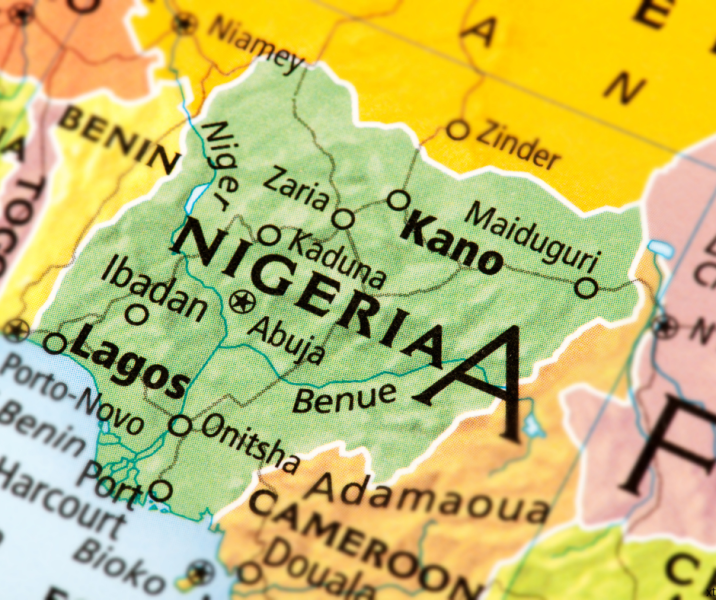
The senator introduced a bill to add Nigeria to a list of nations, including Pakistan, Iran, Sudan, Afghanistan, Saudi Arabia, China, Eritrea, Myanmar, Tajikistan, and Turkmenistan, categorised as “Countries of Particular Concern” for religious violations under the International Religious Freedom Act of 1998. He also proposed sanctions against Nigerian officials.
Several American television networks amplified his claim, featuring interviews with Christian politicians and advocacy figures. Some of these narratives were further shared on social media platforms such as X by public figures like Nancy Mace and Riley Moore, reinforcing a perception of widespread, documented persecution of Christians in Nigeria.
Cruz’s assertion, however, did not arise in isolation. It was heavily influenced by what he and others have read, watched, and heard from both local and international media outlets, coverage that often departs from factual context. The controversy resurfaced after CNN commentator Van Jones and comedian Bill Maher discussed the issue on Maher’s HBO show, Real Time with Bill Maher, on September 26.
“I’m not a Christian, but they are systematically killing the Christians in Nigeria. They’ve killed over 100,000 since 2009. They’ve burned 18,000 churches. These are the Islamists, Boko Haram,” Maher said during the show. “This is so much more of a genocide attempt than what is going on in Gaza. They are literally attempting to wipe out the Christian population of an entire country.”
Maher’s statement quickly spread across the internet, echoed by faith-based media outlets, blogs, and advocacy pages, most of which failed to verify the authenticity of his figures. For example, the Catholic News Agency published a story headlined “Top US satirist draws attention to the plight of Nigerian Christians,” further amplifying the unverified claims. The Nigerian government later dismissed the allegations in a rejoinder published by Al Jazeera.
Media Bias
An article from the University of Rochester’s news centre quoted a study that analyzed 1.8 million news headlines from major U.S. outlets between 2014 and 2022. It found that domestic politics and social issues have become increasingly polarised along ideological lines. The research, led by Professor Jiebo Luo, used machine learning to examine headline trends and presented its findings at the MEDIATE Workshop of the International AAAI Conference on Web and Social Media.
The findings reflect what communication scholar Biagi Shirley describes as “agenda setting” the process through which the media may not tell audiences what to think, but often determine what they think about. In this case, repeated framing of violence in Nigeria as religiously motivated has shaped international perception, despite the country’s complex mix of political, economic, and environmental drivers of conflict.
In journalism schools, reporters are taught that balance is a cornerstone of credible reporting. Yet, in both Nigerian and Western media, particularly among faith-based outlets, this principle is increasingly neglected. Reports on sensitive issues like religion are often influenced by sentiment, with foreign correspondents lacking local context and local reporters shaped by bias. The result is a distorted narrative that heightens polarisation in a fragile society.
Precedent Sensational Headlines
Sensationalism in reporting Nigeria’s insecurity crisis is not new. Over the years, several headlines have contributed to negative stereotypes, particularly against minority Muslim groups such as the Fulani. In 2011, the BBC published a story titled “Nigeria: Sultan of Sokoto condemns Boko Haram crackdown”. The report circulated widely on social media alongside a false quote attributed to the Sultan “You fight Almighty Allah when you fight Boko Haram” which was later debunked by fact-checkers.
In 2022, America Magazine ran a feature titled “For Nigerian Christians, allegations of blasphemy against Islam can be a death sentence,” while Al Jazeera covered the same incident with a more neutral headline: “Mob kills student over blasphemy in northern Nigerian college.” Similarly, Sahara Reporters published an inflammatory headline: “Don’t vote for politicians who will attack or kill bandits,they’re our warriors in the forest,” allegedly quoting an Islamic cleric.
Such language reinforces harmful narratives and oversimplifies complex realities, portraying entire religious groups as aggressors or victims.
Fact-Checking the Claims
Claims of a “Christian genocide” in Nigeria have circulated online for years. In 2018, The Christian Post reported that 6,000 Christians mostly women and children, were killed in Nigeria, a claim later fact-checked and debunked by AFP Fact Check in 2019. In 2020, Dubawa, a Nigerian fact-checking organization, also found that many of the casualty figures frequently cited in Western media were exaggerated or unverifiable.
“Claims around religious killings, ethnic intolerance, and gender intolerance are always very sensitive,” said Philip Ajonrin, a researcher and fact-checker at Dubawa. “When many of such claims go out, they appeal to the sentiment of those who may want to exploit the situation to perpetrate evil using such figures. Therefore, peddling this ‘Christian genocide’ narrative causes more harm than good because it distracts from policies that could genuinely address Nigeria’s wider insecurity issues,” he told MDI.
The misinformation has also prompted activism abroad. For instance, a U.S.-based advocacy group, Save Nigeria Group, announced on X that it would hold a prayer and protest rally at Capitol Hill in Washington, D.C., on December 1, urging the U.S. government to take action.
Collaboration as a Solution
Experts believe that closer collaboration between conflict reporters and fact-checkers could help prevent the spread of misleading narratives.
“Conflict reporters who have access to areas where violence is happening need proper training from fact-checkers who can guide them on identifying, analyzing, and interpreting data accurately,” Ajonrin said. “This will move journalism beyond mere storytelling to investigative reporting that examines and verifies data points.”
As the debate over the alleged “Christian genocide” continues, media responsibility remains central. Balanced reporting and evidence-based verification are crucial not only to preserve accuracy but also to prevent misinformation from fuelling further division in an already fragile society.
Covering Diversity: A Resource and Training Manual for African Journalists is a tool to help strengthen professional standards and reporting practices on inter-communal, inter-faith, minority, and other diversity issues in Nigeria in particular, but also elsewhere on the continent. You can find it on our website.
The views and opinions expressed in this article are solely those of the author and do not reflect the official policy or position of the Media Diversity Institute. Any question or comment should be addressed to [email protected] of the Media Diversity Institute (MDI).