By Anthea Kasonga
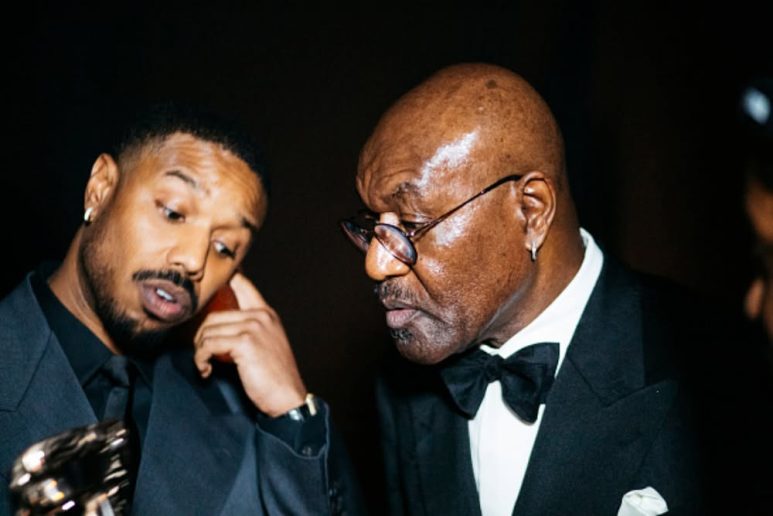
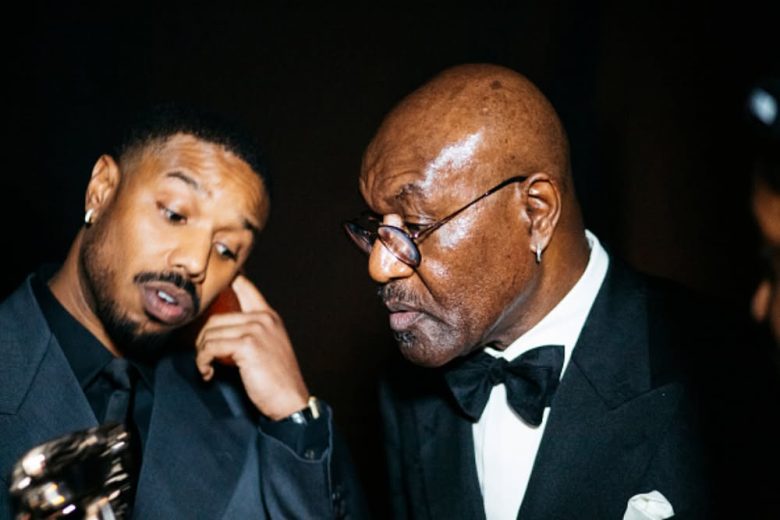
During the 2026 EE BAFTA Film Awards, broadcast on a delay by the BBC, a racial slur was audibly shouted from the audience while Black American actors Michael B. Jordan and Delroy Lindo were presenting an award on stage.
The slur came from John Davidson, whose Tourette’s syndrome includes involuntary vocal tics. The BBC later apologised for failing to edit the moment out of its delayed broadcast, stating that the language arose from involuntary symptoms and was not intentional.
That explanation is important. Tourette’s syndrome is a neurological condition, and vocal tics are, by definition, outside of an individual’s control. However, the absence of intent does not diminish the impact. It is in that gap, between intent and impact, that the role of media institutions becomes most visible.
A failed attempt at an inclusive response
The response during the ceremony, delivered by host Alan Cumming, focused on explaining Tourette’s syndrome and asking audiences for understanding. This framing placed disability inclusion at the centre of the moment. What it did not fully do was acknowledge, in equal terms, the harm of a racial slur being directed at two Black actors on a global stage.
A person can have no control over what they say, and the words spoken can still carry a long history of violence and humiliation for those on the receiving end.
And then came the statement. Cumming closed with: “We apologise if you were offended.” If. In 2026. To people who had a racial slur directed at them on a stage they were invited to stand on.
Every word of a crisis statement is a choice. That “if” is not accidental. It shifts the weight of the harm onto the people who experienced it, framing their reaction as a matter of personal sensitivity rather than a legitimate response to something that should never have reached air.
Public reactions reflected that tension. Actor Wendell Pierce described the incident as “infuriating”, arguing that the response should have centred on those affected. Jamie Foxx similarly called the slur “unacceptable”. Their responses did not dispute the nature of Tourette’s syndrome. They questioned the adequacy of the response to racial harm.
What makes this harder still is where it lands for Black audiences. Writing in The Guardian, journalist Nadine White described being “disturbed, but not shocked”, naming that absence of shock as part of the harm itself. This reflects what Mary Frances Winters defined as Black fatigue, the cumulative physical and psychological toll of living in a racist society. Related to this is racial battle fatigue, a concept developed by William A. Smith to describe the ongoing impact of repeated exposure to racial stress. When a racial slur is broadcast nationally and the institutional response is conditional, it does not just fail in the moment. It adds to that cumulative weight.
Editorial decisions are never neutral
The BAFTAs broadcast was not live. It aired on a delay, giving the BBC time to edit the programme before transmission.
That delay exists precisely so that editors can make decisions about what reaches audiences. In that time, several decisions were made. A joke from host Alan Cumming referencing the current American political climate — cut. Paul Thomas Anderson saying “piss” — bleeped. Filmmaker Akinola Davies Jr. closed his acceptance speech with “Free Palestine” — removed.
Yet the N-word, while two Black men were on stage — left in.
The BBC has since said the moment was not caught in time by producers. That may be the case. But the contrast raises a legitimate question about editorial thresholds and how different forms of harm are recognised and acted on.
This is not about equating a political statement with a racial slur. They are fundamentally different. But the difference in treatment shows how editorial systems operate in practice.
Inclusion cannot be selective
At the centre of this incident is a broader question about how inclusion is understood and how it intersects.
Disability inclusion was clearly prioritised in the framing of the moment. That is necessary and overdue in many spaces. But inclusion cannot come at the expense of recognising other forms of harm when they occur at the same time. A system that can accommodate one form of difference but fails to protect others in the same moment is not yet fully inclusive. It is incomplete.
The responsibility does not sit with an individual experiencing Tourette’s syndrome. It sits with the structures around them, with organisers, broadcasters, and the systems designed to anticipate and respond to risk.
It is worth asking: who was in that edit suite making those calls? Who was in the room deciding what constituted a risk worth cutting?
This is exactly why organisations like the Media Diversity Institute call for diversity in media not only on screen, but in who is shaping decisions behind it. Decision-makers who reflect the world we live in and bring lived experience are better placed to make sound judgements, identify blind spots, challenge inconsistencies, and respond in ways that reflect the complexity of the audiences media serves.
Inclusion is often framed as a goal. But moments like this show that it is also a test. Not of intent, but of systems. And in this case, those systems were not able to hold the full complexity of the moment they were responsible for broadcasting.