With the state of press freedom now classified as a “difficult situation” for the first time in the history of the RSF World Press Freedom Index, and Freedom House declaring global freedom in decline for the 19th consecutive year in 2024, it’s not surprising that this year’s DW Global Media Forum (GMF) in Bonn concluded with urgent calls to protect press freedom, strengthen digital regulation and tackle disinformation.
The urgency of addressing the multiple challenges facing the media was central to speeches and panel discussions at the forum, Breaking Barriers and Building Bridges, which brought together leading media figures from around the world.
Keeping a distance
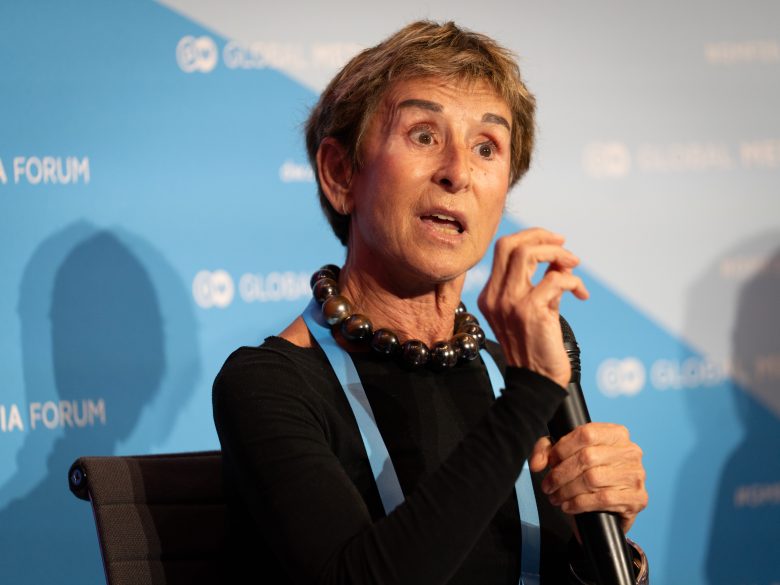
MDI Executive Director Milica Pesic reminded journalists at her panel discussion on ‘how to make journalist products more inclusive’ of the importance of keeping a “balanced distance” between themselves and the authorities. She spoke of the need for responsible journalism, that serves as a public good, to not only report what the authorities say, but also on how their actions and policies affect citizens, in particular those coming from diverse backgrounds. “That balance has been really heavily disturbed.”
Pesic referred to the Journalism Manifesto 2021 which warned that if journalism does not change or revolutionise in this respect, it will die.
Speaking about the importance of journalists holding the authorities accountable on behalf of the public, Pesic encouraged American journalists to stand up to what is happening in their country and “to fight for what they’ve been teaching us to do for decades”.
Having grown up in a Communist country and looking up to America, Pesic, a former journalist, recalled a time when many western media experts supported the fight for independent media in Serbia and the former Yugoslavia, her homeland. “They said, ‘fight for free media, stand up to your government’ and we did. Some of us paid quite heavily (for it). And now we are watching what’s happening in America and wondering what journalists are doing there. Where is the passion for freedom of the media?”
Veronika Rot, Assistant Head Access Services at RTV Slovenija, added: “I would strongly agree with this that we as journalists should be more aware of the power that we have and that we should use this power to create narratives and to create public opinion and not be just distributors of PR messages from politics or from the powerful people.”
News avoidance and the need for good storytelling
The panel also provided advice on how to tackle another major problem facing journalism: news avoidance.
Nozibele Qamngana, author, HIV activist, podcaster, speaker, and TV host, said it was essential to avoid creating fear when presenting certain stories.
Pesic agreed, saying “there is always a way to tell a story that does not cause fear or alienation”. She urged the media to be inclusive in their storytelling. “Don’t just talk about this or that community, bring members of this community into your programmes.” She called on editors and media managers to listen to members of the public they serve and include them more in their coverage.
You can watch the full panel discussion here.
Tamar Kintsurashvili was awarded the DW Freedom of Speech Award for her fight against disinformation and promoting media literacy amid threats to press freedom in Georgia. MDI will have an interview with Tamar Kintsurashvili on the website shortly.