By Anthea Kasonga
On 31 July each year, Pan African Women’s Day (JIFA) commemorates the women who fought for Africa’s liberation, organised across the continent and helped shape its political future. More than sixty years after it was first established by African women, however, the day remains relatively unknown outside the continent and Afrodescendant communities.
Discussions about African independence often focus on male political leaders such as Patrice Lumumba, Kwame Nkrumah, or Julius Nyerere. If we can easily name the men who fought for Africa’s independence, why do so few of us recall the women who stood alongside them?
Women organised resistance movements, mobilised communities, challenged colonial rule, negotiated political change, and helped shape the future of newly independent nations. Yet, many of their names are missing from the mainstream narratives of Africa’s liberation.
It was this gap in historical memory that led Geneviève Kaninda to help revive International African Women’s Day in Belgium.
Media Diversity Institute interviewed Kaninda, co-coordinator of the Collectif Mémoire Coloniale et Lutte contre les Discriminations (CMCLD), a Belgian-based pan-African, decolonial, and intergenerational collective dedicated to challenging colonial narratives, combating anti-Black racism, and promoting a fuller understanding of African history through education, public engagement, and cultural initiatives. Since 2023, the collective has organised annual JIFA commemorations in Brussels, using the day to reconnect audiences with often-overlooked histories.
A day created by African women for African women
Pan African Women’s Day traces its roots to the early years of African independence movements.
On 31 July 1962, women from across the continent gathered in Dar es Salaam, Tanzania, for the first Conference of African Women. Organised under the leadership of three prominent activists, Aoua Kéita of Mali, Jeanne Martin Cissé of Guinea and Pauline Clark of Ghana, the conference marked the beginning of a continental movement that would later take shape as the Pan-African Women’s Organisation (PAWO).
For Kaninda, this history deserves to be much better known.
“People often forget that African women were part of the independence movements.”
JIFA emerged from that political moment. It recognised African women not simply as participants in liberation struggles, but as political actors whose contribution to independence deserved to be remembered and whose voices would continue shaping the continent after colonial rule.
As countries gained independence, African women were also organising across borders, exchanging ideas and building networks that enabled their continued participation in the political, economic, and social life of newly independent nations.
Building a political language rooted in African realities
As African women organised across the continent, many also encountered women’s movements in Europe and elsewhere.
Those meetings created important opportunities for solidarity, but they also revealed significant differences in political priorities.
“There was allyship,” Kaninda explains, “but there were also tensions.”
Women worldwide were challenging patriarchal structures, but African women also faced colonialism, racial oppression, and struggles for national liberation.
“They were not only confronting patriarchy. There was also colonialism and white supremacy. Their historical and political realities were different.”
These conversations helped African women articulate political priorities grounded in their own lived realities.
Long before Kimberlé Crenshaw coined the term intersectionality, African women were already organising around the idea that gender could not be separated from colonialism, race, political sovereignty, or economic justice. Their activism anticipated what would later become central to African feminist thought: these systems of power operate together, not in isolation.
JIFA emerged from this context, reflecting the understanding that African women’s struggles were shaped by unique historical and political realities while remaining connected to broader movements for women’s rights worldwide.
Remembering what history leaves behind
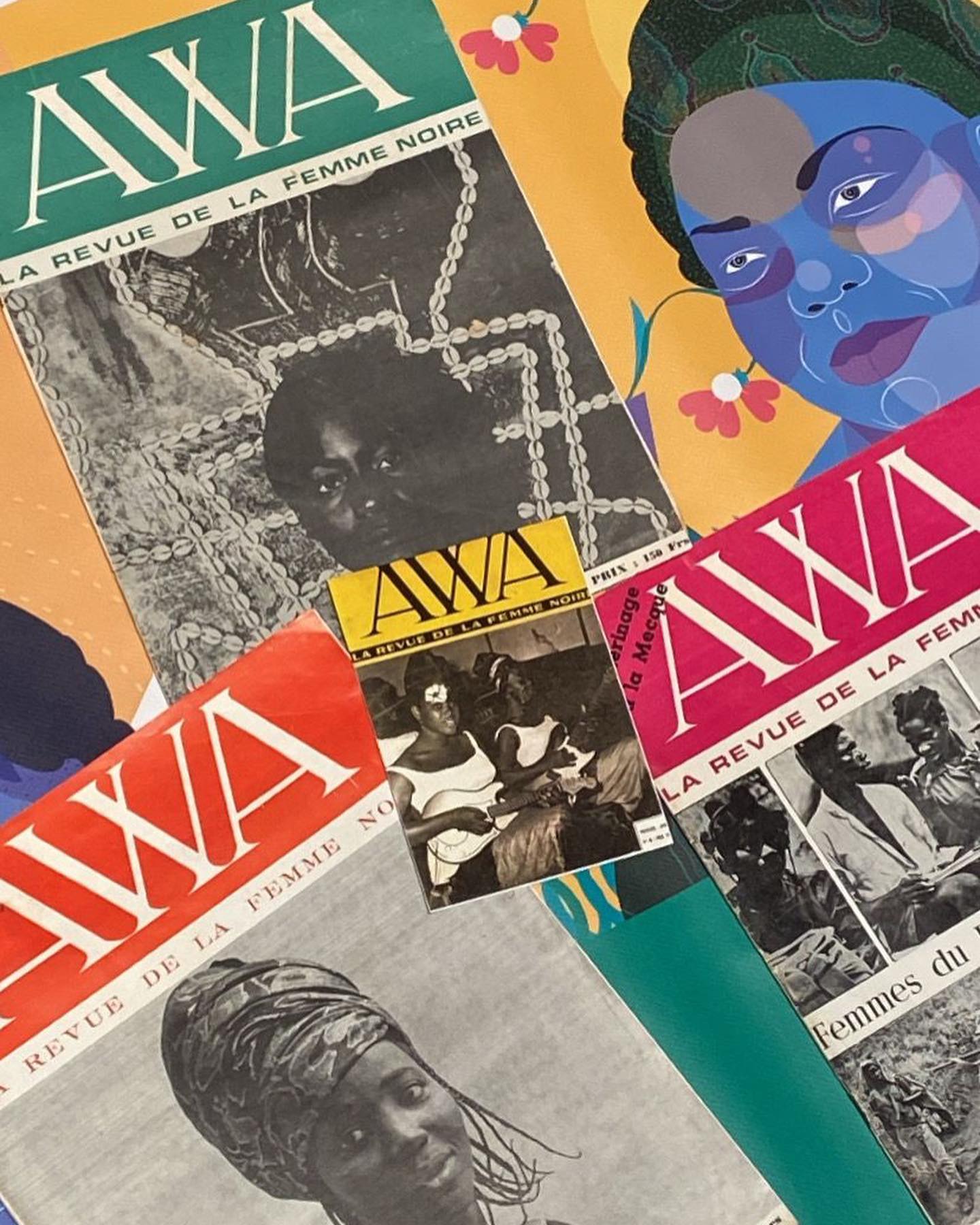
Throughout our conversation, Kaninda repeatedly returned to the importance of memory, questioning how history itself is preserved.
Colonialism itself disrupted the preservation of African histories, leaving fragmented archives and historical silences that continue to shape how the continent’s past is understood.
Within these already incomplete archives, women’s stories have often become even more difficult to recover.
“If these stories are not documented, they disappear.”
Without archives, books, exhibitions, documentaries and journalism, future generations lose access to the women who organised communities, led resistance movements, negotiated political change and contributed to African independence.
Figures such as Andrée Blouin, Funmilayo Ransome-Kuti, and Jeanne Martin Cissé played vital roles in anti-colonial movements and political life. Yet, their names remain unfamiliar to many today.
How CMCLD brings those histories into public memory
That commitment to historical transmission sits at the heart of CMCLD’s work.
Founded in Belgium in 2012, the collective raises awareness about colonial history, memory, stereotypes and discrimination affecting people of African descent. Through educational activities, conferences, commemorations, decolonial guided tours and partnerships with schools, cultural institutions and community organisations, it advocates for a more accurate understanding of African history and its place within public education and public space.
For CMCLD, JIFA has four objectives.
It commemorates the historical struggles of African women in anti-colonial resistance, highlights the work of contemporary African and Afrodescendant women’s movements across the continent and diaspora, creates spaces for women from diverse backgrounds to connect and share experiences, and celebrates African women’s political, cultural, intellectual, and economic contributions.
Kaninda explains that this deliberate focus is also what makes the day distinct.
While International Women’s Day on 8 March has become a broad global commemoration encompassing many different conversations, JIFA intentionally centres African and Afrodescendant women’s histories and experiences, making those stories central rather than peripheral.
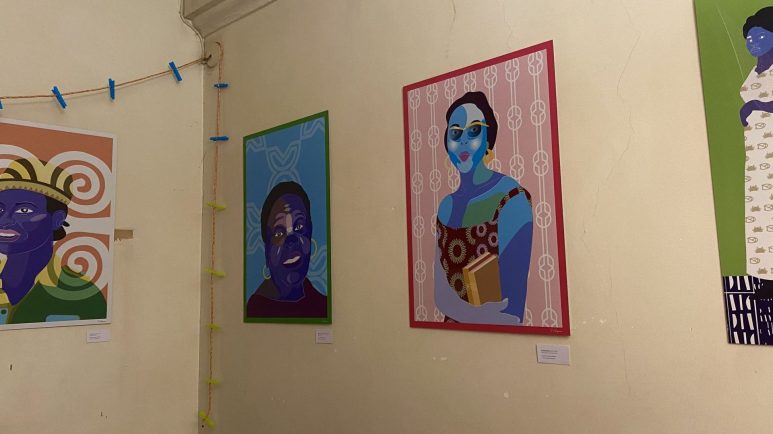
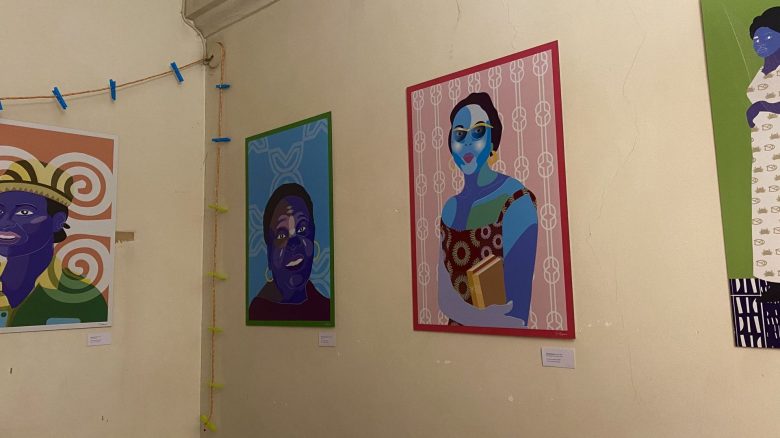
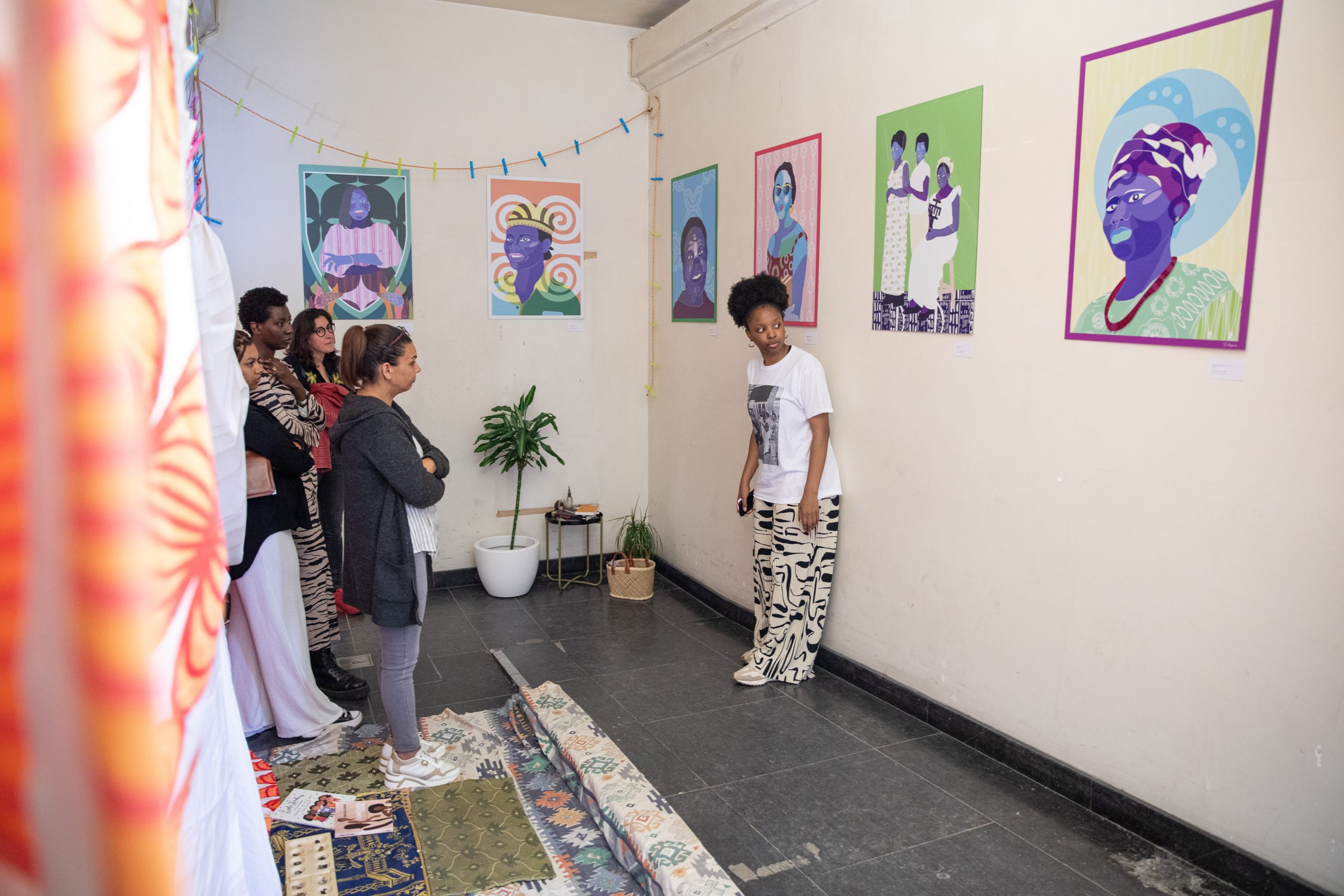
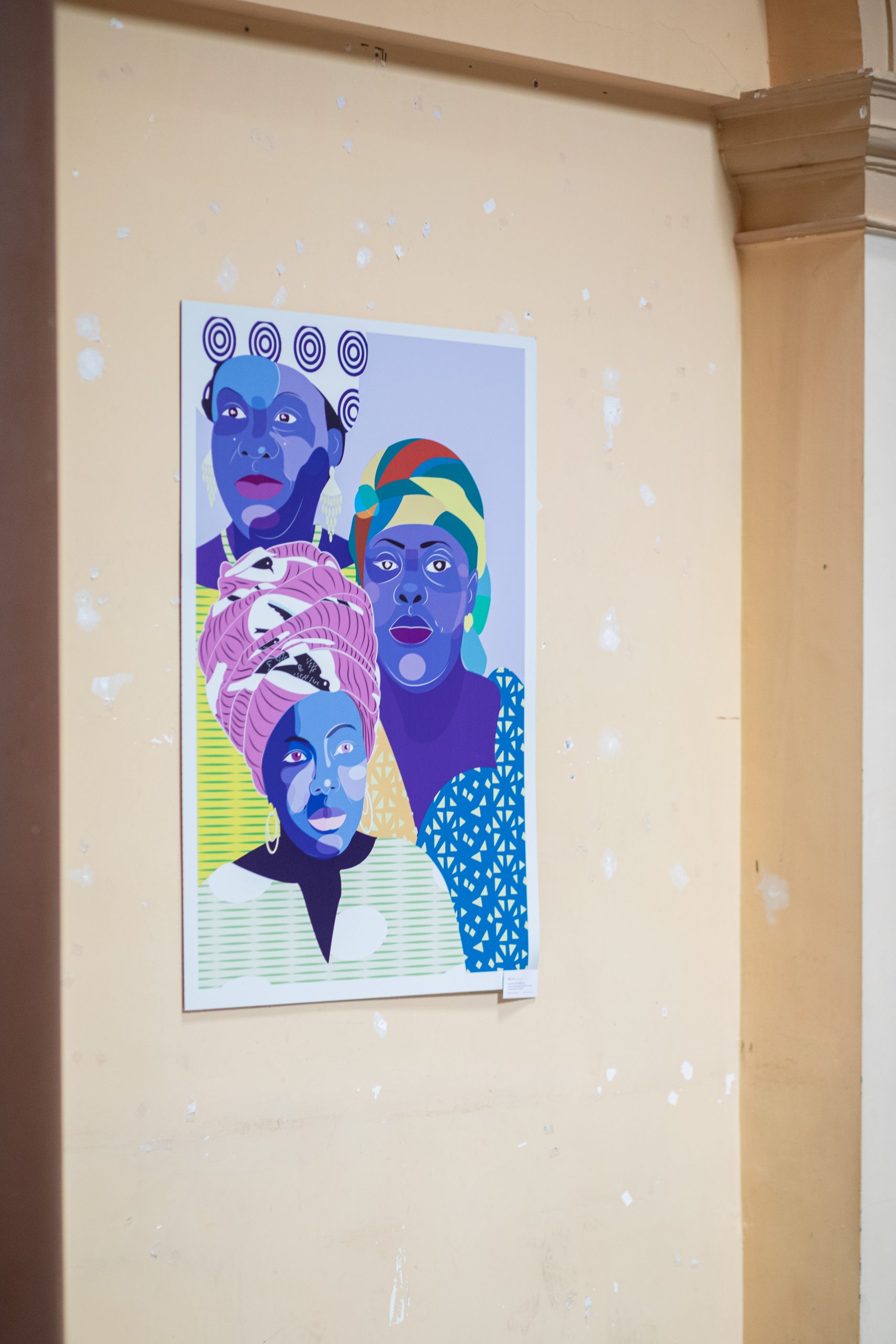
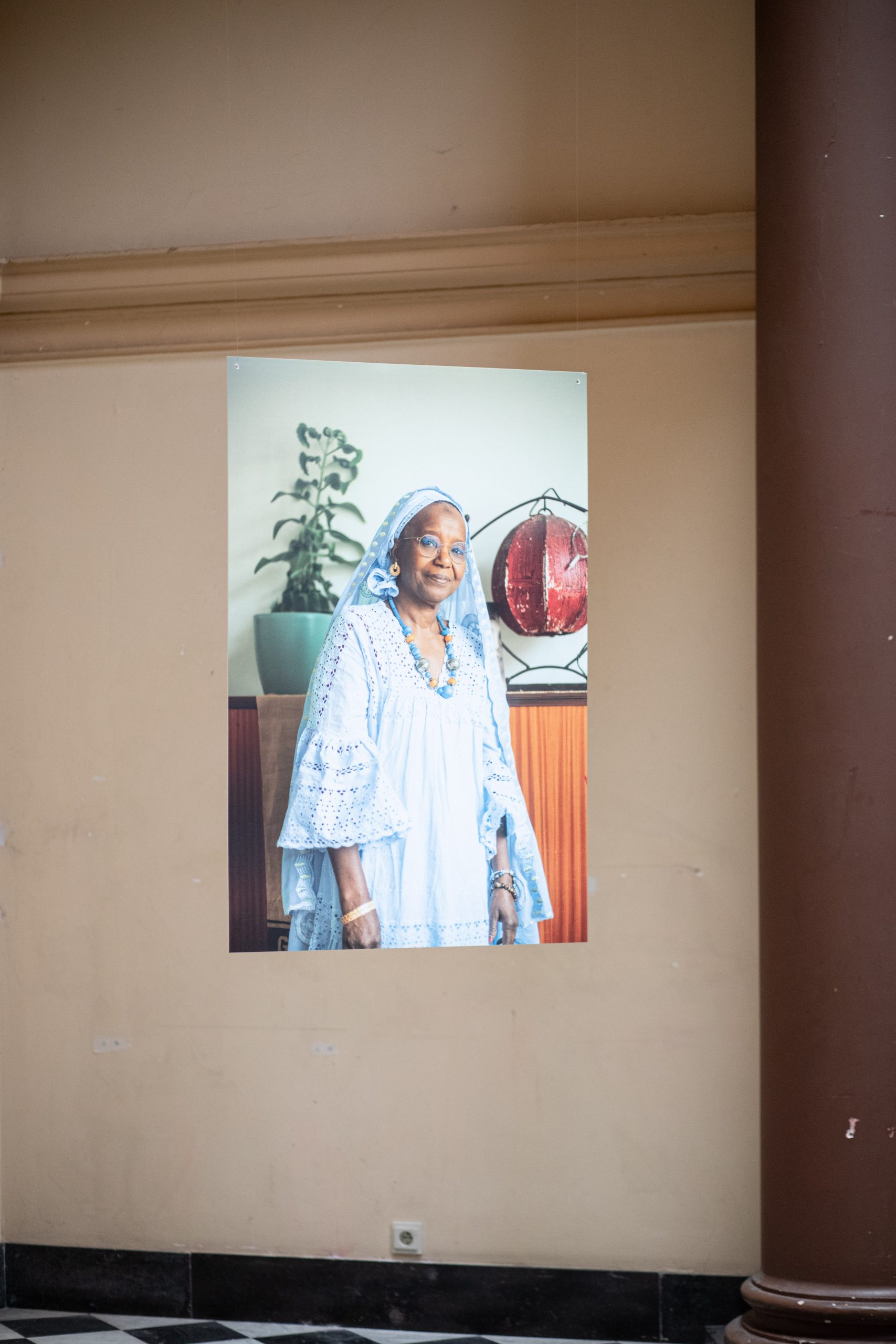
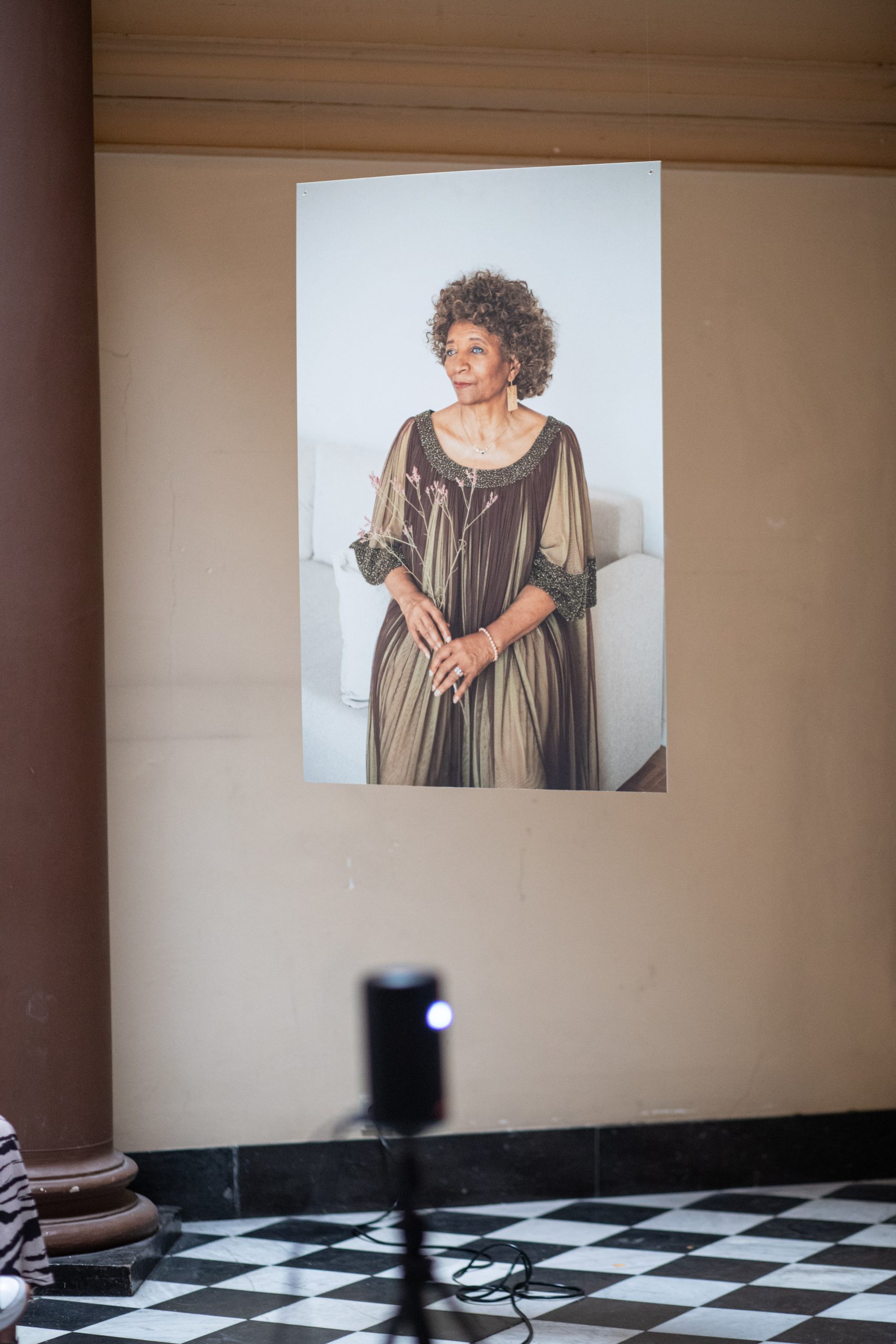
One of the programme’s most distinctive projects is Ọkụ, an exhibition whose name means incandescent light in the Nigerian language Igbo.
That same gap, women present in the history, absent from how it gets told, is what inspired CMCLD’s Afrodescendant and Pan-African Women’s Cell to create Ọkụ.
Described by the collective as “bringing our own lights into the light,” the exhibition retraces African women’s resistance movements throughout history, beginning with the creation of PAWO and continuing through later generations of activism.
It also introduces contemporary African and Afrodescendant women whose work continues those political, intellectual and cultural struggles today.
Rather than a permanent exhibition, Ọkụ was conceived as what CMCLD calls an outil-œuvre—a travelling tool for transmission. It is designed to grow over time through new historical research, artistic collaborations, and contributions from diverse communities as it circulates between Africa and its diaspora.
Continuing the work
Asked what she hopes people take away from discovering JIFA, Kaninda returns to the women whose stories first inspired the commemoration.
“Remember that African women fought for independence alongside men. They fought for the liberation of the continent and for the advancement of women’s rights.”
For Kaninda, remembering those women also means recognising the people continuing that work today.
She encourages readers to explore the work of writers and thinkers including Ndèye Fatou Kane, Fania Noël and Maboula Soumahoro, while stressing that they are only a few among the many scholars, artists, activists and organisations across Africa and its diasporas documenting these histories and keeping them alive.
She also believes journalists have an important role to play. Historians, academics, scientists, artists, organisers and political thinkers continue producing knowledge year-round, and their work deserves to be reported, archived and recognised.
For Kaninda, this is ultimately what JIFA represents: not only remembering the women who helped shape Africa’s past, but also honouring those who preserve, expand, and transmit that history today, ensuring future generations inherit a more complete record than those before them.