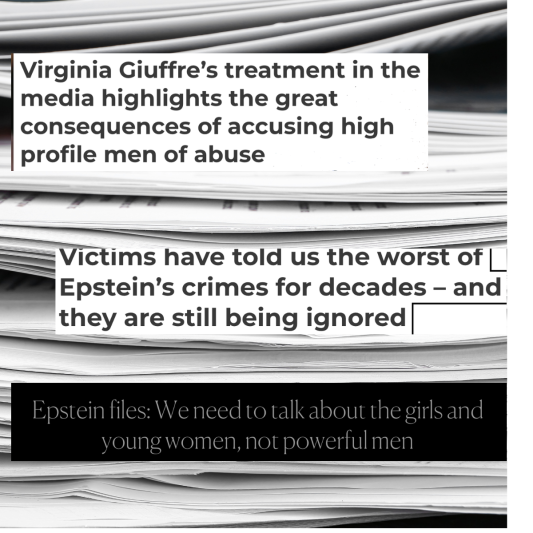
The recent release of millions of files related to Jeffrey Epstein are still dominating headlines across the globe, with much of the reporting centred on the list of rich and powerful men connected to the late sex offender.
What about the survivors – the young women and girls who were abused and trafficked? Is the media ignoring them?
The treatment of women in the media
The latest revelations have centred on high-profile men who were friends with Epstein, including Andrew Mountbatten-Windsor, the former prince, and Peter Mandelson who was sacked as UK ambassador to the US.
Dr Lindsey Blumell, a lecturer in Journalism, at City St George’s, University of London, told MDI’s Diversity Matters podcast that the voices and experiences of the victims are still largely being ignored.
“Important men always have a bigger place in journalism, therefore they get their stories centred.”
Dr Blumell says although some journalists have “decided smartly to centre survivors,” many others ignore them altogether. “There is such a huge risk to survivors to come forward.”
She says reporters should not shy away from these stories and some need to stop publicising myths that place blame on victims.
What media is listening to survivors?
Dr Blumell says media ownership is affecting what issues are covered. In the US, some if the richest men in the country own a large number of influential media outlets
“Billionaires have taken over media, which has squashed some of this reporting,” she says.
Dr Blumell says some of the best reporting on Epstein and other cases of sexual abuse is from regional and independent media.
Julie K. Brown, an investigative reporter for the Maimi Herald, worked on the Epstein story in 2017 and 2018. Her reporting helped bring him to justice.
However, the outlook for local, regional and independent media is challenging. The 2025 edition of the State of Local News report by the Local News Initiative at Medill, Northwestern University, found that almost 40 per cent of all local US newspapers have vanished. Around 50 million Americans now have limited or no access to a reliable source of local news.
Yet despite those challenges, Dr Blumell also sees opportunities.
“The Epstein story is an opportunity for journalists to show that they still have value and that the public still values their work.
“I think the positives that can come out of this story is that journalism is still needed, is still valued and when journalists do their job properly, the public will respond.”
The risks of speaking out
In 2025, Dr Blumell highlighted the dangers of survivors speaking out in an article focused on Virginia Giuffre, one of the most prominent accusers of Jeffrey Epstein.
“Giuffre’s story is a poignant reminder of the great consequences to anyone who speaks out about their abuse, especially someone who speaks out against the powerful. Giuffre was not just a victim of Epstein’s crimes, she was also the focus of brutal tabloid media coverage in the UK and around the world.
“That’s not to say there weren’t moments of great reporting. But those were often overshadowed by sensationalising and stereotyping that regularly accompany reporting on those who come forward with allegations of sexual abuse.”
Dr Blumell told Diversity Matters that the media needs to rethink how it reports and talks to survivors.
As Dr Blumell recently wrote: “The sexual abuse and sex trafficking of girls and young women detailed by the survivors is harrowing. Removing a few titles or losing a job will never be adequate justice for the crimes committed, nor for the sidelining of victims for so many years.”
You can listen to the full discussion with Dr Blumell on our podcast Diversity Matters.