Bad Bunny’s half-time show at the Super Bowl was cause for both celebration and condemnation, exposing deep divisions over diversity and inclusion.
Bad Bunny was the first performer to sing exclusively in Spanish at one of the biggest annual sporting events in the US. Partially-deaf performer Celimar Rivera Cosme made history by translating the all-Spanish show into Puerto Rican Sign Language—a first in NFL history.
An audience of 128 million
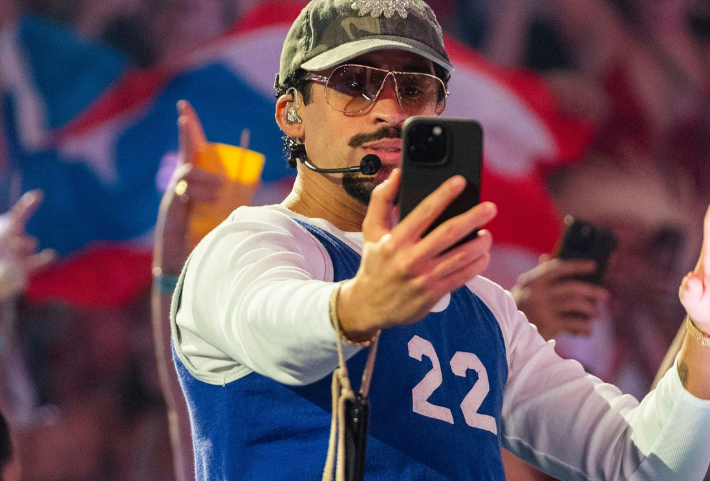
Those history-making moments reached an impressive audience. 128.2 million people tuned in to watch Bad Bunny’s performance, with the Super Bowl drawing a peak viewership of 137.8 million in the second quarter and an average of 124.9 million viewers for the game.
The impact was almost immediate. His performance sparked a 35% spike in Spanish learners, according to Duolingo.
New York-based journalist Alana Casanova-Burgess wrote in the Guardian: “The Puerto Rican star’s vision of American identity moved beyond colonial tropes to span an entire hemisphere.”
Glaad, which focuses on LGBTQ advocacy and cultural change, highlighted Bad Bunny as an outspoken LGBTQ ally in their evaluation of LGBTQ and Ally Inclusion in the run-up to the Super Bowl: “Super Bowl LX and events leading up to it will feature notable visibility and inclusion of LGBTQ people and allies.”
Mixed results for Super Bowl advertising diversity
With such large audiences, advertising during the Super Bowl is highly prized, much talked about, and very expensive. Costs this year were reported to be around $10 million for a 30-second slot.
How diversity is represented in these ads matters, as advertisers try to connect with large and diverse audiences. This year, the results were mixed.
Ads reflected more racial diversity than last year, but celebrity talent remained primarily white. LGBTQ representation also dropped.
- 68% of national Super Bowl spots visibly represented multiple racial or ethnic groups, compared to 57% last year and 70% in 2024.
- Market research firm Zappi found 26% of Super Bowl spots depicted multicultural representation as central to the narrative this year, up from 6% in 2025.
- Of the 103 celebrities who appeared in Super Bowl ads this year, at least 60 were white, according to ADWEEK’s count.
The backlash
Not everyone regarded the show and the decision to invite Bad Bunny as positive. Backlash came from some Republicans, including the president.
President Trump wrote: “The Super Bowl Halftime Show is absolutely terrible, one of the worst, EVER! It makes no sense, is an affront to the Greatness of America, and doesn’t represent our standards of Success, Creativity, or Excellence.”
Others called Bad Bunny anti-American and anti-ICE. Several House Republicans urged the Federal Communications Commission to investigate the show’s content and lyrics, which some labelled “illegal.”
Media analysis revealed that most of the lyrics Republicans criticised were not actually performed during the show.
Many conservatives are not fans of Bad Bunny, who has spoken out about the administration’s immigration policy, declaring “ICE out” before accepting the Grammy for Album of the Year.
To counter his performance, a conservative advocacy group supported an “All-American” halftime show.
Has diversity won?
An opinion in The Hill asked: Did MAGA lose the culture war on Super Bowl Sunday?
Vox wrote: “Woke isn’t dead. Bad Bunny’s halftime show proved it. Maybe the Right didn’t capture the culture as much as they thought.”