By Tanya Sakzewski
Indigenous journalists are calling for mainstream media to be more inclusive and recognise the diversity of the First Nations groups.
Despite gains in coverage and representation, Indigenous communities are still being misrepresented or underrepresented in news media.
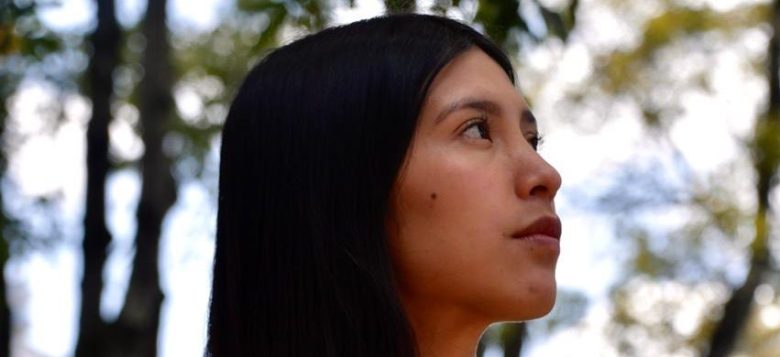
As countries across the Americas mark 12 October as a day to reflect on Indigenous resistance, interculturality, or diversity, we take stock of the region’s media coverage of First Nations issues and people.
Under-representation
Across the globe, there are more than 476 million First Nation peoples who manage or hold tenure rights to around one-fifth of the world’s surface area. They are custodians of over half the remaining intact forests and a significant portion of the planet’s biodiversity.
As a 2025 UNESCO report said, “in a world increasingly influenced by media narratives, the representation of Indigenous Peoples in the media has far-reaching implications for their rights, cultural and linguistic preservation, economic empowerment, well-being and inclusion in society”.
It found that, when asked how often Indigenous Peoples were used as sources in news stories serving the public interest, 53 per cent of non-Indigenous media said nearly all, most, or more than half of their stories. However, 28 per cent said they use few or hardly any Indigenous Peoples as sources.
In Latin America and the Caribbean, home to more than 54 million Indigenous people, journalists say officials are often driving the narratives, and stereotypes are still common.
The 2020 Global Media Monitor Project’s report Who Makes the News? highlighted that only three per cent of people featured in the news in Latin America were from Indigenous or tribal groups, and only one in five of them were women.
Shortfalls in Colombia’s media
Colombian journalist Vanessa Teteye Mendoza from the Iñeje (canangucho) clan who works at the independent media platform and intercultural co-creation network Agenda Propia, says media coverage of Indigenous issues in her country is often framed through the lens of conflict.
Media monitoring has revealed the language most used in reporting Indigenous issues includes words like blockade, protest, tension, and pressure.
Teteye Mendoza told MDI that although there are dozens of Indigenous groups in the country, the media often fails to provide depth of coverage that differentiates groups and issues.
“In Colombia, we have different Indigenous groups, but the media portrays all Indigenous in the same way.” She added: “The media doesn’t explain what the people’s relationship is with the environment, their culture, their languages.”
Teteye Mendoza says her research has found that the media relies on stereotypes, often negative, rather than explaining the complexity behind some issues, which can include history, colonialism, land rights and culture.
Media monitoring of coverage of Indigenous issues over a three-month period in 2025 found most stories were about urban mobilisation and budgetary issues, with few about culture. For example, Indigenous mobilisation in the capital was often portrayed as an urban event affecting the city’s dynamics, rather than as an expression of long-standing territorial processes.
Why are Indigenous voices missing?
A lack of inclusion is part of the problem.
The media monitoring found that even when media organisations don’t use stigmatising labels or language that openly delegitimises, narratives are often centred on institutional frameworks, limiting the space for direct Indigenous voices. Thirty-eight per cent of stories had direct Indigenous representation, while 62 per cent relied on government sources.
That model leads to official voices shaping the interpretation of events at the expense of local communities.
The monitoring concluded that media representation of Indigenous Peoples in Colombia is shaped by structural dynamics involving institutional mediation, a focus on immediate conflict, and narrative simplification. This is limiting the public’s understanding of Indigenous issues.
As the monitoring highlighted, “this ambivalence opens up significant strategic space”, as there is “fertile ground” for strengthening a rights-based approach that deepens the inclusion of Indigenous voices across all stages of coverage.
Efforts to improve inclusion
The situation in Colombia is not unique. A 2026 Public Media Alliance report, One Shared Future: Amplifying Indigenous Voices, found that in many countries, the political appetite for diversity from a decade ago is waning.
It warns that at a time of geopolitical uncertainty, the rise of autocratic political leaders, and the consolidation of power that threaten Indigenous Peoples, mainstream media narratives risk “excluding Indigenous perspectives and portraying Indigenous Peoples as passive actors in world affairs, rather than people with agency”.
Several initiatives have been established to address concerns over representation and inclusion.
Earlier this year, Associated Press announced it has introduced the Global Indigenous Reporting Network (GIRN), a collaboration among news outlets to expand the reach of Indigenous affairs coverage.
Mongabay introduced an Indigenous Desk several years ago, with the aim of expanding environmental reporting that centres on diverse Indigenous perspectives and sources worldwide.
An Indigenous Partnerships in Public Media (IPPM) will share best practices and strategies among national public service media.
The important role of Indigenous content and media
The impact of Indigenous media and content is widely acknowledged.
As UNESCO highlights, it contributes to the preservation and promotion of Indigenous languages, cultural practices and traditional knowledge, with the inclusion of Indigenous languages in the media helping foster a sense of belonging and recognition.
Information and media content tailored to Indigenous audiences also enables communities to make informed decisions and fully participate in society.
On a positive note, there is a growing appetite for authentic Indigenous content. As the One Shared Future report said, Indigenous stories and series are proving phenomenally popular around the world.
As well as sharing their own stories their own way, Indigenous media is proving “especially resilient in stopping the spread of false information”. According to a 2025 study by the International Centre for Journalists (ICFJ), ethnic and Indigenous newsrooms in the United States are often “attuned to harmful rumours and falsehoods circulating within their communities well before those narratives manage to garner national attention”.
Actions to further strengthen inclusion
Vanessa Teteye Mendoza said to improve representation, mainstream media needs to gain a better understanding of the complexities of Indigenous issues and history. With knowledge of land rights, culture and communities’ links to the environment, reporters will be able to present a more comprehensive and informative narrative for the general public and counter negative stereotypes.
The Media Diversity Institute’s Media Diversity Index South America (2026) recommends several steps for improving inclusion in the region, including strengthening references to diversity in journalistic codes of conduct to avoid reproducing prejudices, generalisations and stereotypes. It also calls for more discussion of diversity issues at major media events.
With AI spreading fake news and social media platforms being used to orchestrate coordinated campaigns against Indigenous communities, further damaging public perceptions and access to reliable information, the need for action is urgent. As Teteye Mendoza points out, the future will be bleak without it.