Highlighting under-reported minorities and groups impacted by conflict.
By Delphin R. Ntanyoma
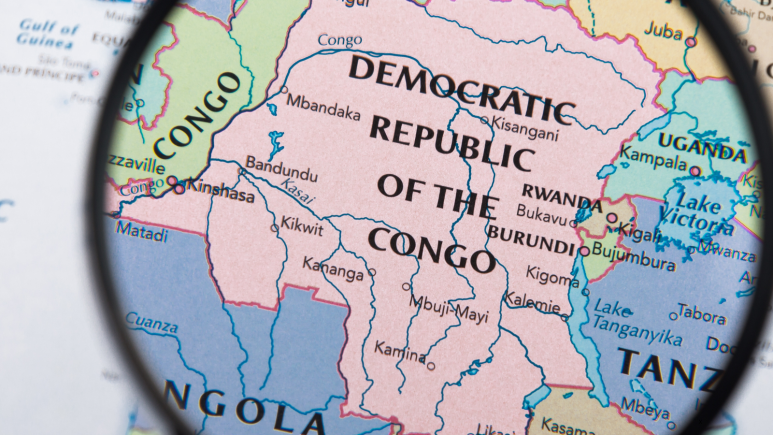
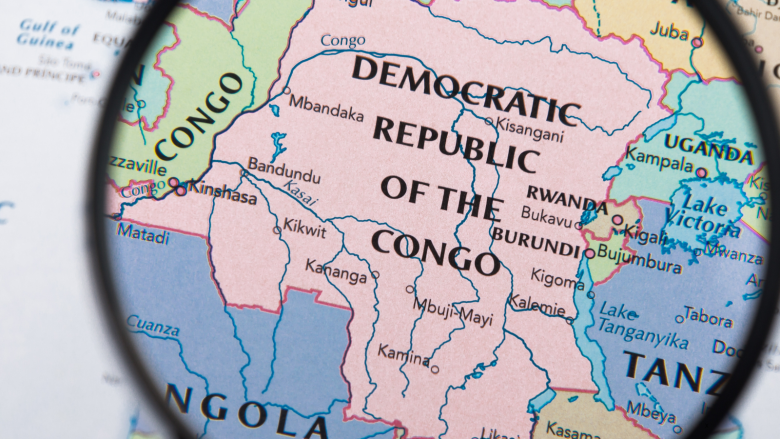
The Banyamulenge are a contested minority ethnic community in South Kivu Province of the Democratic Republic of Congo (DRC). Their homeland lies in Fizi, Mwenga, and Uvira territories. While violence and armed conflict have affected many civilian populations in eastern Congo, the Banyamulenge remain particularly at risk due to longstanding marginalisation and exclusion.
For decades, the Banyamulenge have endured recurring waves of violence marked by targeted killings, forced displacement, the destruction of homes and cattle, and prolonged periods of siege and humanitarian blockade. They are often singled out because some actors portray them as “foreigners” rather than legitimate Congolese citizens—a narrative that has entrenched discrimination and heightened their vulnerability. The Banyamulenge are often portrayed as “foreigners,” in contrast to self-styled autochthonous groups who describe themselves as the “sons and daughters of the soil.”
Despite the seriousness and persistence of these abuses, their plight has received limited sustained attention at both national and international levels.
Since 2017, attacks and humanitarian restrictions have intensified, leaving Banyamulenge civilians in underreported urgent need of meaningful protection and a consistent, well-resourced humanitarian response.
Killings of civilians
The killings of Banyamulenge and other minorities in the DRC is a result of political manipulation that led to the revocation of their nationality in the 1980s. Over decades, Banyamulenge civilians in the DRC have been deliberately targeted in waves of violence marked by massacres, mass arrests, and executions. The driving force behind attacks is that the Banyamulenge are portrayed as “foreigners” or “invaders”. Records show that in 1995, the then Zairean authorities resolved to expel members of this community and send them to Rwanda or Burundi.
In the aftermath of the genocide against the Tutsi in Rwanda and the influx of Rwandan Hutu militias into Congo, widespread violent conflicts have been used to justify attacks targeting civilian members of this community.
Banyamulenge were specifically killed in 1996, 1998 across different regions of the DRC, and in 2004 in Burundi. Killings frequently followed a chilling pattern that followed political mobilisation to kill. Following these massacres, men and boys were rounded up and executed first, while women and girls were subjected to sexual violence. In many cases, bodies were sometimes burned or dumped to erase evidence.
In South Kivu, the Banyamulenge have been facing yet another wave of violence that began in 2017 and continues to this day. Throughout 2017 onwards, there have been coordinated attacks perpetrated by several militias affiliated with or claiming to belong to self-styled ethnic communities constituting the majority. Thousands of civilians lost their lives in attacks driven by efforts to block the creation of administrative entities in areas where the Banyamulenge form the majority.
Rather than seeing the different forms of killings as isolated clashes, they are rather part of a long, systematic process of persecution aimed at breaking the community’s social fabric, destroying livelihoods, and gradually eliminating the Banyamulenge from their homeland.
Destruction of villages and forced displacement
Destruction of villages and forced displacement of the Banyamulenge are likely systematic, repeated, and deeply targeted as they intend to chase away “foreigners”. In the 1970s, the Banyamulenge were driven out of Ngandja in South Kivu, despite being among the communities that had long settled there. Since then, they have faced expulsion in other areas, with villages burned and razed.
The destruction of villages and forced displacement have narrowed the Banyamulenge territorial boundaries in a way that progressively erases their presence from their ancestral areas. It highly deepens suffering as the majority have been forced to leave the DRC and have no hope of returning.
Humanitarian Blockade
Attacks on Banyamulenge civilians have gone beyond physical violence, often including deliberate efforts to block or restrict humanitarian assistance from reaching them. Since 2017, they have endured a dire humanitarian crisis characterised by violence, isolation, and deprivation. The majority live in remote localities hardly accessible due to the total absence of road infrastructures. Humanitarian support is sometimes delivered via airlift from Bukavu and Goma or loads carried on heads.
In recent years and specifically early 2025, armed conflicts, longstanding ethnic discrimination, and shifting alliances between militias, government forces, and regional actors have left the Banyamulenge homeland largely inaccessible. Following the destruction of villages and homes, Banyamulenge civilians are besieged in tiny enclaves with no safe access in or out.
For instance, in Minembwe as of now, thousands are effectively cut off, unable to access food, medicine, basic goods or healthcare facilities, the United Nations OCHA has recently confirmed. The blockade is described as a premeditated choice of local militias and units of the Congolese armed forces to prevent civilians receiving humanitarian aid. The prices of essentials soared and supplies skyrocketed, culminating in a tenfold increase. Currently, all routes towards Minembwe are blocked to the extent it is almost impossible to evacuate the wounded and injured. Meanwhile, all telecommunication means are cut off creating more fear that attacks are happening in a total blackout context.
This siege-like situation has compounded the community’s deep impoverishment and trauma, with health facilities overwhelmed and humanitarian agencies unable to reach the area, leaving residents in severe hardship and at risk of further suffering.
Gaps within the Media
Despite the severity of the Banyamulenge’s plight, it is rare to find media coverage that sheds light on their situation. The 2021 Guardian article “Freight Dogs”, about a novel, mentions the name Banyamulenge as the character’s community affiliation. A February 2025 BBC article broadly speaks about how “DR Congo’s Tutsis, [including Banyamulenge] become foreigners in their own country” without including details of their recent experience.
As far as this argument is concerned, there is no article on the Banyamulenge recent experiences in the Financial Times, the Daily Telegraph, Reuters and the Independent. Whenever international media cover the Eastern Congo, they tend to focus on the M23 rebellion, and regional and international diplomacy between the DRC and Rwanda. In some cases, aspects touching the Banyamulenge and Congolese Tutsi are simply conflated in the dominant political narratives of Rwanda and the DRC.
The lived experiences of Banyamulenge civilians are marginalised, decontextualised, or ignored. This absence reinforces misinformation, flattens complex histories, and reinforces epistemic injustices by excluding affected communities as credible sources of knowledge.
Risks associated with media oversight
There are numerous risks with the media ignoring the plight of the Banyamulenge people.
Firstly, simplified narratives that portray the community mainly through the lens of armed actors contributes to collective blame amalgamating civilians. Victims are denied rights to speak for themselves.
Secondly, underreported conflicts usually do not attract the attention of key policymakers therefore hindering humanitarian attention, donor funding, or diplomatic pressure.
Thirdly, conflicts that are off the media radar can provide perpetrators of violence with the belief that they can pursue their dirty business. It endangers the sense of accountability and justice.
Conclusion
Giving spaces to minority ethnic communities such as the Banyamulenge does not require abandoning journalistic rigour or neutrality. It only requires the sense of digging deeper to examine historical roots and question why violence persists. By foregrounding under-represented voices like those of the Banyamulenge, international media can move beyond repetitive frames and contribute to a more accurate, humane understanding of the conflict.
Although areas such as Minembwe are frequently portrayed primarily as battle zones, they are also places where at-risk civilians seek to live, raise families, and preserve their dignity despite ongoing insecurity. While international media coverage does not consistently reflect their experiences, the understanding of the situation in the DRC will remain partial.
Delphin R. Ntanyoma is a Visiting Researcher at the University of Leeds
The views and opinions expressed in this article are solely those of the author and do not reflect the official policy or position of the Media Diversity Institute. Any questions or comments should be addressed to the editor at [email protected] of the Media Diversity Institute (MDI).