Written by an Iranian abroad
As voices in Iran have been silenced with internet shutdowns, what role has the diaspora played in ensuring the plight of protestors is known across the globe, and how has the latest crisis cemented solidarity across ethnic and regional lines?
Controlling the narrative
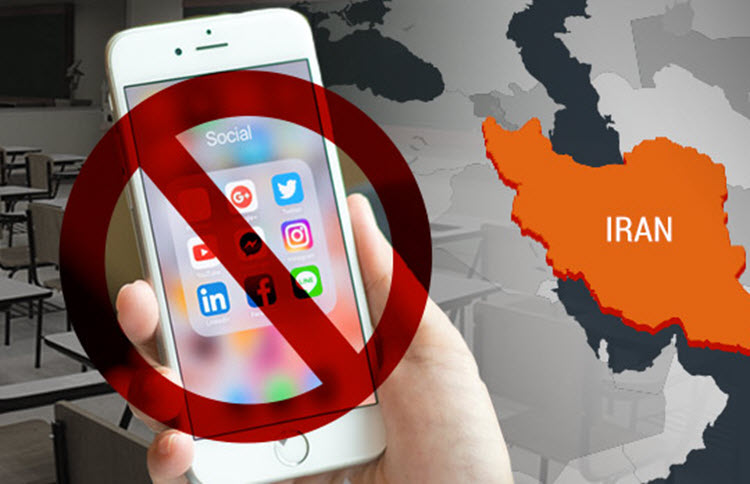
In recent years, cutting off internet access and controlling digital space have become tools authoritarian regimes use to suppress popular protests. By restricting communication and managing media narratives, governments attempt to contain crises and prevent the spread of dissenting voices, often justifying these actions in the name of national security or public order.
In contrast, protest movements have long relied on social media as a powerful tool for coordination, information-sharing, and mobilising public support. The Arab Spring is a clear example of this dynamic: during Egypt’s 2011 uprising, Facebook and Twitter played a central role in organising protests against Hosni Mubarak’s regime, prompting the government to suddenly shut down the internet to contain the movement.
Internet shutdowns in Iran
The Islamic Republic has also used widespread internet shutdowns during recent protests in Iran. These measures were imposed during ongoing demonstrations, as people openly called for a change in the regime. These shutdowns are not only intended to disrupt protest organisation but also represent a deliberate effort to control public narratives.
When internet access is partially or briefly restored, it is often used to share selected information, especially casualty numbers. This is meant to spread fear and send a clear message: protesting comes at a high cost, and the state will remain in power despite widespread dissatisfaction.
By contrast, when the internet remains open and accessible, people can shape an alternative narrative rooted in hope, solidarity, and the possibility of moving beyond the current regime.
One-sided narrative
Free access to information reinforces the idea that protests are ongoing, that demonstrators are not alone, and that political change is possible. Rather than fear, such conditions can encourage broader participation and sustained public engagement. For this reason, internet shutdowns during periods of unrest effectively silence citizens in both national and global public spaces, allowing governments to impose their version of events with little resistance.
In this enforced silence, popular protests are no longer framed as legitimate social or political demands but are instead relabelled as “riots,” “disorder,” or “foreign interference”. The authentic voices of protesters are neither seen nor heard, leaving behind a one-sided narrative produced by those in power.
In practice, internet shutdowns create a monopoly on the truth.
When citizens lose the ability to share videos, personal testimonies, and lived experiences, the only voices that remain visible are state-controlled media outlets. This allows governments to present themselves as the sole arbiters of “truth,” while popular protests are depicted not as civic action, but as chaos or enemy-driven plots. Shutdowns also delay the release of factual information, a delay that significantly shapes public perception.
When people’s accounts reach domestic and international audiences late, their impact is weakened. In the meantime, official narratives dominate public understanding. By the time alternative accounts emerge, they are often treated not as verified news but as questionable claims. As a result, citizens are reduced from active political agents to silent subjects within the state’s official story.
In protesters’ narratives, citizens speak for themselves, articulating their grievances, demands, and aspirations. In state narratives, however, “events happen to people,” or “people are misled”. This shift in language strips citizens of agency and reframes them as passive objects rather than conscious actors.
Internet shutdowns also enable the creation of an “external enemy.” Without independent citizen voices, authorities can blame domestic protests on foreign actors, replacing the narrative of “people versus government” with “nation versus enemy,” thereby justifying repression as a matter of national defence.
Staying connected
Despite this, experience shows that communication restrictions do not always result in total silence in Iran. Activists and ordinary citizens continually seek alternative ways to stay connected.
During the recent protests, satellite internet services such as Starlink served as vital bridges to the outside world in some areas, enabling the transmission of messages, images, and videos from inside Iran. While the government has attempted to disrupt these channels through technical interference, it has not been able to fully stop the flow of information.
Role of the diaspora
In this communication vacuum, people inside Iran have repeatedly called on the Iranian diaspora to act as their voice on the international stage and prevent enforced silence from making the protests invisible. These appeals have particularly targeted journalists, independent media figures, public personalities, and digital influencers with access to global platforms. In this context, the diaspora is not an observer but an active participant in shaping narratives and applying international pressure.
This call has not been limited to prominent figures alone. Ordinary Iranians, especially those living abroad, have been encouraged to contribute in any way possible, even through small actions such as sharing a post, tweeting, or participating in online campaigns. As a result, social media platforms and Iranian communities abroad, alongside independent Persian-language media and human rights organisations, have become key channels for amplifying the voices of people inside Iran.
Reports show that this solidarity among Iranians abroad has been clearly reflected in the scale and diversity of global protests. Large demonstrations in cities such as London, Stockholm, Berlin, Paris, Copenhagen, Adelaide, and Brisbane show how the Iranian diaspora, despite differences in political views, professions, and social backgrounds, have come together around a shared goal: supporting protesters inside Iran and condemning state repression. From healthcare workers protesting in Berlin and families carrying the lion-and-sun flag in London, to Swedish activists and parliamentarians and French Labor unions, these gatherings represent a growing transnational alliance united around the demands of the Iranian people.
Ethnic and regional solidarity
At the same time, within Iran itself, recent nationwide protests, particularly following the death of Mahsa Amini in September 2022, have shown a remarkable solidarity across ethnic and regional lines. Slogans such as “Kurdistan, the pride of Iran,” chanted in cities and areas like Tehran and Azerbaijan, alongside phrases like “From Zahedan to Tehran, my life for Iran,” reflect a powerful sense of unity between marginalised border regions such as Kurdistan and Baluchestan and the country’s central areas.
While maintaining long-term political unity remains a significant challenge for Iran’s future, the scale and persistence of diaspora engagement have created a sense of cross-border connection and collective hope.
For many, this level of solidarity is remarkable and shows how digital communication, even under repression and shutdowns, can still enable collective action and shared purpose.
The views and opinions expressed in this article are solely those of the author and do not reflect the official policy or position of the Media Diversity Institute. Any questions or comments should be addressed to the editor at [email protected] of the Media Diversity Institute (MDI).