By Sannsa Sar Ma Ree
Myanmar’s crisis is not simply a conflict between generals and rebels. It is a deeper collapse – the failure of the state to be accountable to the people within it. For decades, ethnic minorities and women have been pushed to the margins, rendered invisible by a political structure fractured by violence and exclusion. The real story of Myanmar is not only about military coups or resistance forces; it is about those erased from the story altogether. It is about those whose identities, memories, and rights are systematically denied. A just future for Myanmar will not be built through tanks or elections alone, but through political solidarity and public reason, as Rawls might argue.
The Myth of Unity
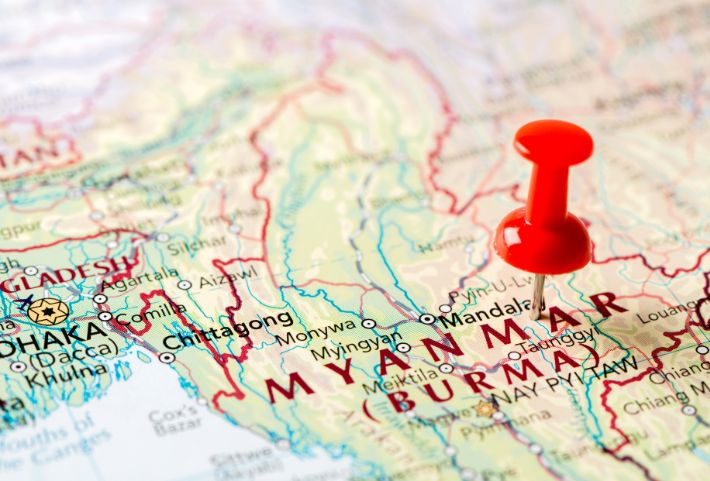
After independence, Myanmar inherited a colonial project: to forge a single nation-state from many internal nations or peoples. The authorities recognise more than one hundred ethnic groups, with ethnic Burmans, known as Bamar, comprising more than 60 per cent of the population. Successive regimes – socialist, military, and democratic – have centralised power in the hands of the majority Barman “nation”, often at the expense of others. The concept of unity has been enforced through coercion, not consent, destroying diversity rather than fostering it. Despite the fact, the two largest political factions of the ethnic majority Burmans have always been trying to eradicate each other to seize sovereignty since independence.
The military claims to protect this unity of nations. In truth, it has operated as a mafia, using violence, propaganda, and bureaucracy to dominate dissent. Civilian leaders, despite democratic slogans, have often dismissed ethnic aspirations, treating minority regions as peripheral rather than foundational to the Union.
The media has mirrored this exclusion. State-run outlets depict a sanitised, Burmese-speaking Myanmar. Indigenous languages and perspectives are nearly absent. Ethnic struggles appear in national media only when framed as threats. Even within resistance movements, women are merely “tolerated” or “given space” – not treated as equal partners. These silences are political. What is not shown is as powerful as what is. When communities vanish from public view, their needs, histories, and futures vanish too.
The Weaponisation of Ethnicity
One of the most insidious tools of exclusion is the “135 ethnic groups” classification. It appears inclusive but functions to divide and depoliticise. The Chin, for example, are fragmented into over 50 sub-groups. Even the Bamar are segmented into nine pseudo-scientific categories based on sacred astrology for their lucky number.
This system doesn’t honour diversity – it neutralises it. It reduces political communities into folklore, while allowing the state to claim all are equally “indigenous,” obscuring its responsibility to protect internal nations. Burman dominance is rebranded as neutrality, and the colonial logic of ‘divide and rule’ persists.
In national discourse, these divisions serve to delegitimise ethnic claims. Calls for autonomy are labelled tribalism and an assault on unity. Diversity is framed as chaos. Resistance is mistaken for destruction, rather than seen as a demand for justice and recognition in a federal democracy.
Women in the Shadows
Women – especially Indigenous and ethnic minority women – suffer some of the harshest consequences of state violence and erasure. In many regions, women lack basic documentation, such as ID cards, which excludes them from land ownership, education, legal protection, and freedom of movement. Without these, even birth registration for their children becomes impossible.
In Rakhine, Rohingya women are denied citizenship and reproductive rights. In Kachin and Karen states, generations of women have lived displaced, without healthcare or safety. Rape and gender-based violence have been systematically used as tools of war. These abuses are rarely acknowledged in official reports or national media.
Women and children face trafficking, forced marriage, sexual abuse and economic exploitation. When the media covers such issues, it focuses on isolated incidents rather than systemic patterns – the structures that leave women vulnerable and remain hidden.
Yet women are not passive victims. Across Myanmar, women run underground schools, organise mutual aid, and preserve Indigenous languages. They tell community histories, lead humanitarian efforts, and sustain social resistance. This is getting stronger with the Spring Revolution. While men often occupy the frontlines or media platforms, women (while also doing similar things) have the additional task to hold together the moral and social fabric.
Still, women remain grossly underrepresented in political institutions – parliament, resistance coalitions, and peace talks. Before the 2021 coup, the proportion of elected women members to parliament was only 17%. Media coverage continues to reflect the gender imbalance.
The Language of Resistance
In the face of exclusion, many communities turn to language, education, and storytelling as acts of resistance. Preserving a script, teaching a native tongue, or telling folk stories becomes a political gesture. These are forms of infrapolitics—subtle acts of survival and defiance in everyday life.
State education, conducted mostly in Burmese and aligned with central narratives, erases alternative histories. In contrast, Indigenous media, though under-resourced, provides vital counter-narratives. It shares oral histories, community truths, and local struggles in native languages. Remember that they are also expressions of dignity.
But these platforms face challenges, including a lack of funding, censorship, poor infrastructure, and targeted repression. As long as state-controlled media dominate public discourse, the realities of Indigenous and gendered lives will remain excluded from the national story.
Reimagining the Union
Myanmar’s future depends on dismantling these systemic challenges. A peaceful, democratic country cannot be built while treating minorities and women as threats or as afterthoughts.
What can be done?
- The military must be removed from politics. A new structure must protect, not suppress, diversity.
- The harmful, divisive “135 ethnic groups” framework must be replaced with recognition of national communities with their rights to self-determination and their heritages through federalism.
- State media must open to minority languages, voices, and narratives – not as symbolic gestures, but as equal authors of identity.
- Women’s participation must be central to all political processes, not just for fairness and tolerance, but because they are equal partners.
The future of Myanmar will not be decided by arms or ballots alone. It will be decided by reasons and a variety of narratives – those told, those silenced, and those yet to be reclaimed. The real question is whether we will continue to tell a single story or finally make room for all those we have ignored.