By Milena Trajkovska
“Politics and the mafia are two powers that thrive on control over the same territory: they either go to war or strike a deal.” — Giovanni Falcone, Italian anti-mafia magistrate and judge (1939-1992).
While ethnic tensions dominate public narratives in North Macedonia, the real tragedy lies deeper — in a system corroded by corruption, indifference, and institutional failure. The deadly fire at the unlicensed Puls nightclub in Kočani on March 16 revealed this rot with painful clarity.
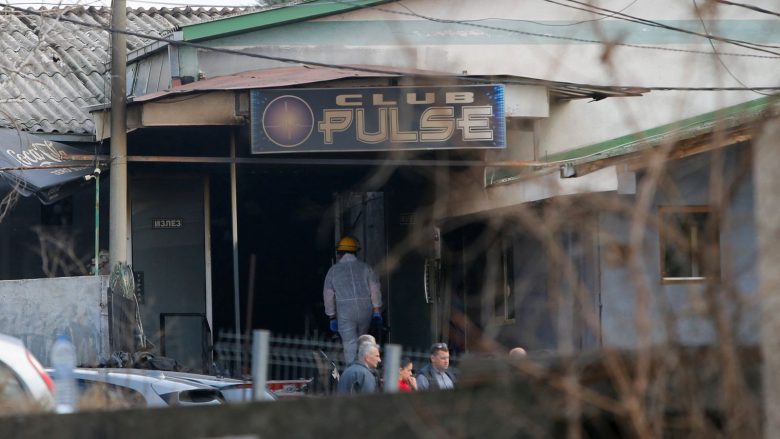
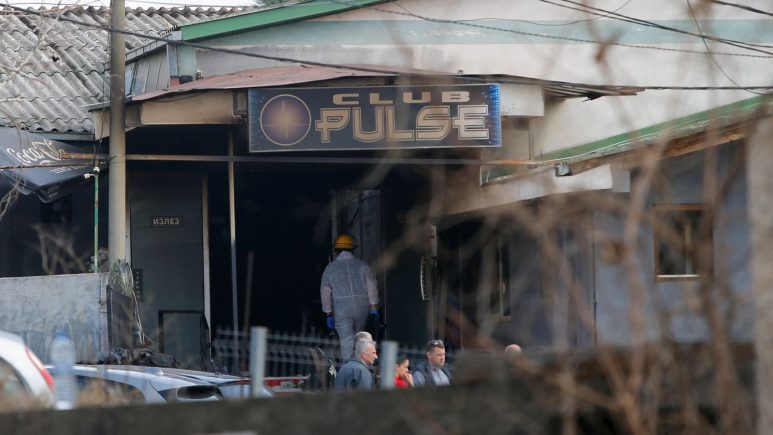
That night, 62 people lost their lives, most of them young, and more than 200 were injured. The venue operated without a valid license, inside a structure zoned for light industry, not public gatherings. The tragedy, which shocked the nation, was not an accident — it was the result of criminal negligence enabled by systemic corruption.
To examine whether this tragedy might lead to meaningful change, I conducted in-depth research and interviewed victims, a lawyer, and obtained direct testimonies from Support Kočani. My aim: to find out if those calling for change are satisfied with the pace of action, whether those directly affected by the tragedy are confident in the actions taken so far, and whether the government and authorities will hold those responsible to account.
This article is an account of what happened.
A Town in Mourning, a Country in Denial
On May 16, two months after the tragedy, families marched in silence through Kočani, at exactly 4:05 PM — the moment the fire broke out. They walked past the police station, courthouse, and prosecutor’s office, demanding justice.
On the same day, they gathered before Parliament in Skopje. Only a few opposition MPs met them and the Interior Minister received them hours later. However, no new measures were announced. A proposal for a parliamentary debate was rejected by the ruling VMRO-DPMNE, with officials suggesting the families were being “manipulated,” trivialising their grief. Parents reported being followed and threatened.
Parliament has failed to hold a commemorative session following the fire, although it did call a recess and a mourning period after the tragedy. President of the Assembly Afrim Gaši justified it as a matter of “balance”.
Institutional Silence
The country’s leaders have been under pressure for their response, which for many of those affected has been inadequate. President Gordana Siljanovska-Davkova posted on Facebook: ”Your immense pain is mine too,” yet her dealing with the families has been minimal. Prime Minister Hristijan Mickovski eventually met with the victims’ families in May. That meeting was kept private at the request of the families, but Mickovski later confirmed it in a media statement, describing it as “an emotionally difficult encounter”.
A Healthcare System at Its Limits & Tales of Survival
Over 100 survivors still require daily medical care and Katerina Panić-Mirčovska is their main doctor. Burn victims undergo skin grafts and therapy in inadequate conditions. Macedonia’s only Burn Unit is defunct.
Survivors have described the night of the tragedy – how ambulances broke down, there was a shortage of supplies at the scene, and volunteers, not institutions, saved lives.
Survivor Dario Trifunov recalls: “We poured regular water on their burns. There weren’t even scissors to cut clothes. I had panic attacks. The images, the smells — I still can’t sleep. Why is it in this country they jail the sheep, not the wolves?”
Ljubomir Ignatov, another survivor, was pulled unconscious from the stampede: “Kočani has become a withered flower. All that’s left are the thorns and the cries of the
wounded. We raise our voices — we will not stay silent.”
Bojan Manasiev described the chaos: “Music, laughter — then screams. Black smoke. People suffocated. We rushed to an unequipped hospital. Dozens dead, and a government without words. The youth died — and with them, the future.”
Dr. Katerina Panić-Mirčovska, was recently appointed director of the Kočani clinic, which was awarded emergency funds for victim care by the government. Local media report that journalists have been barred from accessing the hospital or speaking to staff and survivors. This lack of transparency—despite the use of public funds—has triggered widespread public anger, with residents and civil society groups calling for clear communication, accountability, and open access to information.
The Justice System: Holding Those to Account?
According to local media, the investigation into the Kočani incident has been vague and contradictory. The Ministry of the Interior listed 70 suspects, while the Prosecutor’s Office mentioned 59. No high-ranking officials — including the Kočani Police Chief or the Regional Director in Štip — have been held accountable.
Interior Minister Panče Toškovski avoids public comment. Prosecutor Ljubomir Joveski, once targeted for dismissal by the ruling party, was suddenly praised after being put in charge of the investigation — a move many suspects aims to maintain political control.
Minister of Economy Besim Durmishi and Vlatko Stojkovski, State Inspectorate, have not been questioned, despite their roles. An indictment against 46 suspects was announced in June. Fourteen police officers remain under investigation.
A Legal Expert Speaks Out
In an interview, local lawyer Janaki Mitrovski described the justice system as “deeply rooted and selective in its corruption”.
“In the Tetovo hospital fire (2021), the Durmo Tours bus crash (2019), and the Besa Trans disaster (2021), dozens died — yet no judge has been convicted. Only the Durmo Tours case reached a verdict, and it took five years.”
He added: “Ministers and businessmen are protected. Promotions go to those with connections, not merit. Corruption is folklore here — ‘I know someone inside’ is a national proverb.”
Protecting people and cultural heritage
When 62 people lose their lives in a venue wrongly deemed safe, a fundamental question arises: how can institutions be expected to safeguard complex areas like cultural heritage if they are unable to enforce basic safety regulations?
The credibility of anti-corruption institutions in North Macedonia is crumbling. Tatjana Dimitrovska, head of the State Commission for the Prevention of Corruption (DKSK), is under investigation on suspicion of leaking confidential information to a suspect in a case — just months into her mandate. Her case follows that of former Special Prosecutor Katica Janeva, convicted for abuse of office.
At the same time, proposed legal changes could open heritage sites to commercial use—despite widespread illegal construction and weak regulations. While Skopje Mayor Danela Arsovska leads a determined and difficult fight against illegal construction in North Macedonia’s capital, UNESCO has proposed listing the Ohrid region as a World Heritage Site in danger due to ongoing environmental and cultural degradation, citing urban chaos, illegal construction, and poor governance. It’s urging a full environmental assessment, a halt to new developments, and stronger cross-border cooperation with Albania to protect the site.
Under Attack
The fight against illegal construction comes with risks, including personal safety.
On July 11, Mayor Arsovska was physically attacked during a field inspection of an alleged illegal construction site in the Čair municipality. The attack was not isolated—she was accompanied by her staff and family members, and they were all verbally and physically threatened. Shockingly, this happened in the presence of police officers.
Since 2024, Arsovska has denounced over 150 illegal structures, including large residential buildings built using falsified permits. She has submitted formal complaints to the Prosecutor’s Office, published satellite images and legal documentation as evidence, and pressured local authorities to revoke fraudulent permits.
In the Čair neighbourhood of Skopje, the widespread presence of illegal constructions (дивоградби) has severely compromised access for emergency vehicles. In many narrow and overcrowded streets—where buildings have been erected without any urban planning—ambulances and fire trucks can no longer pass, posing a serious threat to public safety.
Arsovska’s campaign has been met with enormous resistance, particularly from political figures, public threats, coordinated disinformation, and now physical violence.
Toward a Different Macedonia
All of this points to a chilling reality: fighting corruption is a difficult battle. For a country on an EU path, corruption and the pursuit of accountability demands far more attention.
Another Macedonia is possible—one where life matters more than power, and institutions serve people, not parties.
“Those who remain silent die every time. Those who speak out die only once.” — Giovanni Falcone.