Tackling the growing problem of fake news and disinformation targeting minorities and vulnerable groups has become one of the major challenges of our time.
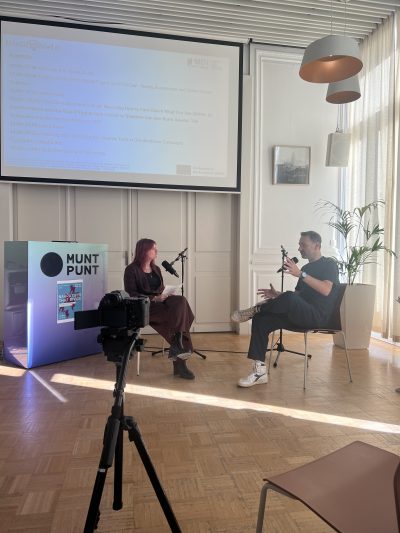
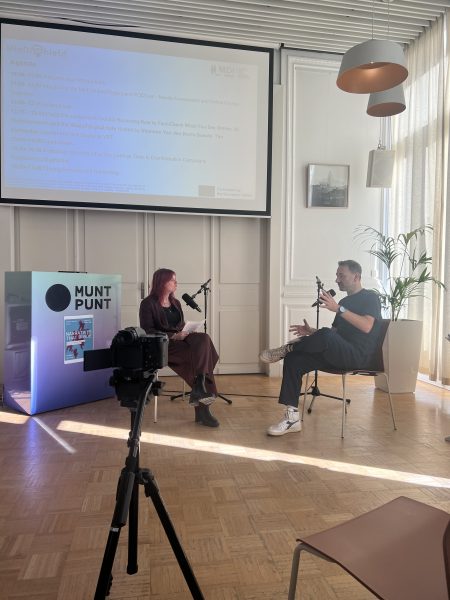
In a podcast recording at the Minority Representation and the Infosphere event in Brussels on 6 October, journalist and fact checker Tim Verheyden told an audience that media literacy alone won’t solve the problem. Tech companies need stronger measures, and people should question information more.
Verheyden was a guest on a podcast recorded at the day-long event organised by the MinDiShield and PODCast projects. The event brought together a wide range of stakeholders from media literacy, diversity and community work to focus on the importance of minority representation and the vulnerabilities caused by the rise of AI and online disinformation.
Tackling disinformation
During the podcast hosted by Shannon Van den Borre, who recently won the PODCast contest in Belgium, Verheyden said when disinformation targets minority groups and focuses on people’s fears, it is “really hard to have a nuanced conversation” about issues.
The senior reporter with Belgium’s public broadcaster VRT NWS shared his top tip for recognising fake news: doubt. “If you doubt something, dive into it. Take a look at the context: who is spreading something with which goal? I think doubt is really a superpower nowadays. Don’t believe everything you see.”
He spoke about the impact of Artificial Intelligence on fake news and rumours, saying
AI’s ability to quickly produce and distribute visuals – images and videos – is “creating a whole new reality”.
AI swarms
AI swarms, when a group of AIs work together, pose another risk. Verheyden warned that with LLMs it would be possible to create fake accounts and sleeper accounts in small groups. “You could ingest or infect social media groups or create social media accounts and wake them up at the same time to spread certain narratives.”
He said current technological changes in how disinformation spreads have made the term “fake news” redundant.
“Today we have to be aware of AI swarms and so many forms of disinformation and that’s why the term “fake news” is so outdated because it doesn’t really capture the complexity of everything that’s going on right now.”
One of the downsides of the disinformation era is that people don’t believe real facts or news anymore. But Verheyden expressed optimism that with awareness and concerns over misinformation growing, people are demanding more action and information to fight it.
Minorities targeted by disinformation
During the event, a workshop How Minorities are Used as Tools in Disinformation Campaigns examined the differences between mis and dis information. Hosted and facilitated by MDI expert Dasha Ilic, the session also took a dive deeper into the reasons why minority communities are often targets of disinformation campaigns.
The workshop focused on creating an engaging space for participants to critically think and use their imagination to see how they would confront and respond to online disinformation targeting minority groups.
You can watch the podcast here.