By Saba Chaudhry
For many people in South Asia, visibility still comes at a cost. In 2024, Bangladesh saw dozens of attacks against LGBTQ+ people. At least 83 people were injured in 12 incidents of physical assault, and 18 individuals were arrested by local influential groups and police forces jointly.
Additionally, 90 people were implicated in criminal cases in 21 incidents, and 41 LGBTQ+ individuals were arrested in 17 separate cases.
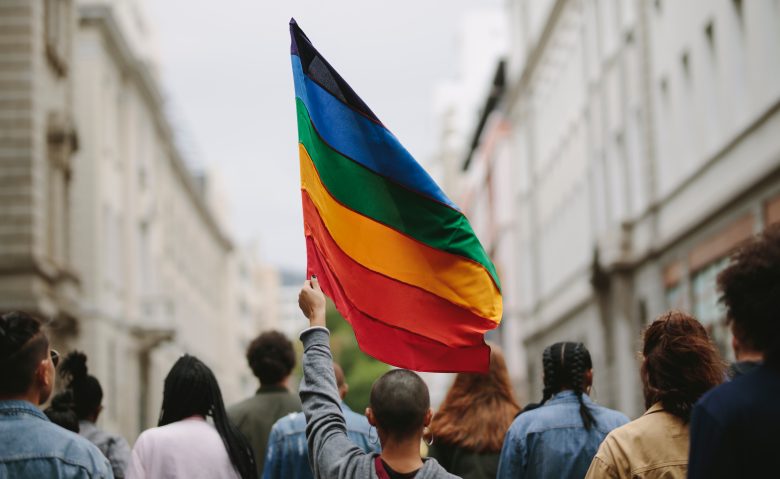
Activist groups warned Bangladesh had become even more dangerous for its LGBTQ+ citizens in 2025, with JusticeMakers Bangladesh in France (JMBF) recording 260 incidents of human rights violations affecting at least 426 LGBTQI+ individuals nationwide. It was “a sharp increase compared to previous years, confirming a continuing upward trend since 2022”.
The incidents are not isolated to Bangladesh. South Asia has seen rising anti-queer and anti-trans rhetoric often reinforced through false media narratives, policies, and public discourse.
As a result, many queer people still choose to remain hidden.
Researchers argue that across South Asia, the media has given visibility to queer communities, but at the same time, it has exposed queer people to surveillance, harassment, and backlash.
According to the research Queer Politics in Times of New Authoritarianisms: Popular Culture in South Asia, “In the last two decades, while there has been an explosion of LGBTQ+ visibility, most notably in South Asian film, television, and new media, this visibility has come with mainstream ideological agendas that do not especially represent the diversity of queer lives in South Asia along key identities of caste, class, religion, and region.’’
False media narratives
On 8 March 2026, Zareen, a trans activist from Pakistan, posted a placard on her social media account to mark International Women’s Day. The post quickly went viral and attracted attention from mainstream television channels and digital news platforms. Rather than focusing on the message she was attempting to convey, much of the discussion centred on her identity. What began as a day of celebration became another debate over visibility itself.
“My different photos were circulated and altered in podcasts without my consent. I also got a call from my home questioning me, ‘Why are you doing this?’ Indeed, you cannot tell everybody what you go through; your identity is questioned, and so are your morals, beliefs, and love for country, because, as to them, you are showing a bad image of the country,” they tell MDI.
For Zareen, just holding a placard became a risk and an attack on their identity, even when their identity had nothing to do with the placard.
“Accurate queer reporting matters a lot because one false report can harm many lives. The media has the power to tell the truth. The problem is that it also has the power to reinforce false narratives. When coverage repeatedly portrays queer communities as controversial, foreign, or morally suspect, public hostility becomes easier to justify,” Zareen added.
In Pakistan, the transgender community is also under attack, with violence surging. The Gender Alliance Interactive (GIA), documented 55 killings in Sindh province between 2022 and September 2025, including 17 in Karachi.
Complex picture
Although there have been some gains for LGBTQ+ communities in South Asia, they continue to face discrimination.
Nepal became one of the most progressive countries in the region for LGBTQ+ rights following a 2007 court ruling that led authorities to recognise trans people’s rights based on self-identification. In 2008, the country elected Asia’s first openly gay federal lawmaker.
More recently, that progress has faced hurdles. Human Rights Watch says a regression of years of progress started in 2025 following an increase in “anti-gender” advocacy. It issued a report in April 2026 that found relations between trans people and the state have been fraught for several years, with many people struggling to change their legal gender on identity documents.
Yet, in March 2026, there was again reason to celebrate as activist Bhumika Shrestha became Nepal’s first transgender woman lawmaker.
In India, parliament passed a bill in March 2026 that changes how transgender people are legally recognised, removing their right to self-identify. Activists and rights groups say if it becomes law, “it will be a major reversal of the hard-won rights of transgender people in India”.
It followed some more positive developments. In March 2026, openly queer lawyer Menaka Guruswamy was elected to the upper house of parliament, the Rajya Sabha. In 2025, the Madras High Court ruled that same-sex couples could form families, and the Andhra Pradesh High Court recognised transgender women as women, entitling them to the same protections under the law.
As ILGA World 2025 revealed, despite some legal victories, queer people continue to face criminalisation, extreme violence, state censorship, and institutional hostility.
Role of social media
Social media became a space for queer people, allowing them to share their experiences and build communities in South Asia. However, at the same time, even visibility online came with a stark reality.
The 2023 suicide of a 16-year-old Indian boy who faced online abuse after posting selfies in a sari and makeup led to calls for social media giants to better protect LGBTQ+ Indians. The suicide also prompted an online petition calling on Meta India to change its guidelines to protect queer individuals.
“People could tell their own stories and find community (on social media). In fact, they could challenge stereotypes directly. But visibility online brought new problems. Harassment campaigns, doxxing, and targeted abuse,” said Iqra, a queer activist from Bangladesh.
She argues that these challenges are increasing with social media’s reliance on algorithms.
“In the age of algorithms and misinformation, that question has become more urgent. The same technologies that can amplify queer voices can also expose them to new forms of targeting. What is at stake is not only representation. It is also who bears the consequences,” she tells MDI.
Similarly, research exploring online safety experiences among LGBTQ+ youth in Nepal revealed that, while expressing themselves online, 59 per cent of individuals were victims of doxxing, 89 per cent endured verbal harassment, and 69 per cent faced unwanted sexting.
Clickbait
With few queer voices in the media, the LGBTQ+ community faces a problem with visibility and inclusion in coverage. In India, journalist Ankur Paliwal launched the platform “Queerbeat’’ after observing the absence of queer people in newsrooms.
Other challenges include the way stories about LGBTQ+ people and issues are framed in the media: inaccurate stories, half-truths, and stereotypical representations.
Researchers and queer activists argue that queer lives are portrayed in negative ways.
Videos and photos are not fact-checked and widely shared just for clickbait. So, when the media relies on likes, views and sensational coverage, the effects on queer people extend beyond the screen. The narratives shape public attitudes and influence political debates.
The media should see the complexity of the issues and experiences of LGBTQ+ people rather than attacking their identities. More inclusive newsrooms and stronger editorial standards could help shift the conversations.
The views and opinions expressed in this article are solely those of the author and do not reflect the official policy or position of the Media Diversity Institute. Any questions or comments should be addressed to the editor at [email protected] of the Media Diversity Institute (MDI).