By Noura Kaddaoui
The way migration is reported in Europe shapes public opinion, influences policy decisions, and defines whose lives are acknowledged and whose are ignored. European media have long been criticised for the way it reports on migration, often focusing on crisis, numbers, and control, while the voices of those most affected remain largely absent.
As the “EU Return Regulation”, which centres on increasing deportations and tightening control over people without legal residence, moves forward, questions about media coverage on migration emerge. Has European journalism learned from past failures, or do the same patterns persist?
A narrative shaped by crisis
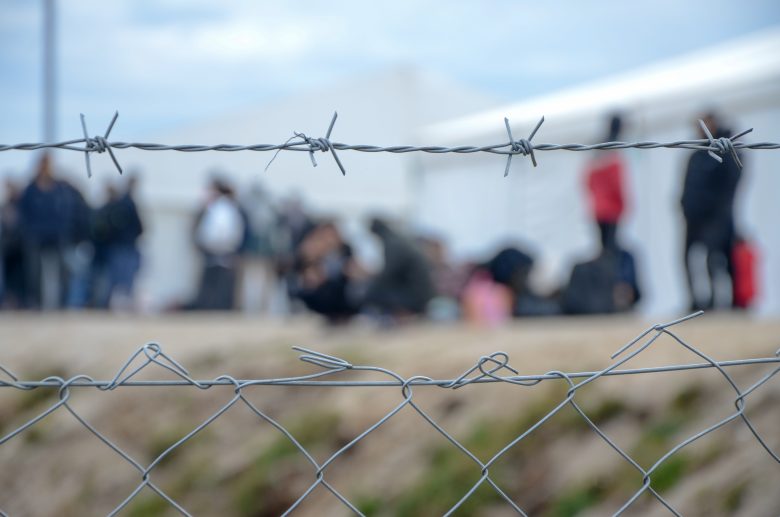
“Why is migration in Europe described as a crisis?” asks Dr. Emmanuel Achiri, migration and policy advisor at the European Network Against Racism (ENAR). “It is not a crisis. A couple of million refugees came to Europe, while Lebanon hosts more refugees than half of the European Union does. That is a crisis.” Achiri sees the framing of migration to Europe as a crisis as both misleading and harmful, as it reinforces the idea that migrants are a threat and normalises restrictive policies.
Since 2015, this framing has dominated headlines, often presenting migration as a threat to security, welfare systems, and cultural identity. Media coverage of migration also tends to be highly event-driven, with peaks during moments of political debate and public controversy. Research by Professor Bastian Vollmer and Dr. Markus Rheindorf shows how terms such as “crisis”, “wave”, and “influx” are not neutral when describing migration. They create a sense of urgency and danger, reinforcing the idea that migration is something to be controlled rather than understood.
Earlier research by the European Institute of the Mediterranean on media coverage of migration draws on Stuart Hall’s concept of “moral panic”. It shows how these narratives channel broader social anxieties toward migrants. This results in a simplified division between “us” and “them”, where migrants are positioned as a collective problem rather than individuals with diverse backgrounds and experiences.
In a previous report published by Media Diversity Institute, a comparative analysis of Al Jazeera and Euronews examined how both outlets covered migration. Despite their different geographic and editorial contexts, both relied heavily on frames centred on asylum policy, border control, and economic impact, while humanitarian perspectives remained secondary. The findings suggest that migration is increasingly treated as a technical and political issue across media, with narratives focused on management and control.
Language obscuring reality
The coverage of the new EU migration policy fits into a long-standing pattern in migration reporting. Restrictive measures are often framed in technical or humanitarian language, masking their real impact. Vollmer and Rheindorf describe this as “strategic doublespeak”, where policies that limit rights are presented as forms of protection. For example, detention and deportation policies are framed as safeguarding vulnerable people, while in practice, they increase control and exclusion.
Media discourse frequently adopts this language without questioning it. As a result, policies appear neutral and necessary, rather than political choices with human consequences.
Dr. Achiri from ENAR argues that a part of the problem is at the level of terminology, where even the concept of “return” is embedded in a racialised logic. “European institutions and media often use neutral language for racist and violent legislations, sanitising violence against black and brown people. Many organisations like us use “deportation regulation” instead of the sanitising term of “return”, because that is what this policy will do. It creates two tiers of humans: those that are controllable and deportable – Black and Brown migrants including EU residents – and another category of white EU citizens and residents. This is why we refer to this policy as the EU’s Jim Crow laws.”
Expertise that goes unrecognised
“We are journalists from our countries and experts in what is happening there. Despite our knowledge and experience, journalists in exile are rarely treated as experts in European media,” says Lailuma Sadid from En-GAJE, an organisation for exiled journalists. She points to recent coverage of tensions around Iran as an example, with media often turning to members of the diaspora who have lived in Europe for decades, rather than journalists with direct, recent experience.
“They bring people who may be Iranian but have been living in Europe for many years. They don’t ask for journalists who came more recently and have direct knowledge of what is happening,” she explains. “They frequently use the contacts they already have, instead of searching for other voices.”
Dr. Achiri sees the same issue in broader migration reporting. “The voices of racialised migrants are not included,” he says. He also points to who is shaping the coverage of the new migration policy itself. “Look at the majority of people writing articles on migrants. They are not migrants themselves. It is not just about interviewing migrants and writing about migration. Media houses need to let migrants write about migration.”
This absence of lived experience, he argues, directly shapes how these stories are told. “And even when these voices are included, they are included as tokens.” Their presence often remains symbolic, where they may be included in coverage, but not in ways that influence editorial decisions or storytelling.
Hierarchies of deservingness
Migrants are not represented equally. Media and political narratives often construct hierarchies of deservingness based on gender, nationality, and perceived cultural proximity. Men from Africa and Southwest Asia are frequently portrayed as threats, associated with criminality or instability. Women from the same regions are more often depicted as vulnerable victims, lacking agency, and in need of saving.
“When Canadians or Australians come to Europe, they are called expats,” Dr. Achiri explains. “But when people from Africa, Latin America and some parts of Asia come, they are called irregular or economic migrants coming to benefit from Europe’s wealth.” These terms suggest that some people contribute, while others are burdens or threats.
Research from the OPPORTUNITIES project shows that migrants are often seen as useful as long as they contribute economically, but quickly framed as a problem when they become vulnerable. The narrative then shifts from worker to burden. Structural factors such as precarious contracts, lack of housing, and dependence on employers are rarely explained. Instead, reporting focuses on individual cases or local tensions, framing issues as conflicts between “communities” rather than the result of broader conditions.
Dr. Achiri also highlights how displacement is framed differently. Ukrainians are consistently referred to as “refugees”, while people fleeing war from mainly non-European regions are labelled as “illegal migrants”, a term that implies criminality and justifies stricter control.
In the Netherlands, the term “veiligelander” is used to question the legitimacy of certain asylum seekers. In Germany, media narratives often focus on the figure of the “young Muslim man”. In Italy, the term “extracomunitario” functions as a coded reference to racialised migrants.
What needs to change?
Improving migration reporting requires more than adding a few new voices. It calls for a structural shift in how journalism is produced. Research shows that current coverage often remains reactive and fragmented, focusing on events rather than systems.
Dr. Achiri argues that change must happen at every stage of the reporting process. “Inclusive migration has to start with the design process, the decision-making process, the hiring process, even before the interview process,” he says. “Anti-racism needs to be mainstreamed in every stage of reporting.” For him, this means rethinking not only how stories are written, but who sets the agenda, who decides what is newsworthy, and how editorial choices are made from the outset.
From a journalist’s perspective, Sadid from En-GAJE highlights how gaps in information and structure continue to shape coverage. She points out that access to policymakers and clear explanations of migration policies is often limited, leaving journalists in exile to piece together fragmented information. At the same time, she stresses that lived experience is still not treated as a form of expertise in itself. Journalists in exile often maintain direct contacts and up-to-date knowledge from their countries of origin, yet this is rarely integrated into reporting. This creates a disconnect between policy debates and reality on the ground. Addressing that gap would mean improving transparency and recognising that those closest to the issue are essential to understanding it.
Initiatives such as Migravoice aim to address these gaps by amplifying migrant voices and supporting more inclusive storytelling. By enabling migrants to share their own experiences, these programmes challenge dominant narratives and offer alternative perspectives. They also demonstrate that audiences respond differently when exposed to stories that move beyond stereotypes. Such initiatives remain limited in scale, but they point toward a different model of migration reporting that centres lived experience and reshapes how migration is understood.
The views and opinions expressed in this article are solely those of the author and do not reflect the official policy or position of the Media Diversity Institute. Any questions or comments should be addressed to the editor at [email protected] of the Media Diversity Institute (MDI).