By Tanya Sakzewski
At the start of 2026, we published the article ‘Who owns the truth?’ examining how the fights over fact and fiction and for control of the narrative could impact diversity in the media in the coming year.
Just a few months into 2026, and that question has become more pertinent with the US-Israel war with Iran.
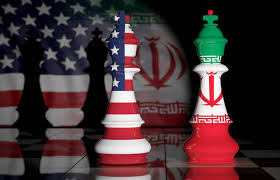
Mis- and disinformation are rife, and pressure and attacks on the media have increased in several countries, including the US.
With free speech and free media diminishing across the globe, how will the media emerge from these latest challenges? Who will get to tell their story, and who will be included in the coverage?
AI driving narratives
It’s well known that social media has become vital in information warfare, but this latest conflict is showcasing the speed and effectiveness of the weaponisation of the digital space, with technological improvements and rising authoritarianism making it far more dangerous.
Advances in Artificial Intelligence are making it much easier to post fake videos, which can attract tens of millions of views, and more difficult to determine what is real.
Timothy Graham, a digital media expert at the Queensland University of Technology, told the BBC that the scale of AI fake videos is “alarming”. “What used to require professional video production can now be done in minutes with AI tools. The barrier to creating convincing synthetic conflict footage has essentially collapsed.”
While some fake videos are still relatively easy to identify, a growing number are not. In early March, NewsGuard reported that Google’s reverse-image tool has produced inaccurate AI-generated summaries of fabricated and misleading visuals related to the war.
Who’s behind the fakes?
You only need to look at fact-checking websites like PolitiFact to see the number of false claims being spread online. “In the days since the US and Israel attacked Iran, bad actors have overwhelmed social media feeds with images and videos of missile attacks, destruction, combat and death.”
PolitiFact says the fake viral imagery is often generated with AI or is old footage misrepresented as if it’s new. Media outlets like Wired, France24, the New York Times, and CNN, among others, have documented and exposed fake videos online since the start of the conflict.
In its analysis, Cyabra, which tracks influence campaigns, identified a coordinated network of tens of thousands of inauthentic accounts distributing AI-generated war footage on social platforms. The activity, centred on narratives designed to portray Iran as the dominant and victorious actor in the conflict, generated more than 145 million views in under two weeks.
President Trump has accused Iran of using AI as a “disinformation weapon” to mislead the public. “AI can be very dangerous; we have to be very careful with it,” he said.
The accuracy of his own statements on the war and whether or not they are misleading has made President Trump the target of fact-checkers from organisations like PolitiFact and CNN.
Reporting from Iran
Whether in the US or Iran, reporting this conflict has been challenging and, in some cases, dangerous.
A near-total internet blackout in Iran has made communicating and reporting from the country difficult. Journalists in the country, which ranks 176 out of 180 on Reporters Without Borders’ (RSF) Global Press Freedom Index, have received intimidating calls and been threatened with arrest.
According to RSF, the Iranian state television channel has announced on several occasions that any activity deemed to be “advantageous to the enemy” would be severely punished. The restrictions are “severely limiting the information that comes out of the war’s primary battleground, leaving journalists and news consumers to gauge the credibility of competing government narratives”.
The US media under attack
The role of the US media has come under renewed pressure from the Trump administration over the war, dubbed Operation Epic Fury.
President Trump has suggested “TREASON” charges against media outlets that he claimed had coordinated with Iran to spread AI-generated fake news.
The fake news in question was reports of the USS Abraham Lincoln Aircraft Carrier on fire. CNN reported there was no evidence that mainstream US media outlets promoted fake videos of the Lincoln on fire, and it only found mainstream outlets that had debunked them.
Federal Communications Commission (FCC) chairman Brendan Carr warned in a post on X on 15 March that “broadcasters that are running hoaxes and news distortions… have a chance now to correct course before their license renewal comes up”.
That threat prompted more than 75 civil society organisations, scholars and former Federal Communications Commission officials to sign a letter urging the FCC Chairman to stop pressuring news broadcasters over their coverage. They argued the threats “constitute unconstitutional jawboning and threaten press freedom”.
The White House also issued a statement accusing CNN “hack “journalists of peddling Democrat-sourced fiction to undermine our decisive victories in Operation Epic Fury”.
The Committee to Protect Journalists (CPJ) has condemned the Trump administration’s efforts to “intimidate news outlets” over their coverage of US military action in the Middle East. The CPJ says the action “directly threatens the public’s right to know”.
Free speech in decline
The latest edition of the Chapultepec Index on Freedom of Expression and of the Press, by the Inter American Press Association, found the United States had the sharpest drop in the Index, falling from fourth to eleventh place. The report attributes the decline to an environment marked by “hostile rhetoric toward the press during the administration of President Donald Trump, the removal of certain institutional safeguards, and episodes of aggression against journalists during news coverage”.
In its latest Freedom in the World report, Freedom House said that “the United States has a free and diverse press, operating under some of the strongest constitutional protections in the world. Nonetheless, media freedom and independence have been eroded by government pressure, market concentration, economic constraints, and partisan bias.”
As V-Dem’s Democracy Report 2026 highlighted, the USA has lost its long-term status as a liberal democracy for the first time in over 50 years. “The speed with which American democracy is currently dismantled is unprecedented in modern history.” The report says Civil Rights and Equality before the Law, and Freedom of Expression and Media are now at their lowest levels in 60 years. The global outlook is also dire, with 74 per cent of the world’s population now living in autocracies and just 7 per cent in liberal democracies.
Unconstitutional actions
There has been some recent positive news for the US press, with a judge ruling that restrictions on them, like those imposed by the Pentagon, are unconstitutional.
In October 2025, Defence Secretary Pete Hegseth changed the rules for press reporting from the Pentagon, making press passes conditional on signing agreements not to solicit information the Trump administration has not approved for release. Most media refused to comply, handing in their press passes.
In a ruling issued on 20 March, Judge Paul L. Friedman of the Federal District Court in Washington ruled in favour of The New York Times, which had sued the Department of Defence. The judge defended the constitutional freedom to report independently and without government control.
Splits in the pro-Trump media
The war in Iran has also exposed splits in the pro-MAGA media. High-profile conservative media figures who are questioning the action include Tucker Carlson, Megyn Kelly and Joe Rogan. They say this is not what Trump supporters voted for. Those defending the actions include Fox News hosts like Sean Hannity and Mark Levin. The splits mirror divisions in society, with polls showing 56 per cent of Americans oppose the attacks on Iran and 44 per cent support them.
Representation
With rising polarisation in the US, some organisations are framing the question of whether news media are failing the public in their coverage in partisan terms. Stories include: “Legacy Media Root Against US in Iran War to Spite Trump” and “The Corporate Media Is Head Over Heels for the Iran War”.
The control for the narrative, the levels and quality of fake news, and increased pressure on the press are damaging public trust in information.
A Pew Research poll in October 2025 found 56 per cent of American adults have “a lot of or some trust” in the information they get from national news organisations. That’s down 11 percentage points since March 2025 and 20 points since the question was first asked in 2016. Fewer than half of Republicans and Republican-leaning independents (44%) have at least “some trust”.
The Freedom of the Press Foundation recommends journalists covering the Iran war should tell their audiences what they were prevented from finding out, and by whom.
“That doesn’t just mean an occasional editorial bemoaning threats to press freedom. Those are valuable, but on their own, they turn speech suppression into a side issue. The reporting itself should include an acknowledgement and explanation of how censorship impacts what the public sees and reads. It might not fix the secrecy surrounding this war, but it could lead to greater demand for transparency and greater scepticism of official narratives in the run-up to the next “forever war.” Maybe it could even help avoid the next one altogether.”
In Iran, the near-total internet blackout has largely sidelined Iranian voices. But some voices are still getting out. The Institute for War and Peace Reporting has published a series of interviews with women in Tehran. They describe a city under attack and a fiercely contested information space. “Public discourse is ‘dominated by violent, hyper-masculine and anti-woman language,” said one women’s rights activist.
An article MDI published before the start of the war highlighted the role of the diaspora in ensuring views from Iranians are heard.
The impact
Perhaps the best description of the impact the increasing pressure and restrictions are having on the media and public is in Judge Paul L. Friedman’s statement.
“The Court recognises that national security must be protected, the security of our troops must be protected, and war plans must be protected. But especially in light of the country’s recent incursion into Venezuela and its ongoing war with Iran, it is more important than ever that the public have access to information from a variety of perspectives about what its government is doing—so that the public can support government policies, if it wants to support them; protest, if it wants to protest; and decide based on full, complete, and open information who they are going to vote for in the next election.”