By Tanya Sakzewski
Funding cuts from public and private donors as well as foundations has become an existential crisis for many media organisations. The cuts have pushed media in exile, public service media and local outlets into survival mode.
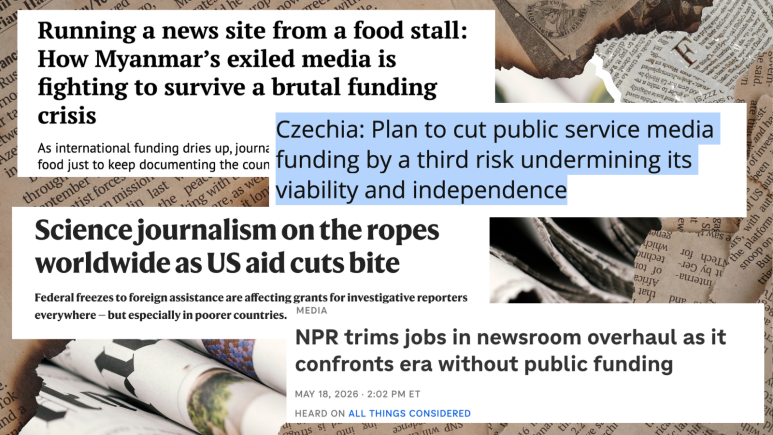
The headlines are frequent and the impact global.
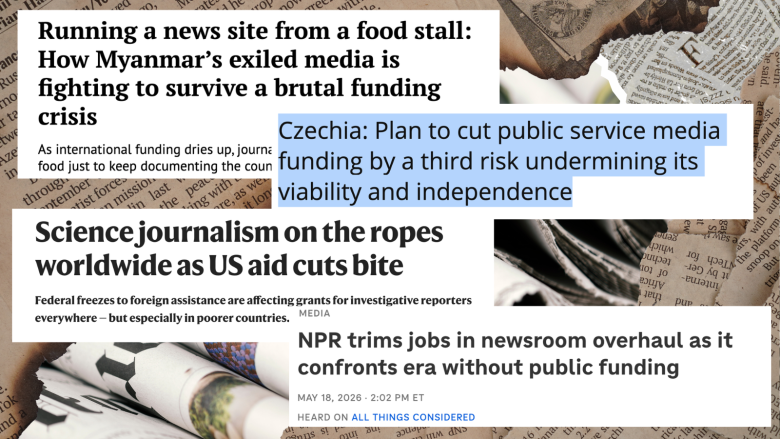
Running a news site from a food stall: How Myanmar’s exiled media is fighting to survive a brutal funding crisis: As international funding dries up, journalists are driving taxis and selling food just to keep documenting the country’s civil war.
Czechia: Plan to cut public service media funding by a third risks undermining its viability and independence.
NPR trims jobs in newsroom overhaul as it confronts era without public funding.
Science journalism on the ropes worldwide as US aid cuts bite.
While funding cuts impact all aspects of journalism, independent media, diversity and inclusion have been particularly hard hit. The long-term implications could result in vulnerable groups losing their presence and influence in helping shape the future of the media and media-related policy.
The impact of US funding cuts
Along with other organisations, Media Diversity Institute projects fighting hate speech, antisemitism and Islamophobia have been impacted by US funding cuts.
Recent reports have started revealing the scale and impact of US funding cuts, which were implemented in early 2025 with the inauguration of Donald Trump as president, on the media.
Article 19’s report Targeted says the US government has cut at least 1.7 billion dollars to freedom of expression programmes. US assistance had supported hundreds of media organisations and programmes.
The Carnegie Endowment for Democracy charted the financial, sectoral, and political impacts of terminating most US support for independent media. It found the cuts have had wide negative effects, undermining efforts to build media sustainability, strengthen information integrity and resilience and ensure independent journalism reaches underserved areas and populations.
It also found that in many countries, the loss of US support for media was more detrimental than the loss of funding, with some countries taking actions to restrict the space for independent journalism.
DW Akademie’s The State of Media Development Report 2026 said that with resources drying up, the rise in authoritarianism and AI have left media organisations struggling to meet challenges. The report found that only 11 per cent of media development organisations surveyed have “sufficient funding to meaningfully support public interest media and the information environment”, with many operating in survival mode.
The report found those most at risk of shutting down are media in exile, especially those based in the United States, and media in minority languages or in rural areas.
With other countries also reducing their own funding, the outlook is uncertain.
As Civitates’ Director Elisa Peter wrote in their Annual Report 2025: “While European philanthropy still has the space to manoeuvre and fund areas authoritarian leaders oppose, I worry that this window of opportunity may soon close.”
Impact on diversity
The impact on diversity is more widespread than funding challenges for media in exile or in minority languages.
Cuts are also putting at risk the ability of organisations to attend key forums and participate in policy debates.
Article 19’s Targeted report outlines how the cuts have massively diminished gender equality efforts, and diversity and representation in policymaking fora have been “hugely curtailed, especially for marginalised groups”.
The report warns that civil society is less able to participate in decision-making and advocacy. The risk is that the whole society will suffer from the loss of diversity and plurality.
“Communities that are already marginalised will be even more marginalised by this loss of representation, and existing imbalances of power and influence will be exacerbated.”
The report warns that the reduced focus on the needs and interests of underrepresented groups will lead to disproportionate dominance of government and private-sector interests in decision-making.
DW Akademie’s report says more international organisations (75%) than national, regional or local ones (44%) are involved in international discussions and fora.
Ensuring diverse voices are heard
The impact of that reduced participation is to put extra pressure on groups that do attend to guarantee diverse voices are included.
DW Akademie’s report says it is essential international media development organisations and funders ensure people and perspectives from local and regional organisations are present at high-level events and discussions, whether through consultation, funding travel or holding events in more affordable locations or online.
Milica Pesic, Executive Director of Media Diversity Institute, says media inclusivity in content and governance is inspired to in principle in many countries without being translated into policy.
“Improving media diversity requires all groups in society, whether they are vulnerable and minority groups, women, or Indigenous community members, to be able to participate at events and policy forums. We need to hear from them, and we should regard their participation as essential in helping shape the future of the media,” she says.
The outlook for diversity
The DW Akademie Report outlines the risks and opportunities for efforts to promote media diversity and inclusion.
It warns that some media development organisations are avoiding or downplaying work related to diversity and inclusion as a response to the perceived risk of working on areas of “diversity, equity and inclusion” (DEI) due to the US administration’s hostile positioning.
On the other hand, the perception that DEI efforts are under attack has, in some cases, led to an increase in grants and opportunities for organisations, especially those that are exclusively women led or maintain diverse newsrooms.
As Civitates’ Director Elisa Peter wrote in their Annual Report: “Resisting authoritarianism will need courage and imagination. We need to challenge our own assumptions on how we work; who we work with; the partnerships we build; the narratives we use to capture the public imagination and inspire hope. If we can do that, our chances of arresting Europe’s democratic decline will rise exponentially.”
As the latest Media Diversity Institute’s Media Diversity Index has revealed, media freedom does not guarantee diversity and inclusion. The Media Diversity Index 2026 South America Pilot Study, which assessed both content and governance of the media in five nations, recommended that discussions of media diversity be included at events that bring media specialists together. The aim is to mainstream discussion about representation of those aspects of identity – such as ethnicity, socio-economic status, regional location – that are often overlooked.
While it is essential for those diverse voices and issues to be represented at major events, it’s also vital for the media to lead by example. That includes continuing efforts to improve diversity and inclusion in coverage, staffing and leadership, as well as at industry events.