Recommendations from an MDI Masterclass “Condemned to loneliness? A Diversity Index to prevent media isolation of marginalised communities in South America”
Recommendations prepared by Gisela Arroyo Andrade
Journalists and media professionals from Latin America have developed a roadmap for improving media diversity and inclusion in the region, including recognising online violence as a structural threat to media diversity, supporting specialised reporting, and improving working conditions.
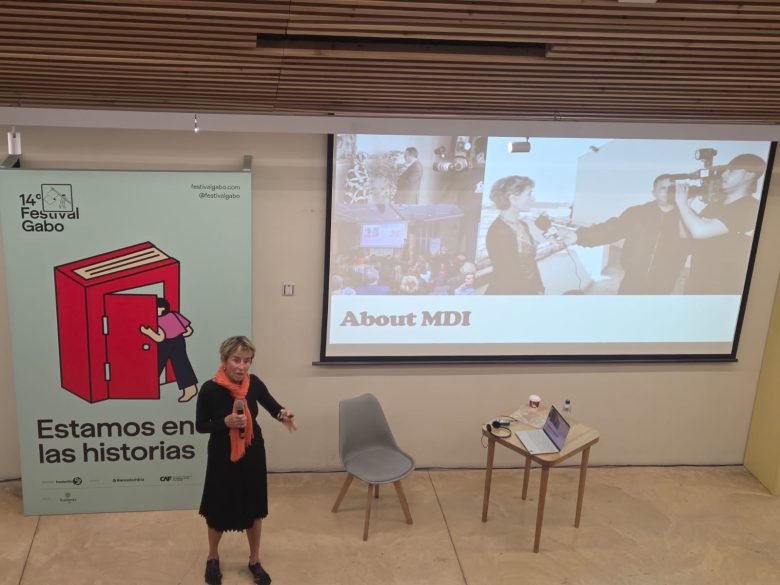
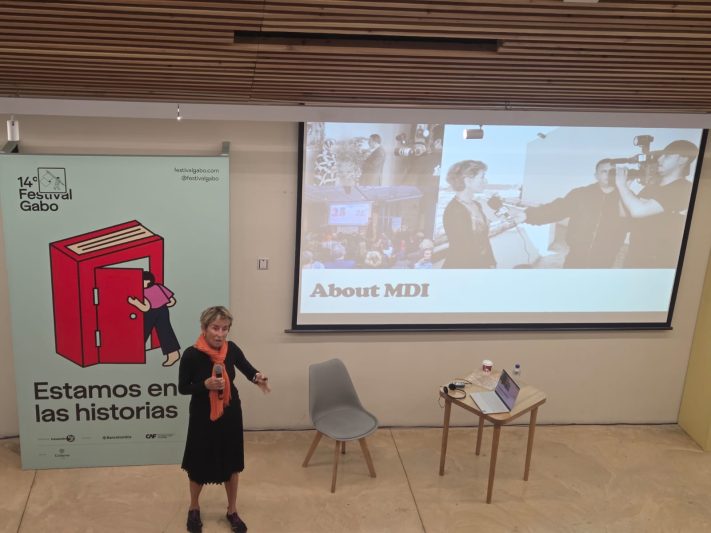
The recommendations were made during a Media Diversity Institute Masterclass at the Gabo Festival in Bogota on 25 July. The Masterclass: “Condemned to loneliness? A Diversity Index to prevent media isolation of marginalised communities in South America” led by MDI Executive Director Milica Pesic, introduced the Media Diversity Index South America and facilitated an audience-led discussion on developing an action plan for change.
The Media Diversity Index South America, which assesses diversity in both governance and content in five countries, produced its own set of recommendations. During the Masterclass, participants, including media professionals, journalists and representatives from civil society, were invited to develop their own set of recommendations based on their experiences.
The following recommendations synthesise the proposals raised by participants during the Masterclass.
1. Complement quantitative indicators with stronger qualitative assessments of media diversity. Participants stressed that regulatory frameworks and quantitative indicators cannot fully capture how media diversity is experienced in different national contexts. A representative of Sembra Media from Argentina noted that many processes promoting diversity are driven by community initiatives, local media and civil society, particularly in contexts where public institutions have weakened. Based on this recommendation, future editions of the Index should incorporate stronger qualitative methodologies that document these experiences and recognise the cultural, territorial and political specificities shaping media diversity across the region.
2. Recognise and document community-led and independent initiatives that sustain media diversity. The discussion highlighted that many of the most meaningful advances in representation emerge from grassroots organisations, independent media and social movements rather than formal regulation. These initiatives should be systematically documented and considered as part of the regional evidence base, allowing the future versions of the Index to better reflect the diversity of practices that strengthen pluralism.
3. Strengthen prevention and response mechanisms to address online violence against journalists from historically marginalised groups. A representative of Muy Waso from Bolivia emphasised that women journalists, LGBTQ+ communicators and other historically marginalised voices are disproportionately targeted by online harassment. Participants recommended developing stronger monitoring systems, rapid response protocols and collaborative protection mechanisms involving media organisations, public institutions, digital platforms and civil society
4. Recognise online violence as a structural threat to media diversity. Beyond its direct impact on individual journalists, participants highlighted that online violence generates self-censorship and discourages the participation of journalists from marginalised communities. Tackling digital violence should therefore be understood not only as a freedom of expression issue, but also as a necessary condition for protecting media diversity.
5. Promote working conditions that enable sustained and inclusive journalism. A participant from Bolivia drew attention to the progressive disappearance of gender desks and other specialised editorial spaces, as well as the increasing precariousness of journalistic work. Strengthening independent media, supporting specialised reporting and improving working conditions are essential to ensure that diversity remains part of editorial agendas over time.
The recommendations complement those made in the Media Diversity Index South America, which was compiled by academic researchers in each country.
About the Media Diversity Index South America
The Index, produced by Media Diversity Institute, includes Uruguay (top ranking), Colombia (2nd), Peru (3rd), Chile (4th) and Argentina (last place). The Index follows earlier editions covering eleven countries in mainland Europe in 2024 and the UK in 2025.
Recommendations from the South America edition include:
- Seek out openings for advocates of inclusive media to establish or develop links and contacts with existing national institutions set up to serve audiences and human rights observance.
- Strengthen and extend references to diversity across journalistic codes of conduct.
- Focus on the media needs of children, for whom the age element of diversity often intersects with other aspects such as gender, socio-economic status, disability and so on.
- Liaise with academic institutions and other civil society bodies to investigate diversity of personnel in media workplaces to fill major gaps in knowledge and puncture misplaced complacency about current performance.
- Include reflection on media diversity as a regular feature of gatherings that bring media specialists together with the aim of mainstreaming discussion about representation of those aspects of identity – such as ethnicity, socio-economic status, regional location – that are often overlooked.
You can watch the Masterclass (in Spanish) here.
The Media Diversity Index South America is available in Spanish and English.